The Reputation Problem
The reputation that precedes Lambrusco into most markets outside Italy is not the reputation it has earned but the one it was given — and the distinction matters. In the 1970s and 1980s, the Emilian sparkling red arrived in export markets as a sweet, low-alcohol, industrially produced curiosity that suited the sugar-tolerant palates of the era and sold in quantities that had little to do with quality and everything to do with price and novelty. The hangover from that episode — commercial in both senses — persists in markets where Italian wine education has moved more slowly than the wine itself.
The Lambrusco currently produced by the most serious growers in the provinces of Modena and Reggio Emilia is a different object: dry, with tannins that grip and release cleanly, with fine-bubbled persistent effervescence and a depth of fruit — mulberry, violet, dark cherry — that the industrial versions never approached. It is one of the more unjustly overlooked categories in Italian wine, and the reasons for overlooking it are entirely historical rather than qualitative.
The Territory and Its Subzones
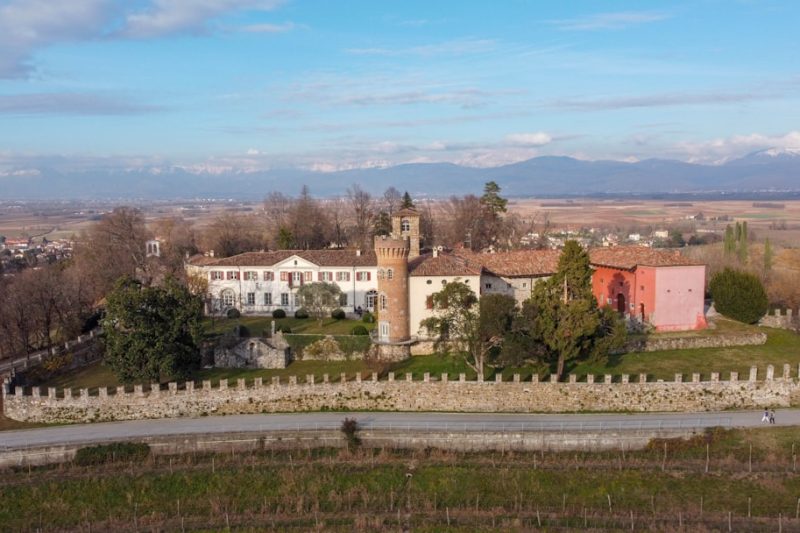
The landscape of the Lambrusco zone is resolutely unglamorous. The Po Valley between Modena and Reggio Emilia is flat, agricultural, and dense with the industrial-scale food production that made Emilia-Romagna Italy’s most prosperous region: Parmigiano-Reggiano in its massive wheels ageing in cooperative warehouses, prosciutto di Parma in its long-windowed curing rooms, the acetaia where traditional balsamic vinegar undergoes its patient barrel sequence over twelve years minimum. The vineyards sit among this infrastructure, and the view from any given row is of flat fields rather than dramatic hillsides.
What the flatness conceals is geological complexity. The three principal Lambrusco DOC denominations — Lambrusco di Sorbara, Lambrusco Grasparossa di Castelvetro, and Lambrusco Salamino di Santa Croce — each occupy a distinct terroir within this apparently uniform plain. Sorbara, to the north of Modena, sits on alluvial soils with a high water table that produces wines of exceptional lightness and aromatic finesse. Castelvetro, on the southern hills at the base of the Apennine foothills, has clay-limestone soils that give the Grasparossa grape its characteristic tannic grip. The differences between these wines, produced from different grape varieties on different soils, are far greater than the shared Lambrusco name implies.
The Grape Varieties
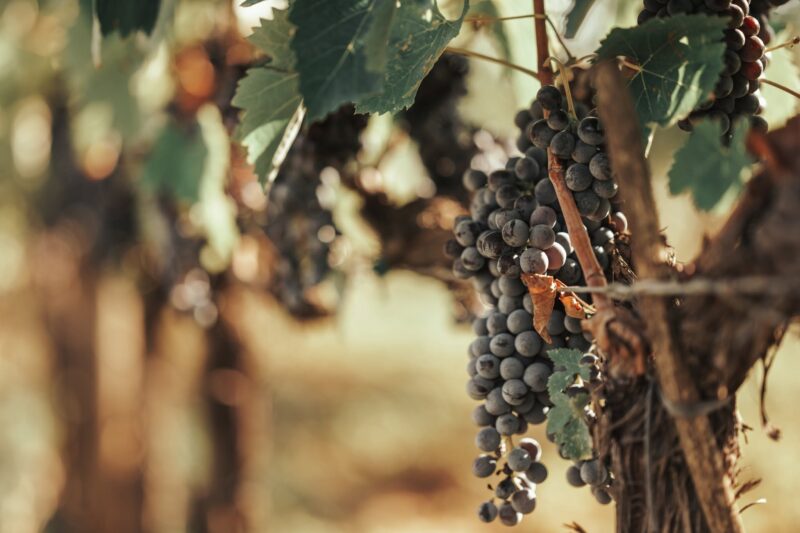
The Lambrusco family is not a single variety but a constellation of related but distinct cultivars, several of which have been grown in Emilia for at least a thousand years. Lambrusco di Sorbara is the most refined: thin-skinned, pale in colour, producing wines of almost rosé-like translucency with an aromatic profile dominated by violet and pomegranate. It is also the most fragile — susceptible to coulure, producing irregular harvests that make it commercially risky and all the more prized when the vintage cooperates.

Lambrusco Grasparossa, named for the red-tinged stems that give it away in the vineyard, is the opposite: deep-coloured, tannic, muscular, producing wines with the structure to stand up to the fat-rich food culture of its home territory. Salamino, the third principal variety, sits between them in character and is the most widely planted — reliable, versatile, and capable of genuine quality in the hands of producers who are not primarily interested in volume.
The Secco Imperative
The critical issue in Lambrusco quality, and the point of departure between the industrial and artisan versions, is residual sugar. The mass-market Lambrusco that shaped the international image of the category is amabile — semi-sweet — with residual sugar levels that mask structural deficiencies and appeal to the broadest possible palate at the expense of everything that makes the wine interesting. The serious Lambrusco is secco: genuinely dry, with fermentation carried to completion and the natural grape sugars fully converted to alcohol.
In a dry Lambrusco di Sorbara from a careful producer, the combination of fine effervescence, tart cherry fruit, and bright acidity produces a wine that functions like a sparkling Pinot Noir from a cooler climate — light, precise, genuinely food-friendly in a way that sweet versions never are. The move from amabile to secco is not a question of fashion; it is a question of what the grape and the territory actually contain.
The Food Culture It Was Made For
Lambrusco did not develop in isolation from the food culture around it; it developed with it, and the relationship is symbiotic in a way that no amount of wine-pairing theory can fully explain. The classic Emilian antipasto — mortadella, culatello, the coppa di testa served cool with a drizzle of local vinegar — calls for a wine that cuts through fat without competing with it. Lambrusco does this because the effervescence acts as a palate cleanser and the acidity lifts the flavours rather than flattening them.
The more substantial second act of the Emilian table — the bollito misto, the braised pork cheek, the pig’s trotter stuffed with its own meat and spices — requires the tannic Grasparossa rather than the lighter Sorbara. The matching is instinctive rather than calculated: people who grew up eating this food grew up drinking this wine alongside it, and the calibration happened over generations rather than at a tasting panel.
The New Producers
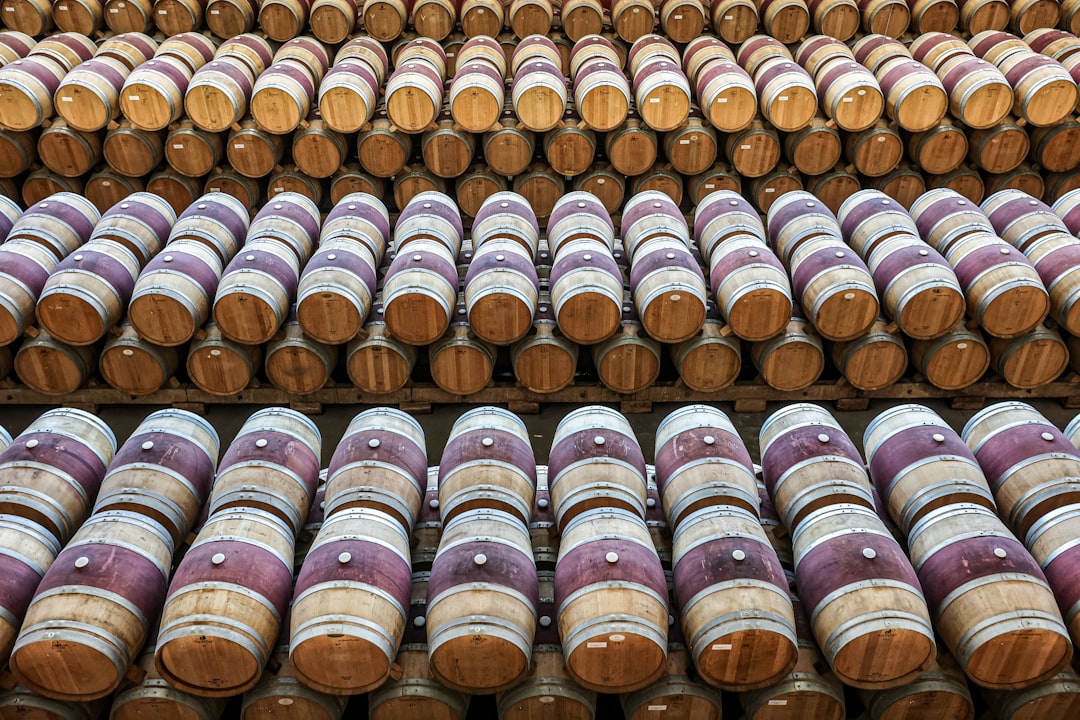
The shift in Lambrusco’s quality profile is recent and ongoing. A generation of producers who came of age in the early 2000s, when the category’s international reputation was at its nadir, made a deliberate choice to produce dry, low-yield, estate-bottled Lambrusco that had nothing in common with the cooperative-era production except the name. They found, initially, that their market was local — the people of Modena and Reggio Emilia who had always known what good Lambrusco tasted like — and then, gradually, that it extended to the wine trade in northern Italy, Germany, Switzerland, and eventually to the restaurant lists of serious establishments in London and New York.
The volumes remain small. A single estate in Sorbara producing serious wine will typically bottle twenty to fifty thousand bottles per year — a fraction of what the large cooperatives process in a week. But the existence of these bottles, and the conversations they provoke among people who drink them expecting nothing and then find something worth thinking about, is the substance of the rehabilitation.
How to Find the Wine
The Lambrusco zone offers no wine tourism infrastructure in the sense that a visitor from Tuscany or Piedmont would expect. There are no wine roads lined with tasting rooms, no heritage centre devoted to the history of the variety. There are wineries that receive visitors by appointment, working cellars where the welcome is functional rather than theatrical, and the wine is poured from the tank or the bottle with equal directness.
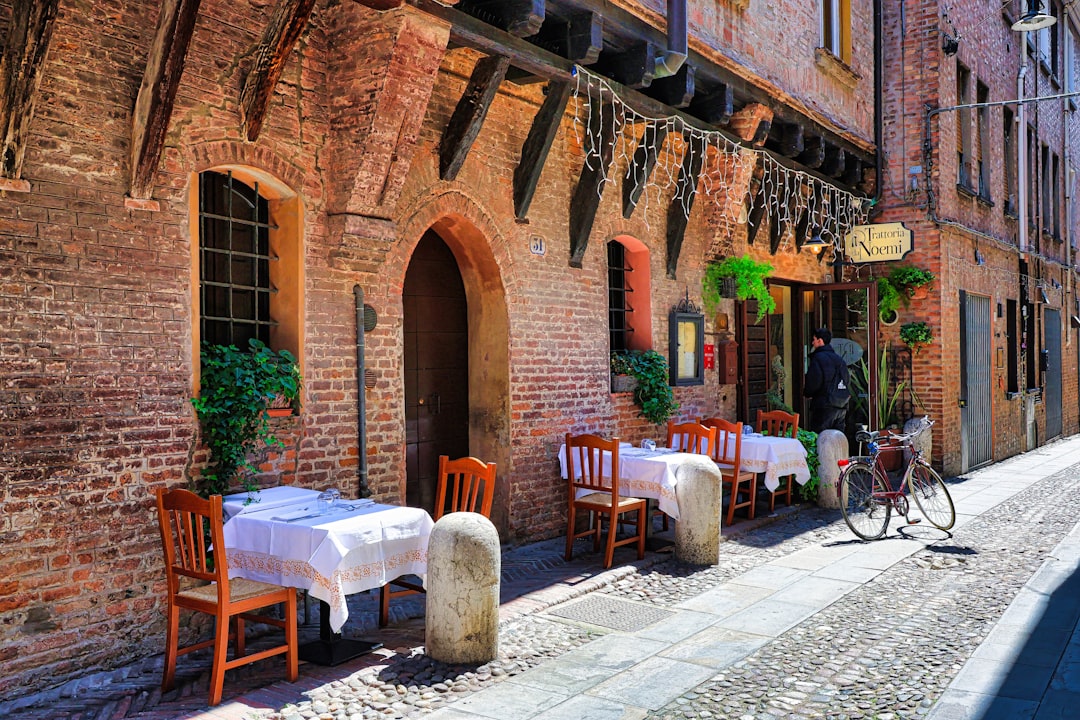
The better approach, for the visitor with limited time, is to eat: the osterie and trattorias of Modena and Reggio Emilia, or the farmhouse agriturismos of the Emilian Apennines, are where the wine is encountered as it was meant to be encountered — alongside food, in quantity, as an integral part of the meal rather than its centrepiece. The wine list in such places is typically a handwritten page with a small number of producers and a carafe option that represents the house choice: local, honest, and almost certainly better than its price suggests. Both cities are reached quickly by regional train from Bologna.