The story of natural wine in Friuli Venezia Giulia begins in a limestone cellar in the village of Oslavia, near the Slovenian border, sometime in the 1970s, when a winemaker named Josko Gravner began to question everything he knew about how wine should be made. Gravner had built a successful business producing technically correct, internationally styled white wines — clean, fresh, fruity, the kind that earned high scores in tastings and sold well to restaurants. And he had grown to loathe them.
A Different Philosophy of Winemaking
What he wanted, he would later say, was wine that tasted of the place where it was grown and of the year in which it was harvested — wine that was alive in the way that bread baked with a wild yeast starter is alive, fermented with the natural yeasts on the grape skins, without temperature control, without sulphur additions, without filtration or fining. Wine that aged in the Georgian manner, in terracotta amphorae buried in the earth, with extended skin contact that turned the white Ribolla Gialla grape amber in colour and gave it a complexity and structure that no conventionally made white wine could approach.
The Wines of Oslavia
The wines that Gravner eventually produced — and that his neighbours in Oslavia, including Stanko Radikon and Dario Princic, began producing alongside him — were unlike anything else being made in Italy or anywhere else in the wine world. Amber in colour, tannic, oxidative, intensely flavoured, deeply mineral, they divided opinion violently: enthusiasts compared them to the great wines of the ancient world; critics called them faulty, unstable, and undrinkable. The controversy has never entirely ceased, which is itself a sign of how genuinely innovative and challenging these wines remain.
The Collio Wine Region
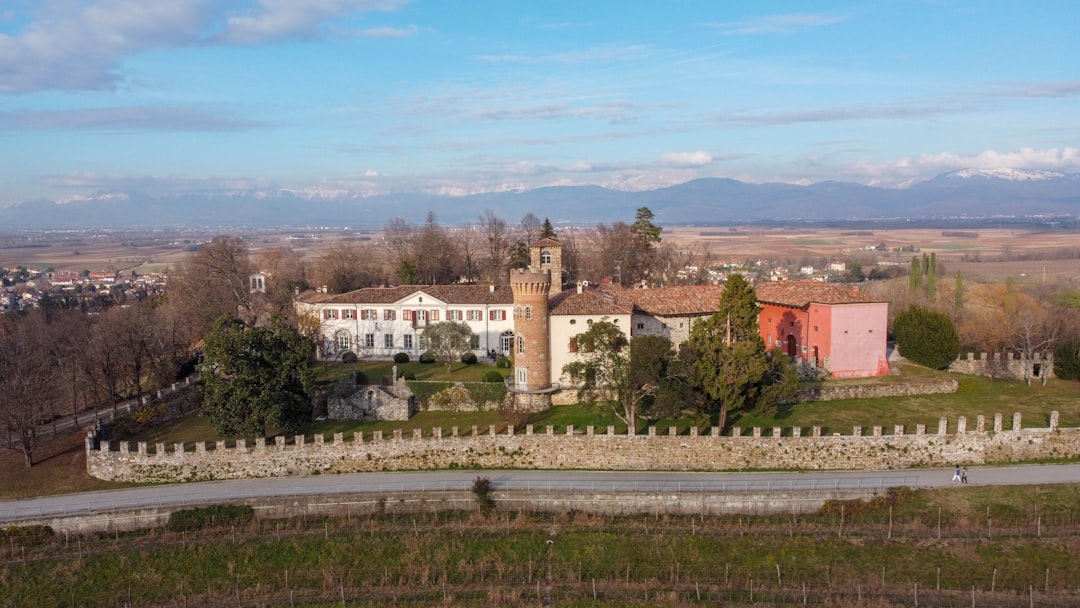
The Collio zone, which straddles the Italian-Slovenian border in a landscape of rolling hills, has clay-and-limestone soils and a microclimate moderated by the Adriatic to the south and the Alps to the north. It has been producing exceptional white wines from indigenous varieties — Friulano (once called Tocai), Malvasia Istriana, Ribolla Gialla — for centuries. The natural wine producers of Oslavia represent the most radical expression of that tradition, but the entire region rewards exploration by anyone interested in white wines of character and depth. For contrast, consider what Barolo represents at Italy’s opposite winemaking extreme: the two regions define the poles between which Italian wine culture operates.
Visiting the Natural Wine Cellars
Visiting the cellars of Oslavia requires appointment and planning — these are not tourist wineries with tasting rooms and gift shops but working farms where the welcome is genuine but unscheduled visits are not possible. The reward for the effort is access to wines that are made in tiny quantities, that are rarely found outside specialist wine shops in major cities, and that represent the current frontier of a conversation about what wine can be that is as important and as unresolved as it was when Gravner first looked at his beautiful, soulless bottles and decided to start again.
Where to Base Yourself
Stay in Gorizia, the border city divided between Italy and Slovenia that has recently been designated a European Capital of Culture, and explore the Collio on both sides of the border — the Slovene Goriška Brda produces wines of equivalent quality to the Italian Collio from the same soils and the same grape varieties. The shared wine culture across a border that once divided the Iron Curtain is itself a remarkable story, and one that is told most eloquently in the wines themselves.