Northeast Italy is where the country runs out of Italy. The region of Friuli Venezia Giulia occupies the easternmost corner of the peninsula, pushing up against Slovenia and Austria in a landscape of alpine peaks, karst plateau, wine-producing hills, and a narrow coastal strip that terminates at Trieste — a city that by any honest description belongs as much to Central European history as to Italian geography. For visitors who arrive expecting a recognisably Italian experience, Friuli delivers something considerably more complicated and considerably more interesting.
The region was assembled from disparate territories over the course of the 20th century, and the assembled nature of it is still visible everywhere: in the architecture of Trieste, which is Austro-Hungarian rather than Italian in its bones; in the Slovenian-speaking communities of the Collio hills; in the Rhaeto-Romance dialect — Friulian — that survives as the daily language of significant portions of the rural population; in the food, which bears the fingerprints of Vienna, Ljubljana, and Venice simultaneously. This is not a region that pretends to be a unified thing. It is several things at once, and navigating the overlap is most of the pleasure.

Trieste: The City That Does Not Quite Fit
Trieste is the most unusual large city in Italy, and making that claim does not require extensive argument. The city was the principal maritime outlet of the Habsburg Empire for several centuries — a cosmopolitan trading port that handled goods, people, and ideas flowing between Vienna, the Mediterranean, the Levant, and Central Europe. When the empire collapsed in 1918 and Trieste passed to Italy, it lost its economic raison d’etre almost overnight. The city that had been a metropolis of 250,000 began a slow process of adjustment that is still, a century later, not entirely complete.
The architecture downtown is monumental in a specifically Austro-Hungarian way: broad boulevards, grand public buildings in eclectic historicist styles, the Piazza Unita d’Italia opening onto the sea with a scale that speaks of imperial ambition rather than Italian urbanism. The coffee culture here is distinct from the rest of Italy — not just in the terminology (ordering a “caffe” in Trieste gets you something different from anywhere else in the country) but in the institution itself: the old literary cafes of Trieste, still functioning, were gathering places for the Central European intelligentsia in a way that has no real equivalent in Rome or Milan.
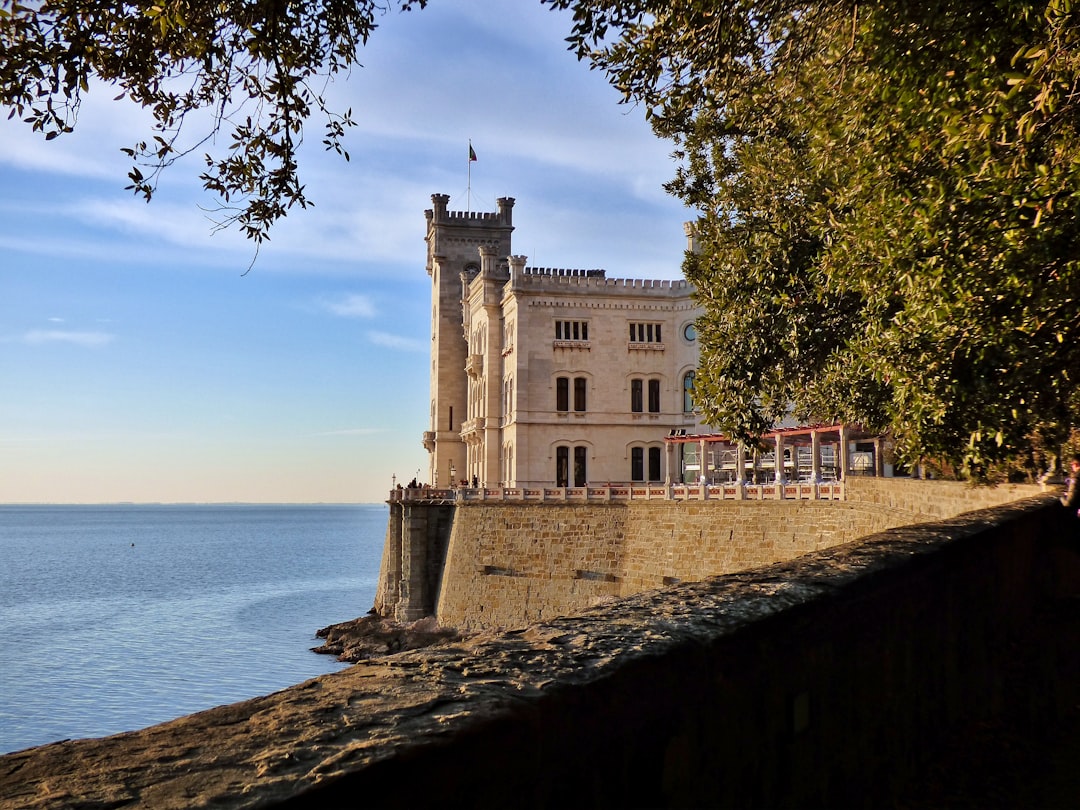
The literary associations are extensive. James Joyce lived here for years, teaching English and writing much of Ulysses and Dubliners in the city’s apartments and cafes. Italo Svevo was born here. Rainer Maria Rilke finished the Duino Elegies at a castle on the cliff above the sea just outside the city. The density of serious literary production in a single relatively small city over a relatively short period is remarkable, and it reflects something about Trieste’s particular position as a place of crossings — between languages, cultures, empires, and identities — that made it generative for writers working through exactly those themes.
The Karst Behind Trieste
The limestone plateau that rises immediately behind Trieste — the Carso, in Italian, sharing the name with the geological term “karst” that English derived from this landscape — is one of the most distinctive pieces of terrain in Italy. The surface is rocky, windswept, and studded with sinkholes and caves; the Grotta Gigante, accessible from the outskirts of Trieste, is one of the largest accessible tourist caves in the world. The plateau has a character that is simultaneously harsh and beautiful — the bora wind that descends from the northeast can reach speeds that make standing upright an effort — and it produces the raw material for the Terrano wine, a dark, tannic red made from the Refosco grape that is unlike anything produced elsewhere in Italy.
The Wine Country: Collio and Friuli Grave
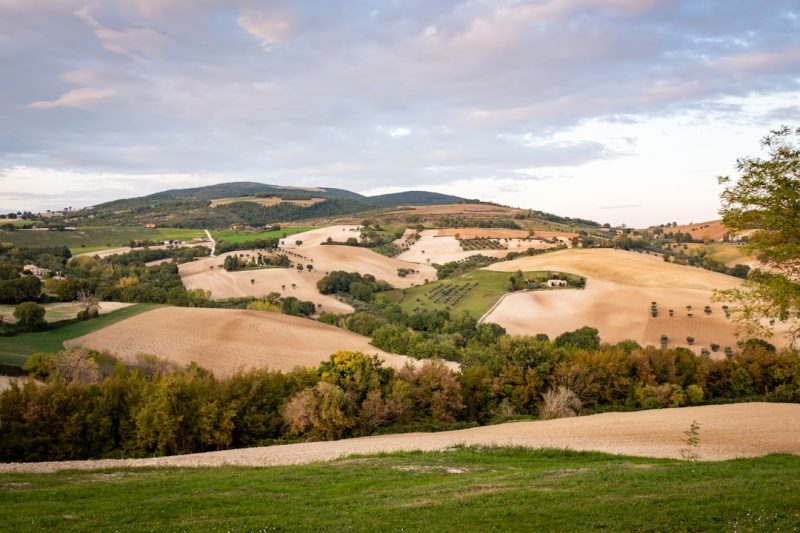
Friuli’s wine production is among the most respected in Italy, though the region operates without the name recognition of Barolo or Brunello and without the tourist infrastructure that the Veneto’s wine zones have developed. The hills of the Collio — rolling terrain along the Slovenian border, with a unique marl-and-sandstone soil called ponca — produce white wines of exceptional quality and complexity. The Friulano grape (formerly called Tocai Friulano) is the local white variety, producing wines with a characteristic slightly bitter finish that pairs with the region’s food in ways that feel like evolution rather than design.
The natural wine movement has a particularly strong presence in Friuli, rooted in a local tradition of extended skin contact for white wines — “orange wines” — that predates the movement’s fashionable status by several decades. Visiting wine producers in this area involves encountering people with very specific and sometimes strongly held positions on how wine should be made, and the conversations that result from engaging seriously with those positions are among the more intellectually rewarding that wine tourism offers anywhere in Italy.
Tastings at smaller producers in the Collio typically cost €10-20 per person and include several wines. The wine road through the hills — along the Slovenian border, through villages where the street signs are bilingual — is drivable in a day and deeply scenic, particularly in late autumn when the vines turn colour against the backdrop of the Julian Alps.
The Mountains: Julian Alps and Carnia
The northern portion of Friuli Venezia Giulia is defined by the Julian Alps — a range that reaches into Slovenia and presents some of the most dramatic mountain scenery in northeastern Italy. The Dolomiti Friulane, in the western part of the province of Pordenone, are a UNESCO World Heritage Site that sees a small fraction of the visitors who crowd the more famous Dolomites of Trentino and Bolzano. The reason is partly access — the infrastructure here is less developed — and partly awareness. For hikers and mountaineers who know the area, this is considered among the most rewarding terrain in the Alps.
Carnia, the high valley area of the Julian Pre-Alps, has its own distinct culture and food tradition, shaped by altitude, isolation, and a long tradition of seasonal migration — the Carnic people spread across Europe and beyond as seasonal workers and traders in the pre-industrial centuries, returning home with skills and contacts that gave the culture an unusually cosmopolitan character for its geography. The food here — smoked meats, polenta, aged cheeses, freshwater fish, wild herbs — reflects both the mountain environment and the accretion of outside influences.
The Lagoon and the Plain: A Coastal Counterpoint
The southern coastal strip of Friuli — the Marano lagoon and the town of Grado — presents a completely different Italy from the mountains above. Grado is one of the oldest continuously inhabited places in the region, a small island settlement connected to the mainland that was a significant early Christian centre and still contains a remarkable concentration of late antique and early medieval architecture, including a 6th-century cathedral with original mosaic floors. It is also, in summer, a functioning beach resort — a combination that should be more cognitively dissonant than it is in practice.
The lagoon itself, a shallow body of water extending between the mainland and the sea, is a working ecosystem supporting fishing and aquaculture with a quiet, flat beauty that is entirely different from the dramatic coastal scenery elsewhere in Italy. Moving through it by small boat, among the fishing weirs and waterbird colonies, produces a sense of horizontal space and silence that is hard to find in more topographically spectacular parts of the country.
The Food: Central Europe Meets the Mediterranean
Friulian food is among the most internally varied in Italy, reflecting the multiple cultures that have shaped the region. In Trieste, the Austrian influence is direct and unapologetic: goulash appears on menus alongside pasta, the bread rolls are Central European, the pastry tradition draws on Vienna. In the mountain areas of Carnia, the food is alpine in character — substantial, preserved, built for cold winters. On the coast, the Venetian influence dominates, with fish and shellfish from the lagoon prepared with a simplicity that lets quality determine the result.
San Daniele del Friuli produces what many serious food people consider the finest prosciutto in Italy — aged longer than Parma, with a slightly more intense and complex flavour profile. The production is on a smaller scale than Parma, the process strictly controlled, and the result is a product that rewards eating slowly with good bread and local white wine. The town itself is a short drive from Udine and welcomes visitors to understand the process, though the best engagement with the product is simply at the table.
Frico — a crisp or soft preparation of aged cheese and potato that functions as everything from street food to restaurant dish depending on how it is made — is the region’s most characteristic preparation, and eating it at a country trattoria at lunch on a cool autumn day, with a glass of Friulano and views of vineyards, is one of the more genuinely Italian experiences available in this least-typically-Italian of Italian regions.
Expect to spend €20-35 per person for a full meal at a mid-range establishment. The premium producers of both wine and prosciutto offer experiences that cost more but deliver accordingly.
Udine: The Functioning Capital
Udine — the actual capital of Friuli, as distinct from the symbolic weight of Trieste — is a comfortable, prosperous city that functions primarily as a regional centre of commerce, education, and administration. Its Piazza della Libertà is considered one of the most beautiful squares in Italy, with a particular Venetian quality to its architecture reflecting the centuries when Udine was under the Serenissima’s jurisdiction. The regional museum of Friulian art contains works of genuine importance, including a collection of Giambattista Tiepolo frescoes that justify a stop independently of anything else in the city.
The city is not primarily a tourist destination and does not perform as one — which makes spending a few days here, using it as a base for exploring the surrounding wine country, mountains, and small towns, particularly rewarding for visitors who prefer a place with its own internal logic to one that has been organised around the needs of visitors.
Getting There and Around
Trieste has its own airport with connections to several European cities. The main rail line from Venice to Trieste runs through Udine and is fast and comfortable — the journey from Venice to Trieste takes approximately two hours on the faster services. Within the region, a car is the most effective way to explore the Collio, Carnia, and the mountain areas. The Friulian road network is well maintained and the traffic, outside of the main coastal tourist areas in summer, is light.
When to Visit
Late spring and early autumn are the optimal periods — the wine harvest in September and October brings the Collio to its most atmospheric, and the mountain areas are at their most accessible and least crowded between May and October. Trieste in winter has a specific appeal: the bora wind, the cafe culture, the grey quality of light over the sea, the sense of a city in which things are happening that have nothing to do with tourism. It is not comfortable in the conventional sense, but it is authentically itself in a way that a summer visit, with more visitors, slightly obscures.