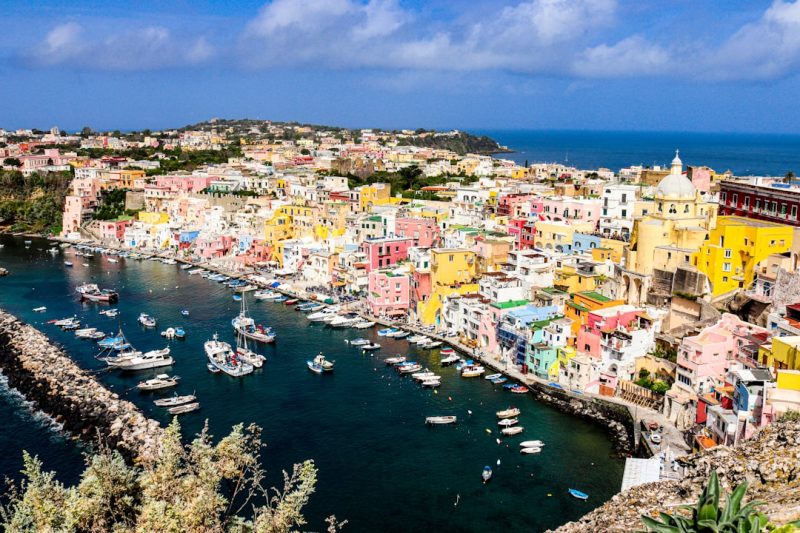
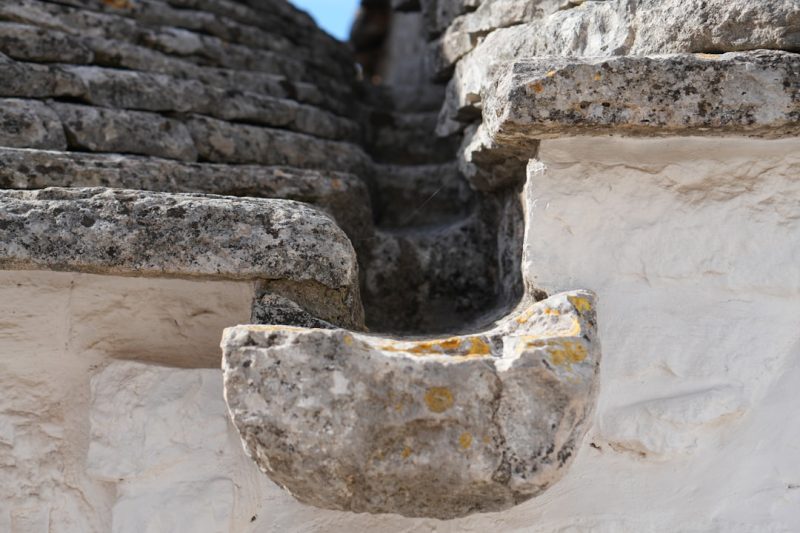
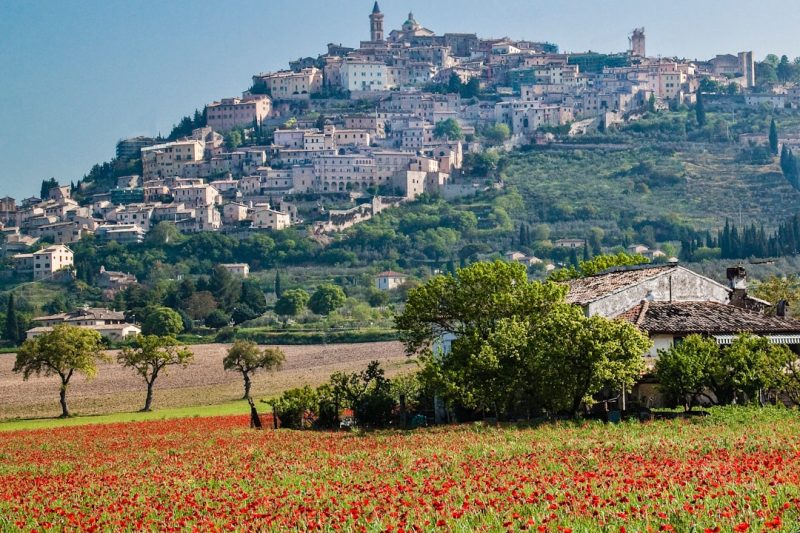
The comparison to Tuscany is both accurate and slightly unfair. Accurate, because Marche does share the fundamental landscape grammar: hill towns on ridges, olive groves on the slopes below, medieval centres of considerable architectural quality, food traditions built on handmade pasta and local wine. Unfair, because the comparison frames Marche as an alternative to something rather than as a thing in itself — and Marche is very much a thing in itself, with characteristics and qualities that Tuscany either does not have or has largely traded away in exchange for the infrastructure required to receive five million visitors a year.
The most important of those characteristics is the density of what Marche contains relative to the number of people who come to see it. There are approximately 200 comuni in the region, many of them medieval hill towns of genuine historical and architectural interest. The coastal strip — roughly 170 kilometres of Adriatic shoreline — includes beach resorts that Italians consider among the best on the peninsula, backed by hill country that rises immediately from the coastal plain. The Apennines that form the region’s western spine include peaks above 2,400 metres, with national park territory and walking routes that see a fraction of the traffic on comparable trails in Umbria or the Dolomites. And all of this exists in a region that, on most international travel agendas, remains essentially invisible.
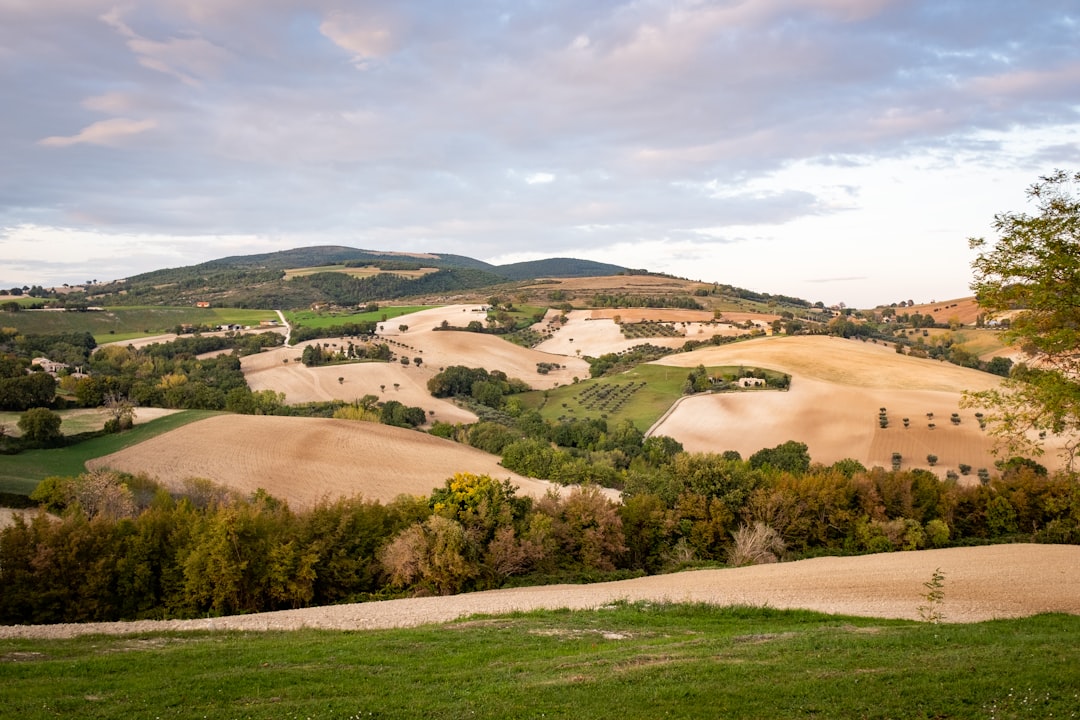
The Hill Towns: What the Comparison Misses
Urbino is the obvious opening argument. The ducal palace that Federico da Montefeltro commissioned in the late 15th century is one of the defining buildings of the Italian Renaissance — the Palazzo Ducale contains some of the most important works of the period in a museum that, compared to the Uffizi, feels almost spaciously uncrowded. The town itself is a university city, which means it has the particular rhythm of a place that is primarily inhabited by young people with reasons other than tourism to be there: noisy in the evening around the central piazzas, quieter and more functional in the daytime, with a quality of life in the cafes and bookshops and streets that belongs to actual urban existence rather than to a managed historic experience.
Beyond Urbino, the catalogue of Marchigian hill towns is long enough to constitute a significant travel programme in itself. Ascoli Piceno, in the south of the region, has a medieval and Renaissance centre built largely in travertine — a light-coloured local stone that gives the piazza the quality of an outdoor room, particularly in the early evening light. The piazza here is considered one of the most beautiful in Italy and is used as such — as a space for daily life — rather than cordoned off for photography.
San Leo, perched on a near-vertical plateau above the Marecchia valley, was one of the most strategically important sites in central Italy for centuries and its fortress — rebuilt in the late 15th century on the commission of Federico da Montefeltro’s engineers — is a masterclass in Renaissance military architecture. The views from the walls take in a landscape that extends across several regions. The village at the base of the rock, and the path up to the fortress, are navigable without the waiting times and ticket booking requirements that comparable sites in Tuscany have accumulated.
The Sibillini Mountains: Walking at Altitude
The Monti Sibillini national park occupies the section of the Apennines along the Marche-Umbria border and constitutes one of the finest mountain landscapes in central Italy. The highest peaks reach 2,476 metres at Monte Vettore, and the range contains a variety of terrain — from the Piano Grande, a high flat plain that floods with wildflowers in late spring, to the steep limestone ridges along the main watershed — that supports genuinely diverse hiking.
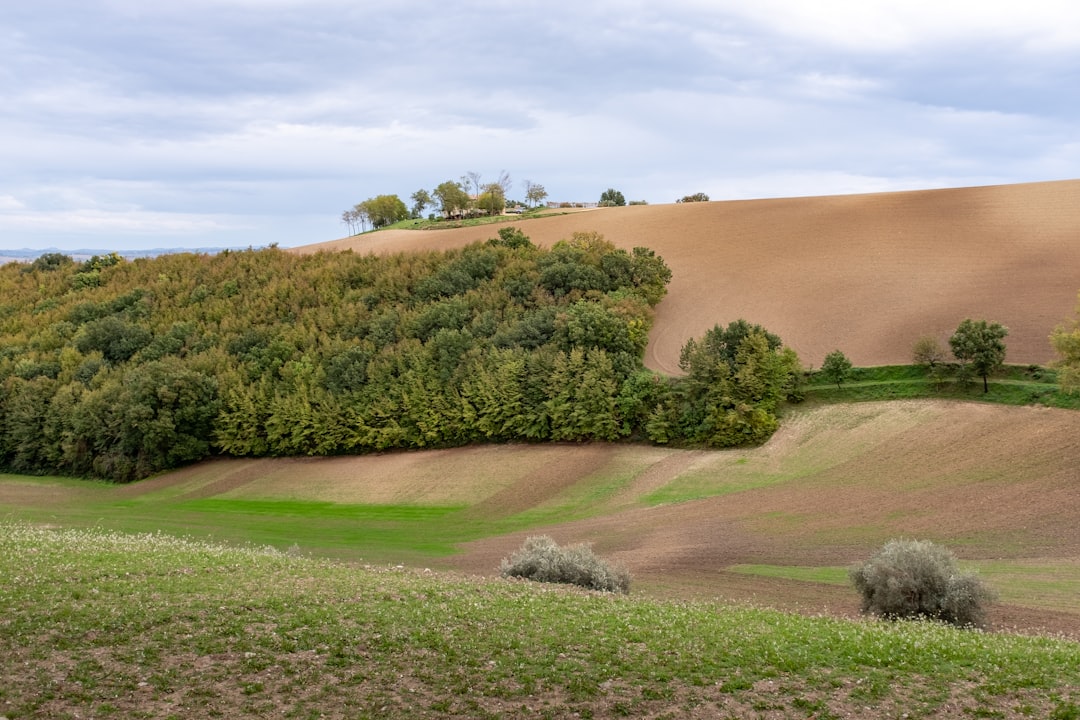
The Piano Grande of Castelluccio di Norcia — technically in Umbria but accessible from the Sibillini side and inseparable from the park experience — becomes famous for a few weeks in June when the wildflower bloom turns the plain into one of the most photographed landscapes in central Italy. Outside of those peak weeks, the Piano Grande is a place of extraordinary quietude — a flat, wind-exposed expanse at 1,400 metres, ringed by peaks, where the only sound is wind and occasional birds. The village of Castelluccio above the plain was severely damaged in the 2016 earthquake and is still in the process of reconstruction — an ongoing reminder that these mountains are living landscape rather than static heritage.
The walking infrastructure in the Sibillini is well developed by Italian mountain standards: marked trails, rifugi at altitude, maps available at the park visitor centres, and a network of easier valley routes that provide access to spectacular scenery without requiring technical preparation. The best months for high-altitude walking are June through September, with the flower season in late May and June representing the absolute peak for landscape photography.
The Adriatic Coast: A Different Marche
The Adriatic coast of Marche functions on a completely different register from the hill country. This is beach Italy — organised, social, built around the ritualised Italian seaside culture of the stabilimento balneare: the beach establishment with its rows of umbrellas and sunbeds, its bar, its changing rooms, its social geometry that distributes families, friend groups, and elderly regulars across the sand in patterns that repeat each summer with the consistency of tradition.
The coast here is not spectacularly dramatic in the manner of the Amalfi or the Cilento. What it offers instead is a functioning resort culture at human scale — towns like Pesaro, Senigallia, and Porto Recanati that have beaches used primarily by Italians and a summer social life calibrated to Italian preferences rather than international tourism. The water quality on this stretch of the Adriatic has improved consistently over the past two decades and is now rated among the best in the sea. The food in the coastal towns reflects a separate tradition from the inland — brodetto marchigiano, the local fish stew, varies in detail from town to town and each version is defended with the mild competitive pride that Italians bring to regional food disputes.
Porto Recanati and the Coast of the Poets
Recanati — the hill town above the coast from which the Romantic poet Giacomo Leopardi came and which figures in some of the most celebrated poems in the Italian language — sits above the Adriatic with a view that on clear days extends to the mountains inland and the sea below. The Leopardi family house, now a museum, preserves the library in which the poet spent much of his short life and the room from which he observed the broom-covered hill that inspired one of his most famous works. It is a literary pilgrimage site of genuine importance, visited at a scale that allows actual engagement rather than herding.
The Food: Vincisgrassi and Beyond
Marche’s most distinctive pasta is vincisgrassi — a baked pasta similar in concept to lasagne but richer and more complex in its layering, incorporating chicken livers and truffles in the traditional version, and taking its name from an Austrian general who allegedly inspired its creation during the Napoleonic campaigns in the region. Whether the etymology is accurate or not, the dish is genuinely distinctive — heavier than Emilian lasagne, with a flavour depth that the offal component provides without being explicitly identifiable in the finished product.
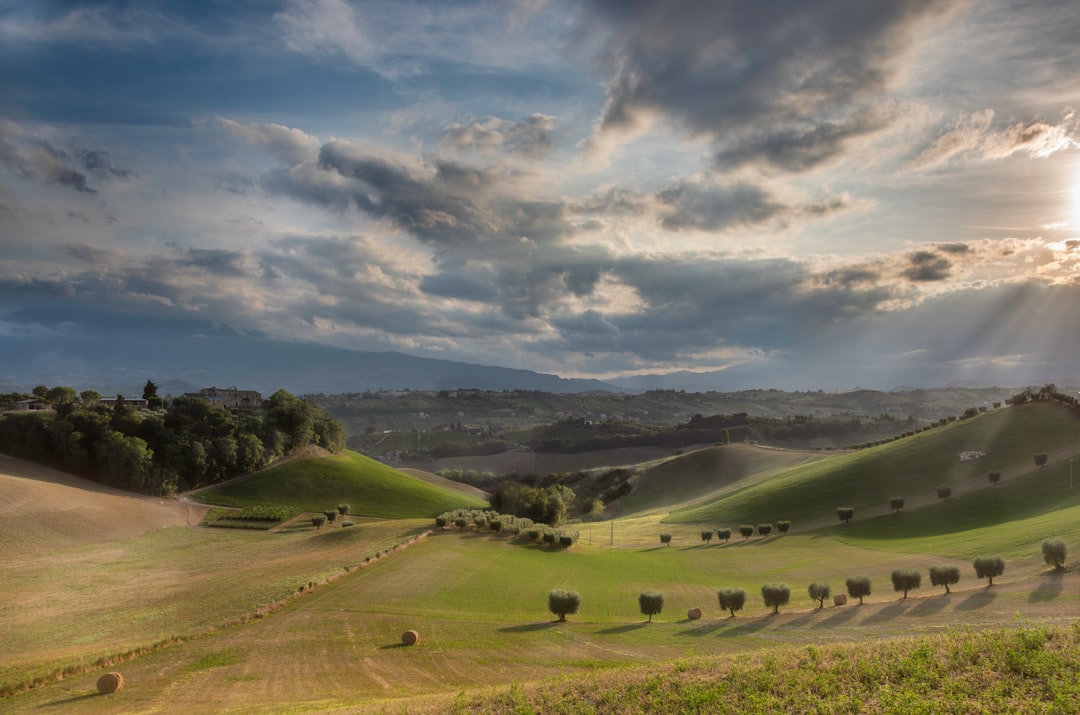
Olives appear in a form unique to Marche: the olive ascolana — the large, mild olive variety from the Ascoli Piceno area, stuffed with a seasoned meat mixture and fried — is consumed as street food, table food, and aperitivo accompaniment throughout the region. The quality of the olive matters: the genuine variety from the Ascoli area has a particular meatiness and mild flavour that makes the stuffed and fried version work in ways that other olives do not replicate.
The regional wine is Verdicchio — specifically the Verdicchio dei Castelli di Jesi and the Verdicchio di Matelica, two distinct production zones making white wine from the same grape in different soil and climate conditions. Verdicchio at its best is among the most food-friendly white wines in Italy: mineral, with moderate acidity, a characteristic bitter almond finish, and the structural backbone to accompany the full range of the regional food from fish on the coast to braised meats inland. It has been chronically underpriced relative to its quality and is one of the better bargains in Italian wine.
Expect to spend €15-28 per person for a full meal at a mid-range establishment inland. Coastal restaurants during peak summer command higher prices for seafood, but the quality of the catch usually justifies them.
Getting There and Around
Marche has two regional airports — at Ancona-Falconara and Pesaro — with a limited range of connections. The more practical approach from most European cities is to fly into Rome or Bologna and continue by train along the Adriatic line, which runs the length of the coast with high frequency and good connections. The A14 motorway parallels the coast and provides fast access to the region from the north and south.
Within the region, a car is necessary for exploring the hill towns and mountain areas, but the coastal towns and Ancona are well served by rail and local bus. The distances are manageable — crossing Marche from coast to the Sibillini takes under two hours in most conditions. The road quality in the hill country is generally good, with the mountain approaches occasionally requiring care in winter conditions.
The Right Comparison
The comparison to Tuscany is useful as an entry point — it establishes roughly what kind of landscape and experience Marche offers — but it becomes a limitation if held too tightly. Marche has its own specific qualities: the combination of Adriatic coast and Apennine mountains in close proximity that Tuscany does not have; the particular quality of hill town culture in a region that has not been heavily managed for tourism; the food and wine tradition that is recognisably central Italian but inflected with local particularity; and, above all, the sense of moving through a place that has not been extensively pre-digested for visiting. The travellers who find Marche tend to return to it. The ones who stay with the Tuscany comparison tend to miss most of what makes the region worth the journey.