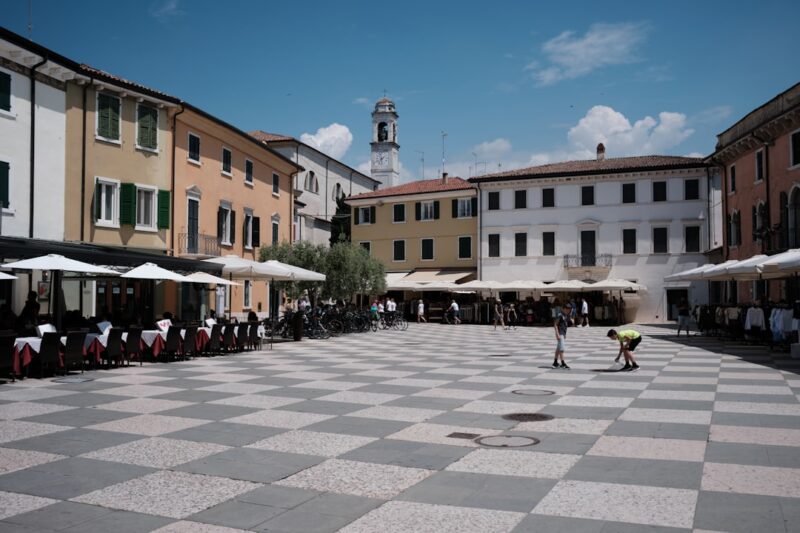
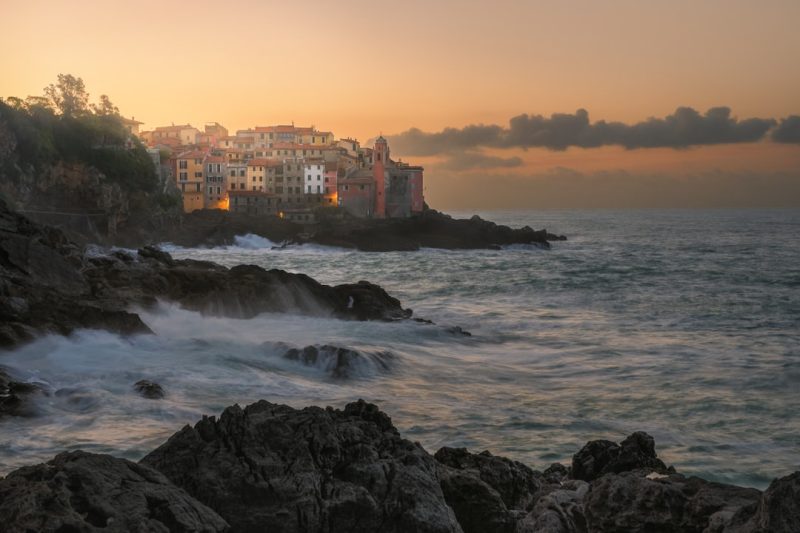
The Italian road trip is not the American road trip — it is not about the highway, about distance covered, about the road as the destination. Italy’s road trip is about the secondary roads, the strade provinciali and the strade statali that connect the small towns and pass through the agricultural landscapes and climb the mountain passes: about what you find when you leave the autostrada and accept the slower pace of the routes that serve local communities rather than long-distance logistics. The country’s scale — the peninsula is approximately 1,200 kilometres from the Alps to Sicily’s southern tip — and the extraordinary density of things worth stopping for mean that the Italian road trip rewards restraint over ambition: covering less ground more slowly, stopping more often, lingering when the landscape or the town or the discovery at the roadside demands it.
The practical arguments for driving in Italy, as opposed to taking the train, are strongest in three situations: when the destination is rural (an agriturismo, a vineyard, a hilltown with no rail connection), when the itinerary requires connecting places that the train network does not link efficiently, and when the journey itself — the mountain pass, the coastal road, the agricultural valley at harvest time — is part of the experience rather than just the means of reaching the destination. The autostrada is the fastest road between Italian cities, but it is also the least interesting: an efficient but characterless infrastructure that connects the cities while bypassing everything between them. The secondary roads are slower, more variable, and infinitely more revealing of the Italy that the visitor has come to find.

The Great Italian Road Trip Routes
The Strada del Vino of the Langhe — the wine route through the hills of Piedmont, connecting Alba with Barolo, Barbaresco, La Morra, Castiglione Falletto, and the smaller villages of the Cuneo province — is the most celebrated wine road trip in Italy and one of the finest in Europe. The landscape of the Langhe in October, when the vines are turning gold and red against the pale ochre of the harvested soil, with the distant Alps visible on clear days and the Ligurian Apennines closing the southern horizon, is extraordinary: a human agricultural landscape shaped over centuries into a composition that is as deliberate and beautiful as any designed landscape in Italy. The route can be driven in two hours; it should be driven in two days, with stops at the wineries (many offer tastings without appointment), the truffle markets of Alba in October and November, and the villages where the local restaurants serve the Piemontese dishes that give the wines their best context.
The Amalfi Coast Drive (the SS163, the Amalfitana) is the most famous coastal drive in Italy and one of the most spectacular road experiences in Europe — a narrow, vertiginous road that clings to the cliff face between Positano and Vietri sul Mare, with the Tyrrhenian Sea visible below and the limestone mountains rising above, passing through whitewashed villages that are accessible only from this road. The drive is genuinely dramatic, and in the right conditions — early morning in May before the tourist traffic builds, or in the low season when the road is not blocked by the buses that dominate it in summer — it is unforgettable. In July and August, the Amalfitana is gridlocked for hours each day; the practical solution for those visiting in high season is to use the ferry services between the coastal towns and reserve the car for the sections of the road not served by water.
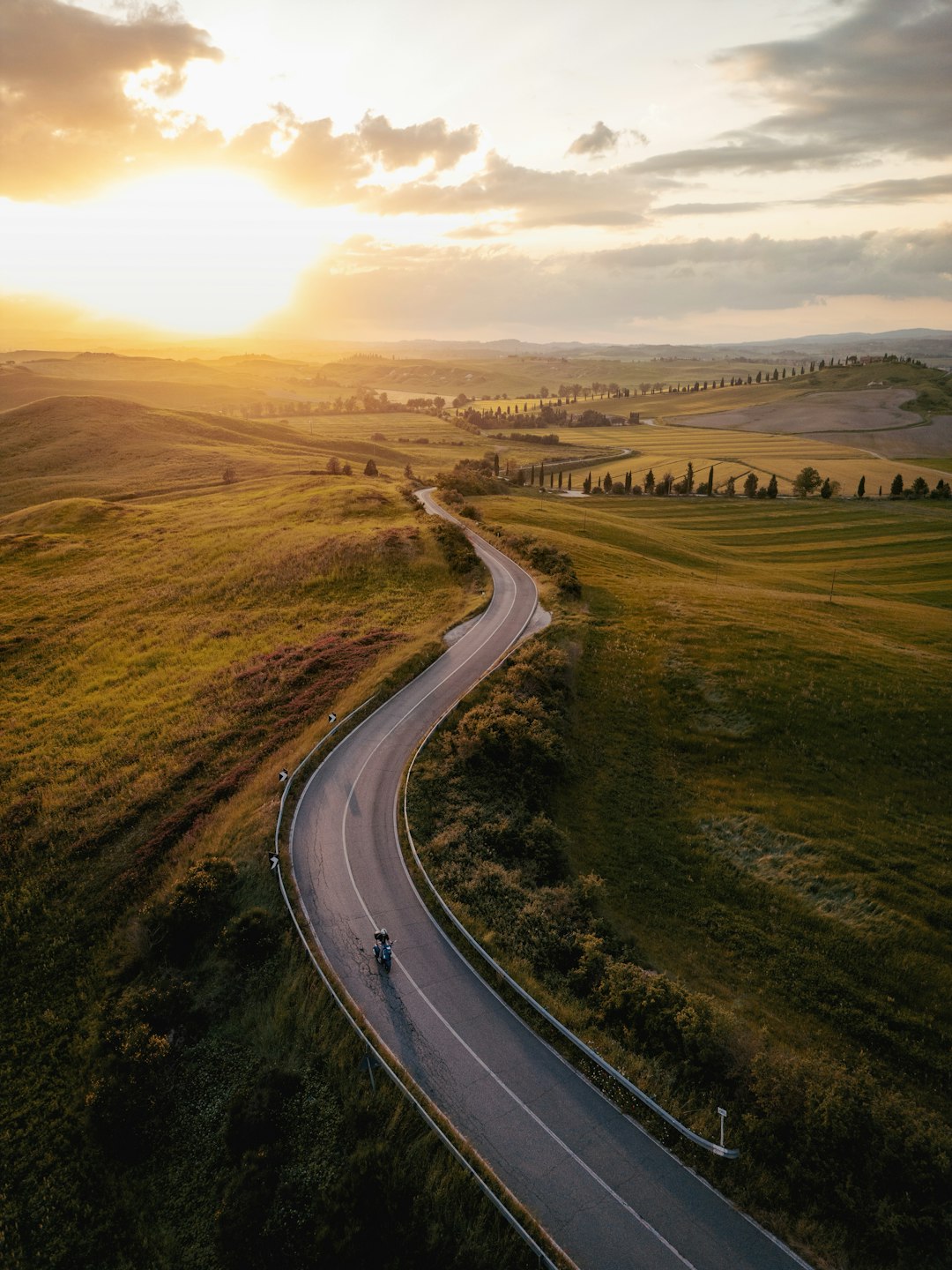
The Val d’Orcia in Tuscany — the valley south of Siena between Montalcino and Pienza — is the landscape that the majority of Tuscan photographs represent: the isolated farmhouse on the crest of the cultivated hill, the avenue of cypress trees leading to an unseen destination, the rolling terrain of clay and grain and vine in the specific colours of the Sienese landscape. Driving through the Val d’Orcia on the secondary roads between Pienza, Montalcino, and Castiglione d’Orcia — small towns perched on the ridges above the valley — is a landscape experience of a very particular quality, one that is simultaneously ancient (the geological forms of the landscape date to the Pliocene) and cultivated (the farmhouses and the arrangement of the fields are the result of centuries of deliberate land management).
The Mountain Passes
The Italian Alpine passes — the Stelvio, the Bernina, the Gavia, the Mortirolo — are the most extreme version of the Italian road trip: roads that climb to altitudes above 2,700 metres, with switchback bends that require confidence and a vehicle with good brakes, through landscapes of bare rock and snowfield and the summer flowers of the alpine meadows. The Stelvio Pass (Passo dello Stelvio), at 2,758 metres the second-highest paved road in the Alps, is the most celebrated of these: its 48 hairpin bends on the Bormio side, climbing from the valley floor to the pass in a sequence of increasingly dramatic switchbacks, constitute one of the great road experiences in Europe. The pass is open from late May to early November, depending on snowfall; driving it in June, when the snow is still visible at the top and the valleys below are green with the first flush of spring, is among the most spectacular versions of the experience.
The Dolomite roads — the Great Dolomites Road (Grande Strada delle Dolomiti) between Cortina d’Ampezzo and Bolzano, and the Sella Ronda circuit that connects the Gardena, Badia, Fassa, and Livinallongo valleys — pass through landscape that has no equivalent in the rest of Italy: the vertical limestone towers and walls of the Dolomites, the most dramatic mountain scenery in the Alps, rising above forest and alpine meadow in a geology that is entirely different from the granitic and metamorphic Alps to the west. The Sellaronda circuit, which takes the driver over four of the passes that enclose the Sella massif, can be driven in an afternoon but deserves more time: the stopping points — at Arabba, at Canazei, at Corvara, at Ortisei — are well-supplied with places to eat and stay, and the landscape warrants lingering.
Driving in Italy: The Practical Reality
Italian driving has a reputation — not entirely undeserved — for improvisation, speed, and a creative relationship with traffic regulations. The autostrade are disciplined and orderly; the city centres are the opposite. Rome’s traffic, in particular, operates on a logic that appears impenetrable to visitors: the roundabout conventions, the bus lane ambiguities, the motorcycle behaviour at traffic lights, and the parking arrangements (which include double-parking as a practical reality rather than an illegal exception) require either local knowledge or considerable nerve. Driving in Rome is strongly inadvisable for visitors who are not confident in urban driving; the public transport system is extensive enough to render the car unnecessary for city movement.
The ZTL (Zona a Traffico Limitato) is the traffic restriction zone that exists in the historic centres of most Italian cities — the area where private vehicle access is restricted to residents and authorised vehicles, enforced by cameras that photograph entry points and generate fines that arrive at the rental car company and are charged back to the renter. The ZTL zones are clearly marked (a white circle with a red border and the acronym ZTL), but the marking is sometimes subtle and the first-time visitor can drive through one without realising it until the fine arrives. Before driving to any Italian city centre, check the ZTL boundaries and understand where parking is permitted; the hotel can typically advise, and many hotels have arrangements with parking facilities near but outside the ZTL.
The fuel supply in rural Italy is less dense than in northern Europe: long stretches of secondary road in the south, in Sardinia, and in the mountain interior can be without service stations for extended distances. The practical response is to fill the tank whenever the gauge is below half in rural areas, without waiting until it is low. Many Italian service stations on the secondary roads close at lunchtime (twelve to three-thirty) and on Sunday afternoon — a fact that, in combination with a low fuel gauge, can create genuine inconvenience. Automatic pay-at-pump facilities (cassa automatica) are increasingly common and operate outside staffed hours.

Planning the Italian Road Trip
The most productive Italian road trips are planned around a theme or a geography rather than a destination list. The Slow Food Road Trip through Piedmont and Emilia-Romagna — visiting the producers of the Presidia products (the heritage foods that Slow Food protects), the norcini of the Piacenza hills, the Parmesan producers of the Parma plain, the Culatello di Zibello producers along the Po — gives purpose and narrative to the route in a way that a list of towns to visit does not. The Wine Road Trip through Franciacorta, Valpolicella, and Soave — tasting the wines of the Brescia, Verona, and Vicenza provinces in the producers’ cellars and asking the questions that the wine shop cannot answer — is a similar thematic approach that gives the driving purpose beyond the landscape.
The most revealing Italian road trips are also often the most modest in scale: not Milan to Palermo in a week, but a single region over five days — the Abruzzo, for instance, where the road from L’Aquila to the coast via the Gran Sasso passes through landscapes of extraordinary variety (the moonscape of the Campo Imperatore plateau, the medieval towns of the mountain valley, the trabocchi coast of fishing platforms extending into the Adriatic), all within two hours of driving and a world away from the Italy that most visitors encounter. The Italy that rewards the road trip most fully is the Italy that the train does not reach and the itinerary planning website does not feature: the secondary roads, the unremarkable hill towns, the farms and villages and rest stops and temporary markets that constitute the daily texture of the country between its celebrated monuments.