The Farmhouse Converted
The farmhouses of the Emilian Apennines were not built for comfort in any contemporary sense. They were built for function: the stalla on the ground floor for the cattle whose body heat helped warm the living space above, the fienile for the stored hay, the cantina for the wine and the preserved meats, the kitchen as the central room of the inhabited floor, its fireplace large enough to accommodate the cooking of family-scale quantities in the era before the domestic stove. The proportions are those of agricultural necessity rather than domestic aspiration, and the buildings that survive — on the slopes above the Reno and the Panaro and the Secchia valleys, often at elevations that give them views across the valley to the opposite ridge — have a functional dignity that the more explicitly designed rural architecture of Tuscany sometimes overshadows but never surpasses.
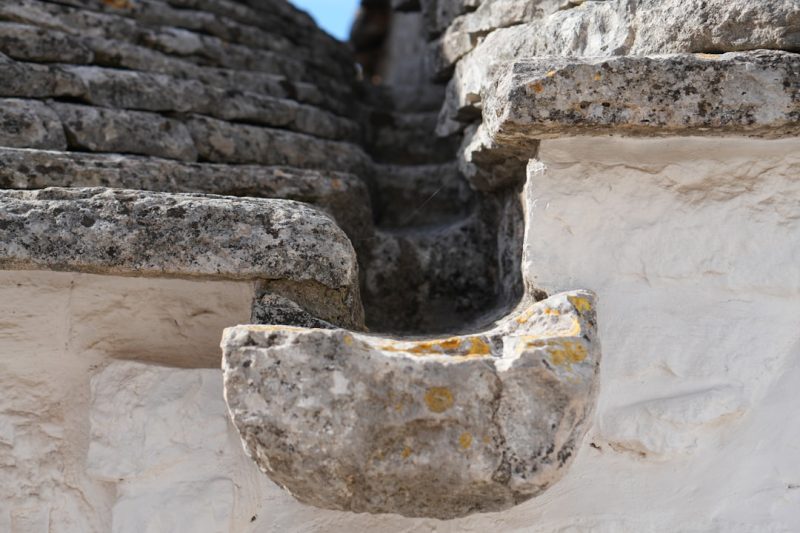
The conversion of these buildings to hospitality use — the agriturismo that is now the primary economic function of several hundred farmhouse properties in the Emilian Apennines — has been, in the best cases, a genuine act of architectural conservation as well as a business decision. The farms that have converted with intelligence have retained the spatial logic of the original building: the high-ceilinged cantina that now serves as the dining room, its stone walls unchanged and its cross-vaulted ceiling still bearing the impression of the wooden centering that supported it during construction, is a dining room of a character that no designed restaurant can replicate. The guest room that occupies the former fienile, its roof beams preserved and its floor at the original granary level, has a spatial quality that the hotel architect would be hard pressed to achieve.
The Apennine Landscape

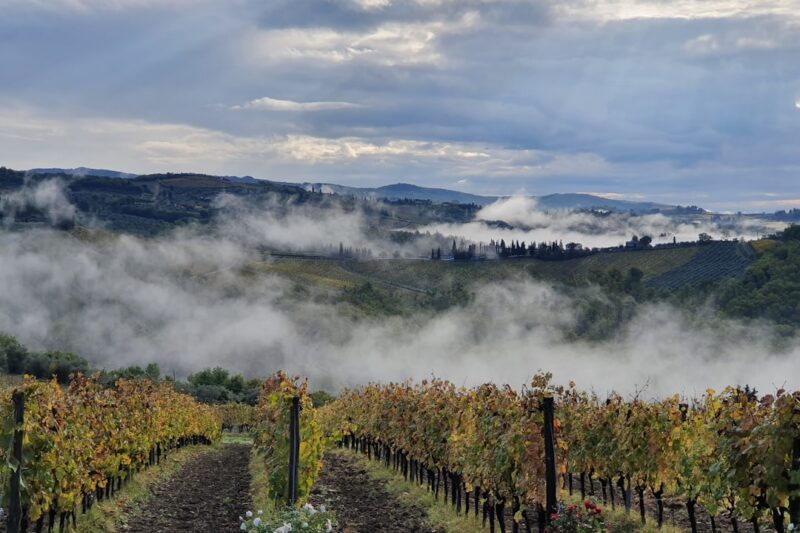
The Emilian Apennines are the section of the Apennine chain that separates the Po Valley from the Ligurian and Tuscan coasts, rising to just over two thousand metres at their highest points and forming a watershed between the Mediterranean drainage to the south and the Adriatic drainage to the north. They are not alpine in character — there is no granite, no permanent snow, no dramatic verticality — but they are genuinely mountainous in the sense that the terrain is complex, the forests extensive, and the agricultural landscape that occupies the lower slopes has been shaped by the specific constraints of mountain cultivation in ways that distinguish it clearly from the plain below.
The chestnut forests that cover the middle slopes of the Emilian Apennines — between approximately 400 and 900 metres elevation — were the traditional economic foundation of the mountain communities, providing food, timber, and fodder in proportions that made the mountain farm viable before the cash economy made the plain more attractive. The chestnut harvest in October is still an event in the calendar of the Apennine farmhouse communities that have maintained it, and the better agriturismos in the area incorporate it into their seasonal offering: the castagnata — the communal chestnut roasting that is the central event of the October mountain festival — is simultaneously a cultural tradition and a very good time.
The Porcini and the Season
The porcino mushroom of the Emilian Apennines is among the finest in Italy, and the season that produces it — August after rain, September, occasionally into October — is the season in which the agriturismos of the area are most animated. The relationship between the farmhouse kitchen and the woodland that surrounds it is at its most explicit in mushroom season: the breakfast conversation is about where to walk, the dinner menu is about what was found, and the knowledge of the local woods that the farmhouse families carry is the knowledge that makes the difference between a bag of porcini and an empty bag.
The mushroom walk offered by several of the better Apennine agriturismos is not a guided nature experience in the wildlife-tourism sense; it is a practical introduction to the woodland foraging that the farmhouse families have conducted for generations, carried out by people who know the woods in the particular sense of knowing which slopes produce which species in which conditions. The educational value is real, and the subsequent dinner, which incorporates the morning’s harvest, is a demonstration of the principle that the quality of knowledge is inseparable from the quality of what the knowledge produces.
The Wine of the Apennine Slope
The wines produced on the lower slopes of the Emilian Apennines — the Colli Bolognesi, the Colli di Parma, the Colli Piacentini — are the wines that the hill towns drink rather than the wines that the international market knows, which amounts to saying that they are frequently better than their reputation and almost always better value. The Barbera that dominates the Colli Piacentini — the same grape variety that reaches its greatest expression in the Piedmontese Asti and Alba denominations — produces here a wine of higher acidity and lower colour than its Piedmontese counterpart, with a freshness that makes it specifically appropriate to the fat-rich cooking of the Emilian kitchen.
The Ortrugo — the white variety specific to the Colli Piacentini — is an almost entirely local phenomenon: grown on the Apennine foothills west of Piacenza, produced in both still and sparkling versions, and consumed primarily within the province it comes from. It is exactly the kind of wine that the regional train and the farmhouse agriturismo give access to: genuinely local, made in quantities that do not justify export, available at the farmhouse table for the price of an honest carafe. The broader wine tradition of the Emilian plain below — where Lambrusco defines the lowland table in ways that the hills define the mountain one — is a counterpoint that the two landscapes have maintained for centuries without resolution.
The New Agriturismo Standard

The farmhouse agriturismos that are establishing the new standard in the Emilian Apennines share several characteristics that distinguish them from both the conventional hotel and the conventional agriturismo. They are small: five to twelve guest rooms, operated by the family that owns the farm, without the division between hospitality function and agricultural function that larger properties inevitably develop. They are honest about what they are: a farm that receives guests, not a hotel that performs a farm. And they have a specificity of place — a rootedness in the particular landscape and community in which they sit — that no designed hospitality experience can manufacture.
The guest who chooses one of these properties over a hotel in the valley is choosing an experience that requires some adjustment: the dinner is served at the family’s preferred time rather than at the guest’s, the menu reflects what the farm has produced rather than what the market can supply, and the presence of the farm in its working state — the cattle in the morning, the tractor in the afternoon, the smell of the stable that no amount of renovation can entirely eliminate — is part of the package rather than a departure from it. For the guest who makes this adjustment, the rewards are of a kind that the hotel cannot provide. The same distinction between genuine agriculture and performed agriculture is being negotiated in a different landscape among the organic farmhouse agriturismos of the Umbrian hills, where the argument plays out in a terrain that has different pressures but the same fundamental question.