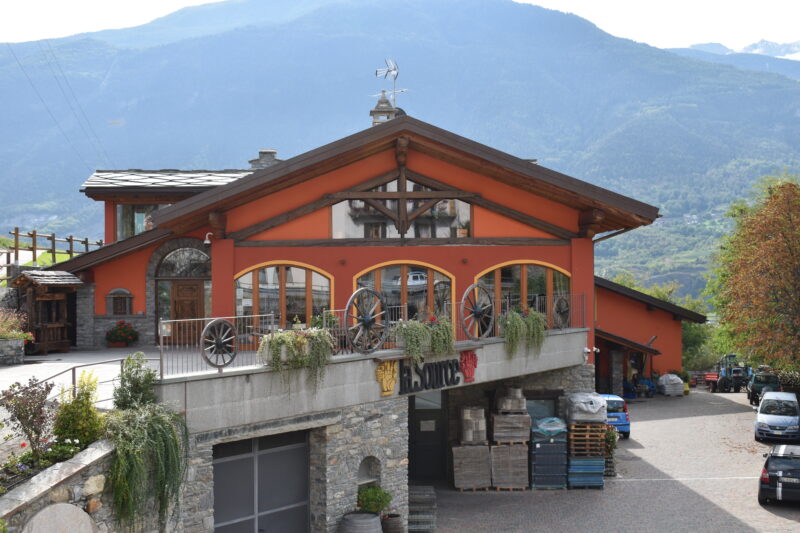
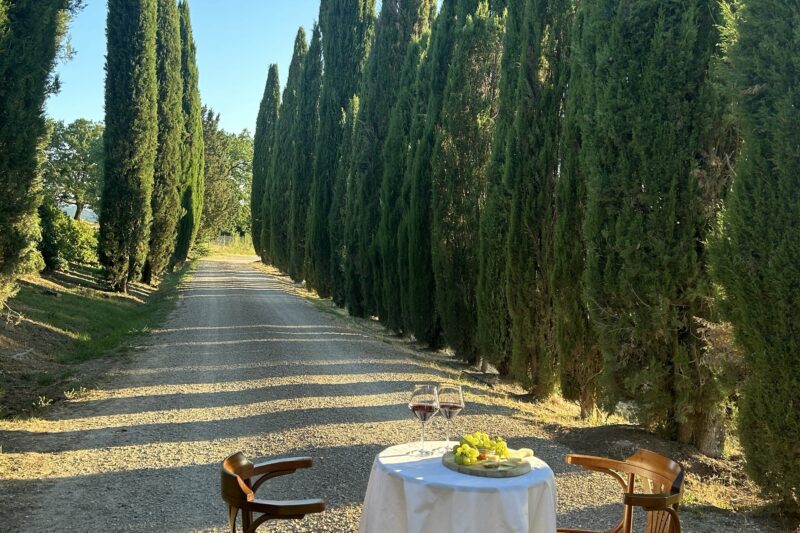
There is a specific quality to waking up on a working Chianti estate in early October. The harvest is underway or just finished, and the smell of fermenting grape must drifts from the winery across the courtyard. The vineyards are the colour of copper and dark red, the olive trees grey-green, the Sangiovese grapes on the vines that have not yet been picked dense and dark blue. You have, almost certainly, drunk wine made from these vines the previous evening at dinner. The continuity — vine, cellar, bottle, glass, winery courtyard where you are now standing with your coffee — is complete and unbroken in a way that any urban wine experience cannot replicate. (See also: Barolo)
The wine estate as accommodation typology is established and varied in Chianti Classico, the zone between Florence and Siena that produces the DOCG wine bearing that name. Estates range from small family holdings of ten hectares to large commercial operations of several hundred. The accommodation ranges correspondingly: a converted farmworker’s house with a shared pool on a medium-sized estate, or a fully renovated fifteenth-century Villa with independent apartments on a historic property.

What the Estate Stay Offers
The practical advantages of estate accommodation are specific. Access to the cellar for tastings — not the tourist tasting room, but the working cellar, with barrels and tanks and the person who actually made the wine available to explain the vintage decisions — is standard at most estates that offer accommodation. The quality of the conversation over dinner is different when you are drinking a wine made on the property with the winemaker at the table, or even just with the agricultural knowledge of years of observation of that specific plot visible in the landscape outside.
Harvest participation, where estates offer it, is the experience that changes the most comprehensively. Working in the vineyard for even a half-day — picking, sorting, understanding the physical labour behind a bottle — reconfigures the relationship between the wine and the person drinking it in ways that no amount of reading or tasting achieves. The estates that offer this tend to be the ones with the most coherent identity: the agricultural activity and the hospitality are integrated rather than separate operations.

The Chianti Classico Zone
The Chianti Classico zone is defined by the DOCG designation as the area between Florence and Siena, roughly bounded by the SS2 (Via Cassia) to the west and the SS408 to the east. The landscape within this zone is not homogeneous: the northern section, around Greve in Chianti and Panzano, is hillier and cooler; the central zone around Radda, Gaiole, and Castelnuovo Berardenga has the classic Chianti character of mixed woodland, vineyard, and olive grove on clay-limestone soils. The southern zone, approaching Siena, is warmer and often gives riper, more immediately approachable wines.
Estate accommodation is concentrated in this zone but extends into the broader Chianti DOC zone (more land, more variable quality) and into neighbouring Montalcino and Montepulciano, where Brunello and Vino Nobile estates also offer accommodation. Brunello estates, in the more expensive part of the Italian wine market, tend to have correspondingly premium accommodation offerings. The comparison with Chianti Classico estate stays — similar landscape, different wine, often significantly higher prices — is worth making when planning.
For the harvest season specifically (late September through October), booking estate accommodation requires planning several months ahead. The combination of harvest activity, good weather, and the peak autumn colour of the vineyards makes this the most sought-after period, and the best properties fill accordingly.