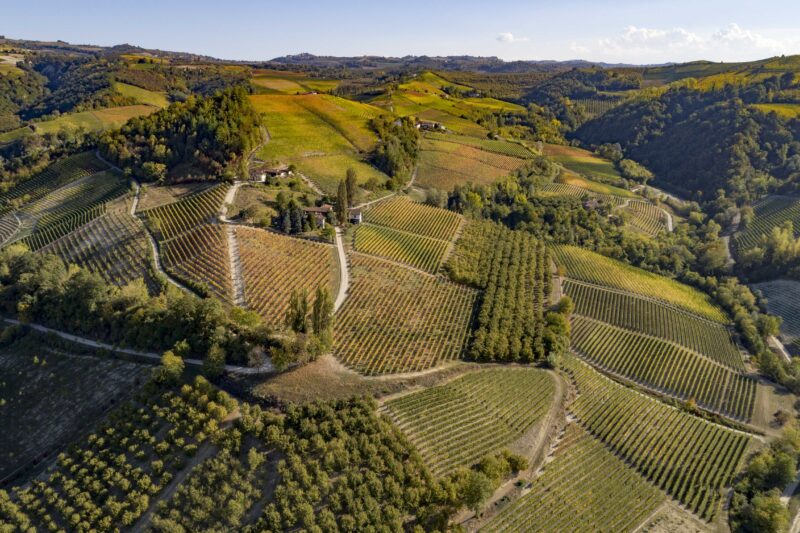
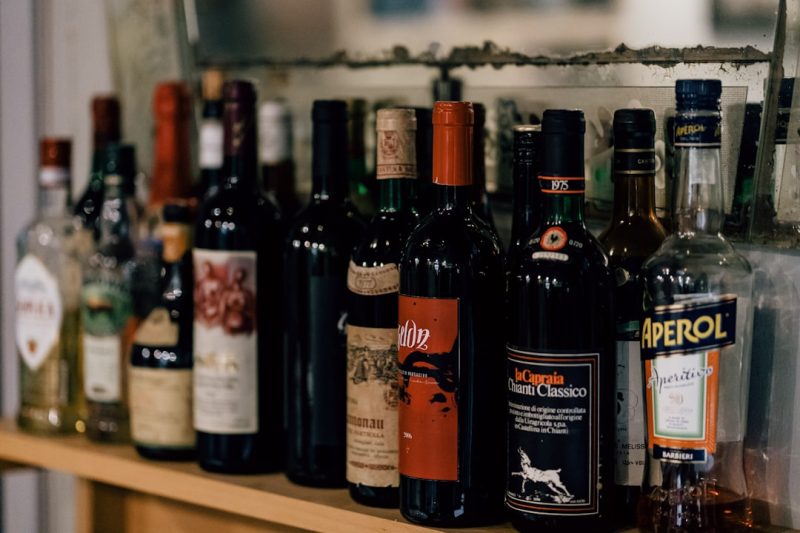
Barolo is made from one grape variety — Nebbiolo — grown in a specific zone of the Piedmontese Langhe hills in an area of approximately 1,800 hectares. Nebbiolo is one of the most demanding varieties in Italian viticulture: it ripens late (the name derives from the nebbia, the autumn fog that settles in the Langhe valleys as the grapes reach maturity), it is sensitive to site and exposition, it produces wines of high tannin and high acidity that require years of ageing to develop the complexity that makes Barolo one of the reference red wines of the world. The grape produces outstanding wine in perhaps three to four zones in Italy — Barolo and Barbaresco in Piedmont, Valtellina in Lombardy, Ghemme and Gattinara in northern Piedmont — and mediocre wine almost everywhere else it is planted.
The “King of Italian Wines” designation that Barolo carries is a 19th-century formulation that has survived into the contemporary discussion partly because it is approximately accurate and partly because it captures something real about the wine’s structure and longevity. Barolo in its best vintages and from its best producers is capable of ageing for decades, developing a complexity — the specific aromatics of tar, roses, dried violets, iron, tobacco, and dried fruits that the Nebbiolo grape develops in the Langhe’s particular combination of soil types and climate — that few other wines achieve. It is also, in its youth, frequently difficult: the tannins of young Barolo are among the most aggressive in Italian winemaking, and a bottle opened too young from a difficult vintage is a poor advertisement for the wine’s potential.

The Terroir: Communes and Soils
The Barolo DOCG zone covers eleven communes in the Langhe hills south of Alba: Barolo, Castiglione Falletto, Serralunga d’Alba, La Morra, Verduno, Novello, Diano d’Alba, Cherasco, Roddi, Grinzane Cavour, and Sinio. Not all communes are considered equal in quality or character, and the debate about the relative quality of the different parts of the zone has been continuous since the 1970s.
The soil distinction that most Barolo discussions begin with is the difference between the Helvetian soils (Tortonian, an older, more compact, and less fertile clay-limestone) of the eastern communes (Serralunga d’Alba, Castiglione Falletto) and the Helvetian-Langhian soils (Elveziano, a younger, more permeable, more fertile blue-grey clay-marl) of the western communes (La Morra, Barolo). The conventional wisdom — substantially supported by tasting but less absolute than it is sometimes presented — is that the eastern communes produce more structured, tannic, longer-lived wines with a more austere aromatic profile, while the western communes produce more immediately approachable wines with more floral and red-fruit character.
The MGA system (Menzioni Geografiche Aggiuntive) introduced in 2010 codified the traditional vineyard names (Cru) of the Barolo zone, allowing producers to label wines with specific vineyard names rather than only the commune or the generic DOCG. The most celebrated Cru — Cannubi in Barolo, Brunate in La Morra, Francia and Vigna Rionda in Serralunga, Lazzarito in Serralunga, Bussia and Romirasco in Monforte — represent the apices of the Barolo quality pyramid and the wines from these sites in good vintages and from the best producers are among the most sought-after in Italian winemaking.
The Winemaking Debate: Traditional vs. Modernist
Barolo winemaking was the subject of the most significant stylistic controversy in Italian wine in the 1980s and 1990s — the “Barolo Wars” between the traditionalist producers (who favoured long maceration times, large old Slavonian oak barrels, extended ageing, and the production of wines that required decades to open up) and the modernist producers (who favoured shorter maceration, French oak barriques, earlier releasing, and wines designed for earlier enjoyment without sacrificing quality).
The controversy generated more heat than it deserved: both approaches, executed well, produce outstanding Barolo, and the best wines of each camp have aged beautifully. The more useful distinction now is between producers who understand their specific vineyards and make wine that expresses the character of the site (regardless of technique) and those who do not. The best traditional producers — those working in the methods of Giacomo Conterno, Bruno Giacosa, Bartolo Mascarello — produce wines of extraordinary complexity and longevity. The best modernist producers produce wines of similar quality with a different aesthetic. The wines from mediocre producers in either camp are forgettable.
The contemporary Barolo landscape includes some producers who have moved beyond the traditional-modernist binary, integrating specific techniques from both camps in response to what their vineyards require rather than adherence to a stylistic position. This pragmatic approach has produced some of the most interesting Barolo of the past decade.

Visiting the Barolo Zone
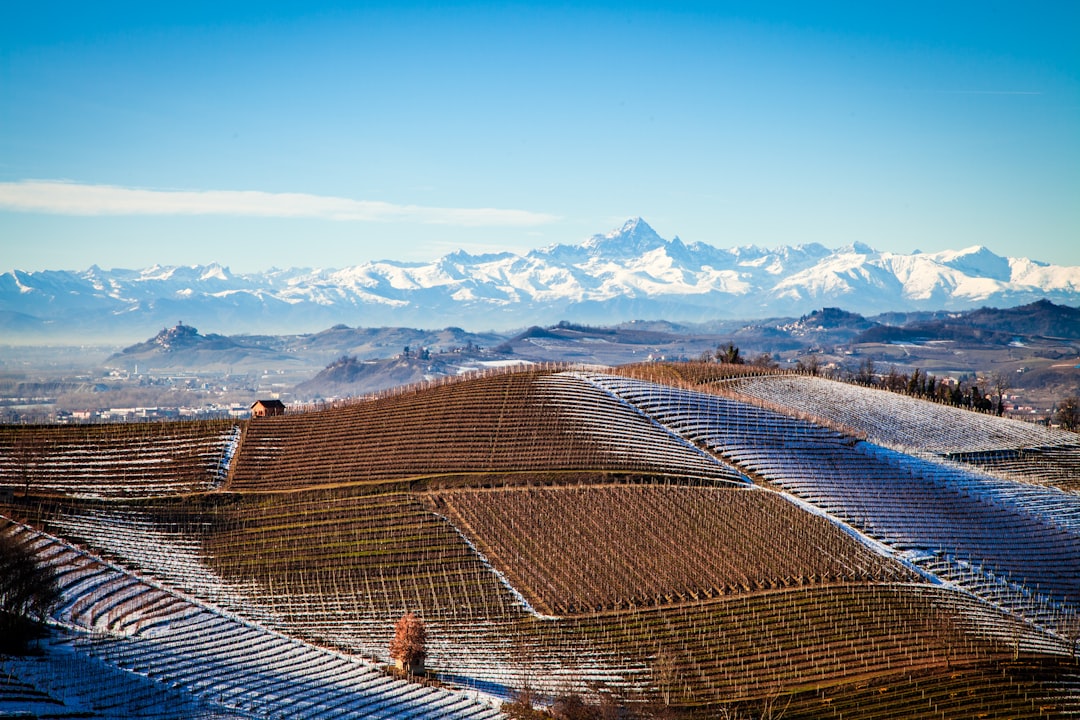
The Langhe hills, with Alba as the principal town and the Barolo communes distributed across a compact area of the hills south of it, are one of the most rewarding wine tourism destinations in Italy. The landscape itself — the vine-terraced hills, the medieval villages perched on the ridges, the October and November fog that rolls through the valleys and the tartufo season that brings the white truffle to Alba’s market — constitutes an experience that extends well beyond cellar visits.
The village of Barolo, giving its name to the entire denomination, has a 19th-century castle (the Castello Falletti, now housing the WiMu wine museum) and a concentration of wine-related shops and restaurants that make it a useful base for the zone. Castiglione Falletto, on its own hill above the valley, has a medieval castle and several producers who welcome visitors. Serralunga d’Alba, the village whose name on a Barolo label typically indicates a more structured wine, is worth the visit for the castle and the panoramic views over the zone.
The Enoteche (wine bars and shops) of the area — the Enoteca Regionale del Barolo in the Castello Falletti is the most comprehensive — provide a structured introduction to the zone’s wines without requiring appointments at individual cellars. Cellar visits at the major producers typically require advance appointment and have varying degrees of openness to individual visitors; smaller producers are generally more flexible.
The Truffle Connection
The October-November period that coincides with the harvest and the release of the previous vintages of Barolo is also the season of the Fiera del Tartufo in Alba — one of the most famous truffle fairs in Italy, running every weekend through October. The white truffle of the Langhe (Tuber magnatum pico) is the most prized and expensive truffle variety, with prices that fluctuate dramatically by year and quality, and the combination of the truffle fair and the Barolo harvest season makes the area in October one of the most culinarily concentrated destinations in Italy. Eating pasta with fresh white truffle and a glass of a good Barolo from a recent vintage in a restaurant in Alba is the specific synthesis of place and product that the Langhe offers in this season.
Reading a Barolo Label
The essential information on a Barolo label: the producer’s name, the vintage, the commune (which may or may not appear), the MGA/Cru name (if a single vineyard wine), and the DOCG designation. The DOCG regulations require a minimum of 38 months ageing (18 months of which must be in oak) for basic Barolo, and 62 months (18 in oak) for Barolo Riserva. The vintage is crucial: Barolo quality varies significantly by year, and the major reference vintages of the past two decades (2016, 2013, 2010, 2004, 2001 are frequently cited as exceptional) are worth seeking out.
Barolo is not a wine to drink young. The minimum recommended drinking age for most Barolo from major producers is 8-10 years from the vintage; the exceptional wines from great vintages benefit from 15-25 years. The investment in a good Barolo is an investment in time as well as money, and the wine that emerges from a decade of correct cellaring is consistently a different and better wine than the same bottle opened at release.
Barbaresco: The Queen to Barolo’s King
Barbaresco, produced from the same Nebbiolo grape in a smaller zone northeast of Alba, is the complement to Barolo and the producer of wines of comparable quality with a slightly different character: generally considered more immediately approachable than Barolo, with a greater proportion of wines that can be drunk with 8-12 years of ageing rather than requiring 15-20. The key communes of the Barbaresco DOCG zone are Barbaresco, Neive, and Treiso; the landmark Cru include Asili, Rabajà, and Santo Stefano in Barbaresco village, Serraboella and Gallina in Neive.
The dominant producer name in Barbaresco — and one of the most significant in Piedmont — is Angelo Gaja, whose influence on the quality perception of the denomination through decades of high-quality winemaking and international promotion is comparable to the role played by Giacomo Conterno in Barolo. Both zones reward the effort of seeking out the smaller producers whose wines are less internationally distributed but whose quality in good vintages is the equal of the famous names at a fraction of the price.