The Langhe is wine country. This is the primary fact about the area, and it is not a fact that can be circumvented or usefully deferred — the landscape is shaped by viticulture, the economy runs on it, the cultural identity of the place is expressed through it, and a significant portion of the visitors who come here come explicitly for wine. But “wine country” as a category has a tendency to flatten the experience of places that are much more than the sum of their tastings, and the Langhe is exactly such a place: richer, more complex, and more genuinely interesting than its reputation as the home of Barolo and Barbaresco prepares most visitors to expect.
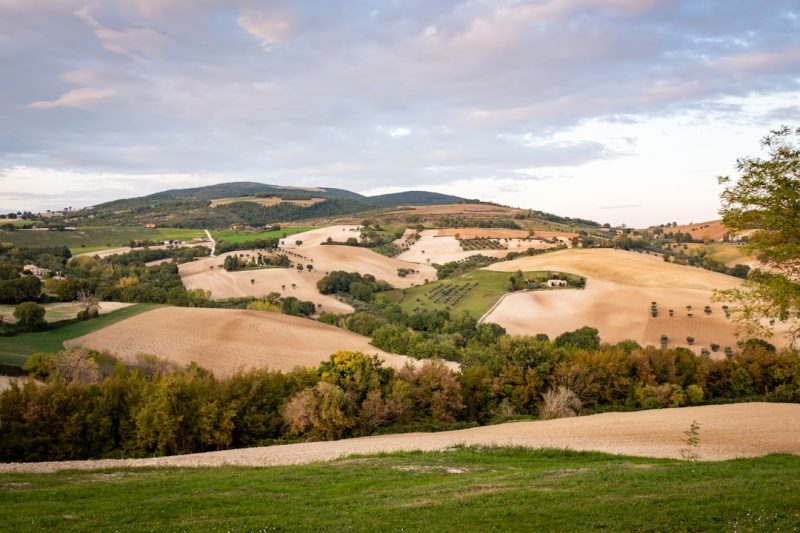
The hills of the Langhe — running south and west of Alba, in the Cuneo province of Piedmont — are among the most distinctive in Italy: the steep, rounded profiles of the Helvetian marine sediments that comprise them give the landscape a sculptural quality that changes character completely between seasons. In winter, stripped of leaves and often dusted with snow, the geometry of the vine rows on the hillsides is monumental. In spring, the new growth is an almost alarming green against the pale clay. In summer, the canopy thickens and the hills become lush. In autumn — harvest time, October, when the Nebbiolo is finally ready — the landscape turns amber and rust and the light takes on the low, golden quality that makes this particular period in this particular landscape one of the most aesthetically compelling in Italian travel.

Barolo and the Villages
Barolo takes its name from a small village in the heart of the production zone, and the wine — made entirely from Nebbiolo, aged for minimum periods in wood, capable of developing complexity over decades in the bottle — has a cultural status in Italy that goes beyond the wine trade. The production zone covers a limited set of communes, each of which contributes specific soil and microclimate characteristics to the wines produced within it. The distinctions between wine from a south-facing slope of Calcareous Helvetian soils and wine from a north-facing slope on Tortonian clay are real, measurable, and the source of ongoing passionate discussion among producers and enthusiasts.
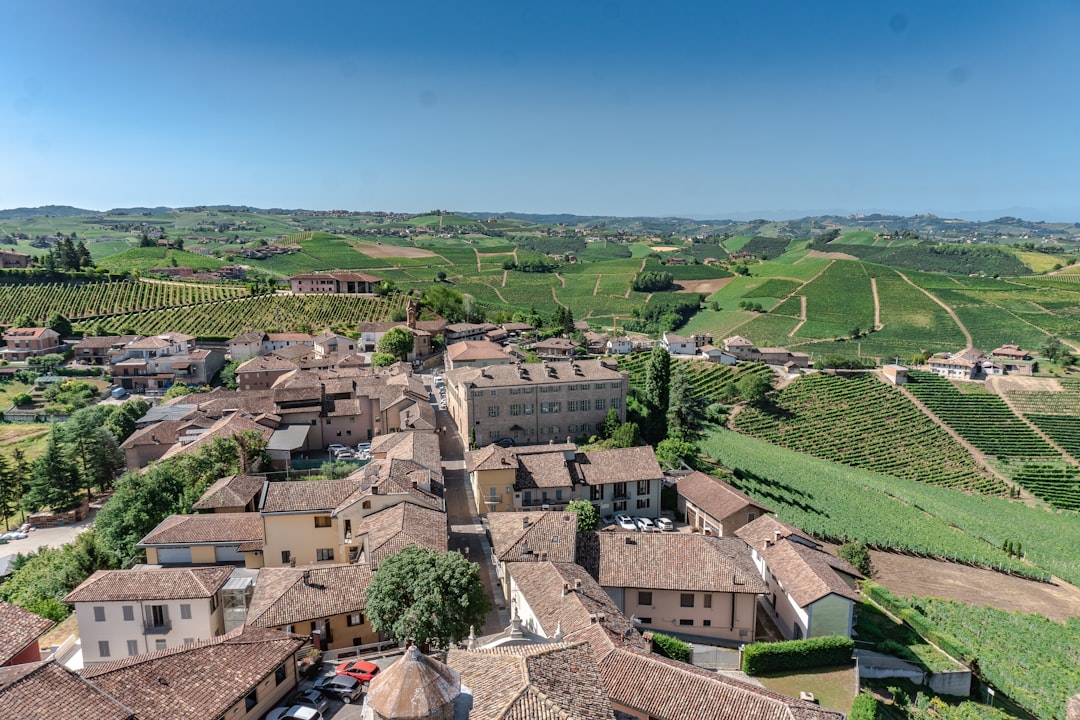
For the visitor, this geography translates into a circuit of small villages — Barolo, Castiglione Falletto, Serralunga d’Alba, La Morra, Monforte d’Alba, Verduno — each perched on its own hilltop, each offering wine tastings at producers ranging from very small family operations to more established names with visitor infrastructure. The villages are pretty in the specific way of Piedmontese hill country: solidly built, not showy, with towers and churches that reflect wealth of a kind that was agricultural rather than commercial. The views from the highest points — across the network of vine-covered hills to the Alps in the far distance — are extraordinary on clear days in autumn and winter.
Tasting Protocol
Visiting producers in the Langhe requires some planning but not the advance booking machinery that the most famous Burgundy or Napa producers have built. At smaller family estates, it is often possible to arrive and be received with a few hours’ notice; at larger operations, advance booking is advisable. Tastings typically cost €15-30 per person for a structured flight of wines, with the purchase of bottles expected rather than required. The more interesting encounters are often at the less-famous producers — those working with single-vineyard material, or experimenting with approaches to the Nebbiolo that diverge from the mainstream, or producing the less celebrated local varieties (Dolcetto, Barbera, Freisa, Pelaverga) that tell a different story about the landscape.
Alba: The Working Capital
Alba is the functional centre of the Langhe — a town of approximately 30,000 people that operates as the commercial and gastronomic hub for the surrounding agricultural zone without being a tourist destination in the manner of the wine villages. The Tuesday market in the historic centre is primarily a market for local people rather than for visitors, and the quality and variety of produce available — mushrooms in season, local cheeses, preserved meats, fresh pasta, vegetables from the valley gardens — provides an index of the agricultural production of the area in a more concentrated form than any individual restaurant menu.
October in Alba means the truffle fair — the Fiera Internazionale del Tartufo Bianco d’Alba — which runs through the month and into November and constitutes the most important commercial event for the Piedmontese white truffle (Tuber magnatum pico). The white truffle is the most expensive food ingredient in the world by weight, and the concentrations available in Alba during the fair period are extraordinary — the smell of an enclosed market space with dozens of certified truffle sellers laying out their product is one of the most intense food sensory experiences available in Italy. Purchasing white truffle requires understanding what you are buying (the price varies by quality, weight, and the year’s harvest conditions) but the fair provides enough price transparency to make informed decisions possible.
The Truffle: The Other Reason
The Langhe white truffle season runs from late September to late December, with the peak typically in October and November. The truffle grows in symbiosis with specific trees — oak, hazel, linden, and poplar — in the wooded sections between vineyards, and is found by trained dogs (Lagotto Romagnolo is the traditional breed, but many local hunters use mixed-breed dogs of proven ability) that can detect the truffle’s aroma underground. The hunt is conducted early in the morning, before the sun warms the soil and disperses the scent, and watching a skilled dog work a hillside in pre-dawn light has a quality that belongs to field sports and natural history simultaneously.
Eating white truffle in the Langhe is a different experience from eating it in a restaurant in London or New York, where the distance from source, the need for refrigerated transport, and the shelf life of the product mean that what arrives on the plate has already begun the decline that starts the moment the truffle is extracted from the ground. The best truffle experience in the Langhe involves the freshest possible product, shaved generously over the simplest possible base — a soft scrambled egg, a fonduta of melted cheese, buttered tagliolini — where the complexity of the aroma can register without competition.
Beyond Wine and Truffles
The part of the Langhe that tends to be underappreciated is its contribution to the broader Piedmontese cultural landscape. The area was the birthplace of writers who shaped Italian 20th-century literature — including Cesare Pavese, whose novels and poems are saturated with this specific landscape — and the connection between the hills, the agricultural life, the rhythms of the agricultural year, and the literary tradition gives the landscape a cultural weight that wine tourism alone does not convey.
The Baroque towns and villages of the Langhe and adjacent Monferrato area contain artistic and architectural quality that is consistently underattended relative to its importance. Churches with decorated interiors, fountains, and civic buildings from the Savoy period are found in villages small enough that the arrival of a foreign visitor is still a slightly unusual event. The Casa Cavassa in Saluzzo — a Renaissance palazzo that represents the highest point of Piedmontese courtly culture in the late 15th century — is one of the most beautiful secular interiors in northern Italy and receives visitor numbers that would embarrass a secondary gallery in Florence.

The Food: Piedmont at Its Most Serious
Piedmontese cooking is formal by Italian standards — there is a full structure of courses, a precise vocabulary of preparations, and a seriousness about raw ingredients that produces a cuisine that repays slow eating and careful attention. The Langhe manifestation of this tradition is built around the local agricultural production: the Nebbiolo-based wines as the primary pairing element; the white truffle in season; the hazelnuts of the Tonda Gentile variety that produce the finest gianduja and pralines in Italy; the tajarin (the local fresh pasta, made with an extraordinary number of egg yolks per kilo of flour, giving the noodles a colour and richness that the Emilian equivalent does not achieve); and the long-braised meat preparations — brasato al Barolo, bue alla Borgognona — that use the local wine as a cooking medium and produce results of considerable complexity.
The antipasto tradition in Piedmont is extensive — typically multiple preparations of vitello tonnato, carne cruda, vegetable preparations, cheese, and charcuterie — and in the Langhe restaurants this can constitute a meal in itself. The cheese tradition includes specific Piedmontese varieties that are available nowhere else: Castelmagno, a semi-hard cheese from the Grana valley west of Cuneo with a partially crumbly texture and complex, slightly funky flavour; Murazzano, a fresh sheep’s milk cheese with delicate flavour; and the robiola della Langhe, a small soft cheese available in several versions depending on the milk type and ripeness.
Expect to spend €45-80 per person for a full dinner with wine at a serious restaurant in the area. Wine list prices in the Langhe are lower than equivalent prices for the same wines in restaurants in Turin or Milan — the proximity of production means margins are managed differently. The same evening at a simpler trattoria covering the local staples will cost €25-40.
Getting There and Practical Matters
Alba is the most practical base for exploring the Langhe, with connections to Turin by regional train (approximately one hour) and to the coast by road. A car is effectively required within the wine country — the villages are not well connected by public transport and the distances, while short in absolute terms, require multiple changes and long waits by bus. The terrain is not suitable for cycling unless the visitor is a serious cyclist — the gradients of the Langhe hills are considerable and the roads were designed for agricultural traffic rather than recreation. The best period for visiting is September and October, coinciding with harvest and the beginning of the truffle season, when the landscape is at its most dramatic and the range of immediate food and wine experiences available is at its widest.