On the morning of 11 January 1693, an earthquake of estimated magnitude 7.4 struck southeastern Sicily. The cities of the Val di Noto — Noto, Ragusa, Scicli, Modica, Catania, and Syracuse — were destroyed or severely damaged. The death toll across the region was approximately sixty thousand. In the town of Noto, virtually every building was reduced to rubble.
The response to this catastrophe in Noto was not to rebuild on the ruins. The decision was made — contested, not unanimous, but eventually carried through — to abandon the hilltop site entirely and build a new city on the lower ground eight kilometres to the southeast. The rebuilding began almost immediately and proceeded with unusual consistency. The architects responsible — principally Rosario Gagliardi and Paolo Labisi — worked within a shared vocabulary derived from the late baroque style developing in Rome and Naples, adapted to local conditions and materials. The pietra di Noto, the local limestone, was the medium; the baroque was the language; and the tabula rasa provided by complete destruction was the opportunity.
What Unified Destruction Made Possible
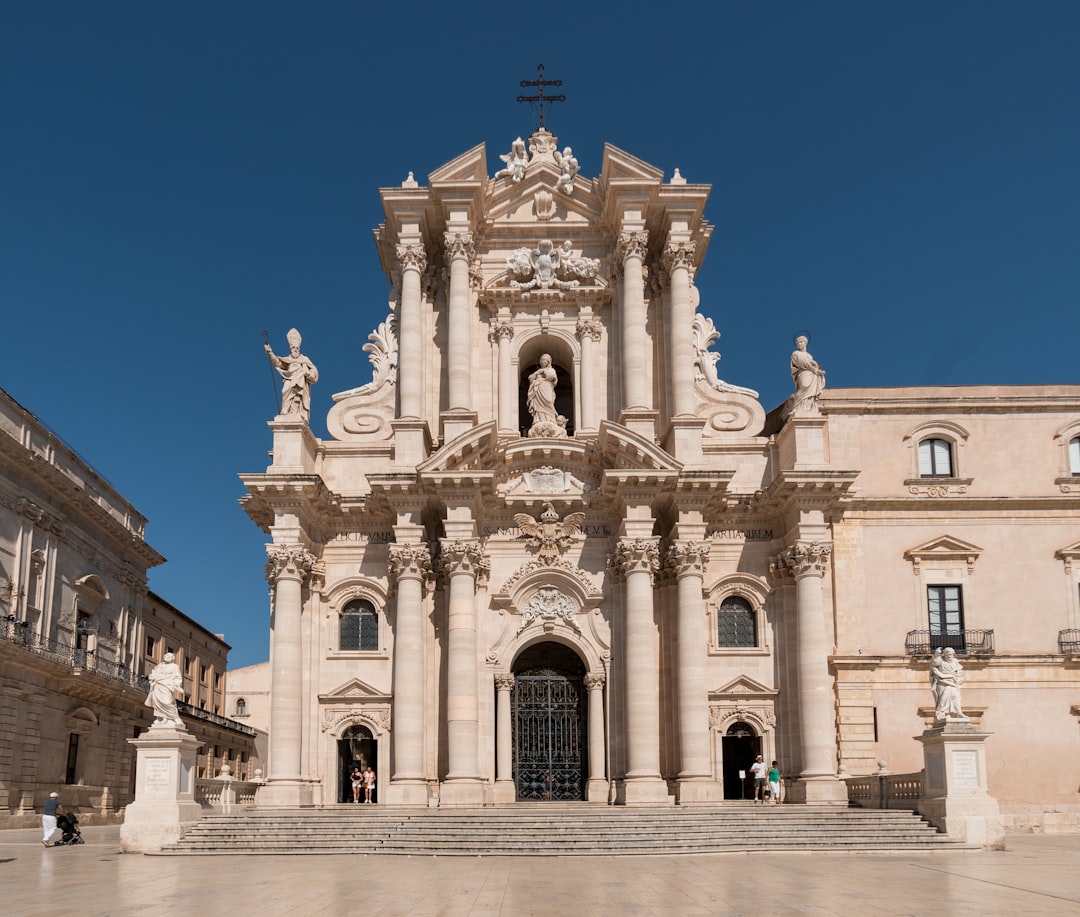
Most baroque cities in Italy are baroque in patches — additions and modifications within older urban fabric, individual buildings in a baroque style inserted into medieval street plans. Noto is baroque throughout, including the street plan. The main Corso Vittorio Emanuele runs perfectly level along a contour line, flanked on both sides by buildings designed for the same street at the same time. The three principal churches — San Francesco all’Immacolata, the Cathedral of San Nicolò, and the Chiesa di San Domenico — are positioned at intervals along the Corso, each on an elevated platform with its own staircase, each a different elaboration of the same architectural vocabulary.
The Cathedral of San Nicolò is the centrepiece. The façade rises in three registers above a wide staircase, flanked by two towers that were added in the nineteenth century to a design that intentionally departed from the original scheme. The interior collapsed in 1996 following structural failure in the dome; the reconstruction was completed in 2007, giving the interior a cleanliness that the exterior’s centuries of weathering does not have. The contrast between the restored interior and the weathered exterior is one of the more unusual aesthetic experiences Noto offers.
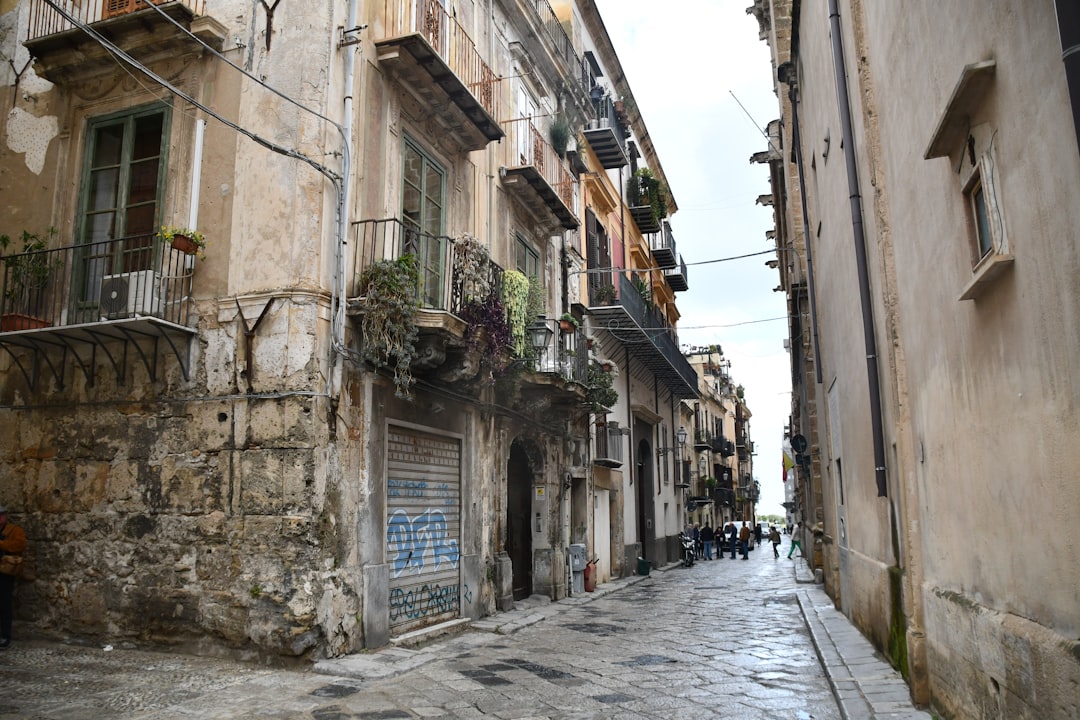
The pietra di Noto is technically a calcarenite — a soft sedimentary limestone composed of cemented shell fragments. It is easy to carve and has the honey-golden colour that photographers find irresistible in afternoon light. It also weathers: the oldest buildings in Noto have developed a patina that ranges from pale gold through orange-brown, depending on the age of the stone and the degree of exposure. In late afternoon, when the sun is low and from the west, the Corso Vittorio Emanuele takes on a colour that is neither the stone’s actual tone nor the light’s colour but some combination of both.
Beyond the Main Street
The streets north of the Corso — the Borgisi quarter — are less polished and less visited than the main route. The baroque vocabulary continues into smaller churches, palaces in various states of maintenance, and ordinary domestic buildings that use the same decorative grammar at reduced scale. The Palazzo Nicolaci di Villadorata, on the Via Corrado Nicolaci north of the Corso, has one of the most elaborate balcony systems in Sicily: six balconies supported by carved figures of varying grotesque character — horses, cherubs, centaurs, sirens — in a continuous composition across the façade. It looks improbable in photographs and more improbable in person.
The third week of May brings the Infiorata di Noto — a flowering festival in which the Via Nicolaci is covered in a large-scale pictorial composition made from flower petals, visible from above from the balconies of the Palazzo Nicolaci. The design changes each year; the quality is consistently high. The event brings significant visitor numbers for a single weekend, then the city returns to its normal pace.
Practical Notes
Noto is forty-five minutes south of Syracuse by car or bus. The historic centre is compact and walkable; the architecture is concentrated within about 600 metres of the main axis. A serious morning is enough for the main sights; a full day allows time for the side streets, the Palazzo Nicolaci interior (open to visitors), and a proper lunch. Catania airport, ninety kilometres north, is the most practical arrival point for a trip that combines Noto with Ortigia and the Val di Noto circuit.
Photo: Ryan Waldman on Unsplash