The southeast corner of Sicily contains the most concentrated collection of baroque architecture in Italy — perhaps in Europe — and also some of the best beaches on the island. The combination is unusual enough to deserve the attention it receives, and the area around Noto, Ragusa, and Modica has accordingly become one of the most visited parts of Sicily in recent years. Managing that visit well requires understanding both what the baroque towns actually offer and how to use the coast without competing with the high-summer infrastructure that the beach towns generate.
The baroque of this region is not incidental. It is the direct consequence of a single catastrophic event: the earthquake of 1693, which destroyed more than 50 towns in the Val di Noto and killed an estimated 60,000 people. The reconstruction that followed produced an ensemble of towns built from scratch on a single stylistic principle — the high baroque, in the Sicilian variant that emphasises ornamental excess, theatrical facade design, and the use of local golden limestone that glows in the afternoon sun. The towns are not a collection of individual remarkable buildings. They are unified architectural environments, built over a period of decades in the early 18th century with a coherence that was possible precisely because the previous urban fabric had been destroyed and needed to be rebuilt comprehensively.
Noto: The Perfect Baroque Town
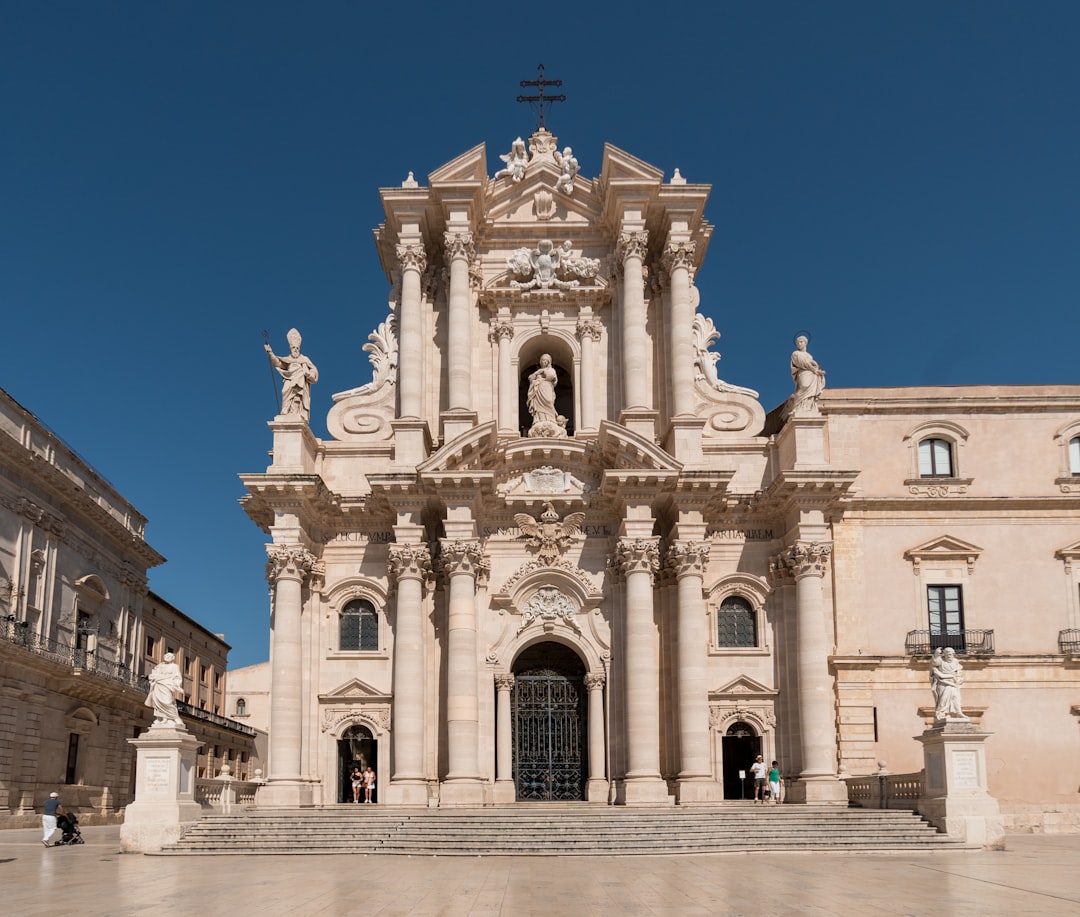
Noto is the most formally accomplished of the Val di Noto towns — the one in which the urban plan, the cathedral, the palaces, and the street theatre of the Corso Vittorio Emanuele cohere most completely. The cathedral, rebuilt after partial collapse in the 1990s, sits at the top of a monumental staircase and dominates the main street with a facade that exemplifies the theatrical instincts of the period: layered, curved, decorated with a confidence that only a culture simultaneously deeply religious and deeply theatrical could produce.
Walking through Noto in the late afternoon, when the sun is low enough to illuminate the limestone facades without washing them out, is the correct way to experience the town. The light at this hour — warm, raking, casting long shadows from the elaborate cornices and balconies — produces an aesthetic effect that photographs only partially capture. The smell of the pastry shops open for the evening — almond-based Sicilian sweets, granita of jasmine or mulberry, the particular heat of sugar and flour from the ovens — is the sensory complement to the visual.
The town is manageable: the main corso is the focus, the side streets contain the residential fabric behind the monumental facades, and the total time required to walk the historic centre thoroughly is two to three hours. Staying overnight — rather than arriving as a day trip from Catania or Syracuse — allows access to the town in the early morning and evening, when the day-tripper buses have departed and the experience becomes close to what it would have been for an 18th-century traveller arriving for the first time.
Ragusa: A Tale of Two Towns
Ragusa is in fact two towns on two different ridges, separated by a valley and connected by a road that descends and ascends the canyon between them. Ragusa Superiore, the modern upper town, is the administrative and commercial centre — functional, unremarkable by the standards of the surrounding region. Ragusa Ibla, on the lower ridge, is one of the most extraordinary baroque townscapes in Italy: an organic accumulation of buildings on a conical hilltop, visible from the upper town as a concentrated silhouette of towers and domes, and experienced from the inside as a labyrinthine sequence of stairways, alleys, and sudden piazzas that rewards extended walking without a fixed itinerary.
The Piazza del Duomo in Ragusa Ibla is the emotional centre: the Cathedral of San Giorgio occupying one side of the elliptical space with a facade that is among the most composed pieces of 18th-century baroque design in Sicily. The scale of the interior — three naves, side chapels, the whole illuminated by the particular quality of Sicilian light through the windows — has a quietude that the elaborate exterior does not quite prepare you for. The surrounding piazza functions as the social centre of Ibla in the late afternoon and evening, with the characteristic Sicilian arrangement of grandparents, parents, and children occupying the same public space simultaneously in different activities.
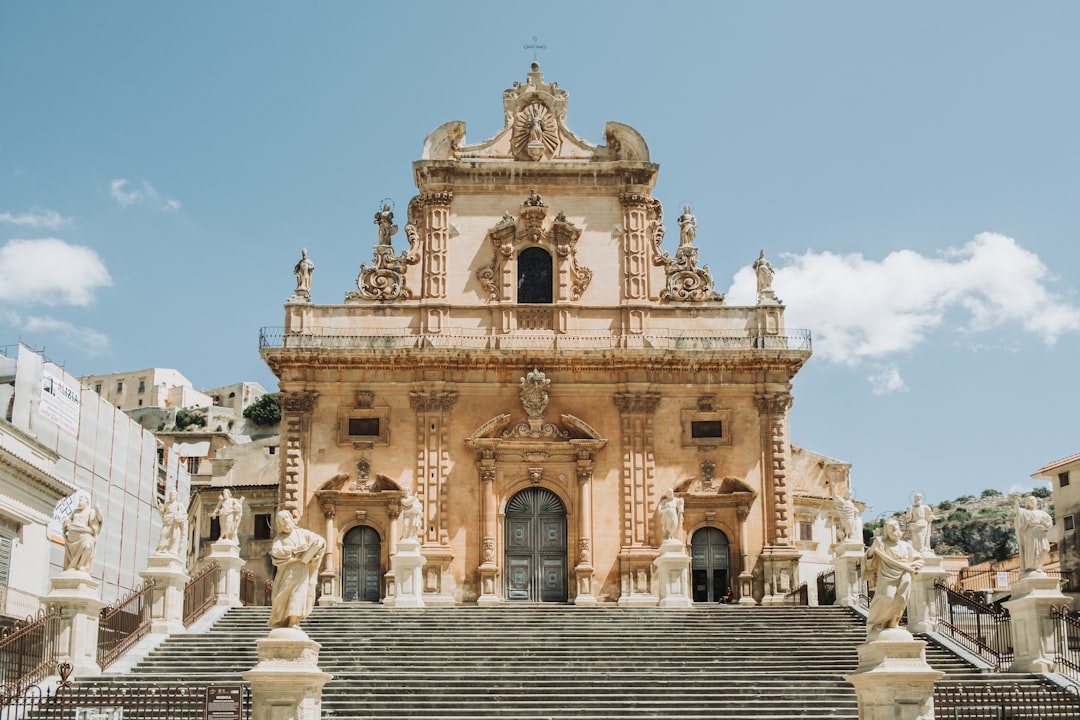
Modica: The Chocolate Town
Modica’s fame rests on two things: the baroque town itself, which is comparable in quality to Noto and Ragusa but receives fewer visitors; and the chocolate that has been produced here using a technique derived from the Aztec preparation that arrived in Sicily via Spanish colonial networks in the 16th or 17th century. Modica chocolate is made without the addition of fats or milk — the cacao is processed cold, which means the sugar crystallises rather than melting, producing a crumbly texture and an intense pure chocolate flavour that is unlike the smooth, emulsified chocolate of northern European tradition.
The production of Modica chocolate has been given Protected Geographical Indication status and is taken seriously by Sicilians in a way that reflects both genuine pride in the tradition and awareness of its commercial potential. The town’s main street contains several producers, ranging from artisanal workshops that make small quantities using traditional stone mills to larger operations with more extensive distribution. The difference in quality between the best and the worst is significant and worth engaging with slowly — tasting before buying, paying attention to the ratio of cacao to sugar, and noting how the texture changes between producers.
The Beaches: Ionian and Mediterranean
The coastline of the Val di Noto region runs along two different bodies of water. The eastern coast, from Syracuse south through Noto Marina and Marzamemi, faces the Ionian Sea and has the character of long sandy beaches backed by shallow dunes and maritime pine. The southern coast, from Punta Secca west toward Gela, faces the Mediterranean directly and is characterised by rockier shoreline, clearer water, and a stronger sea breeze from the African coast that makes August bearable in ways the more sheltered Ionian beaches are not.
Marzamemi, a small fishing village on the Ionian coast south of Noto, has become popular with Italian visitors who value the combination of a working harbour atmosphere and good beach access. The piazza at the centre of the village, built around an old tuna fishery (tonnara), has the character of a genuine Sicilian piazza that functions as both social space and tourist destination without one entirely compromising the other. The tuna — once the primary product of the local fishery — appears in the local restaurants in several preparations that reflect the historical importance of the catch.
The Food: Sicilian Southeast
The food of the Val di Noto is deeply Sicilian in its combination of Arabic, Greek, Norman, and Spanish influences, but carries local specifics that distinguish it from the food of Palermo or Catania. The nero d’Avola grape — the most internationally recognised Sicilian red variety — is native to this area, and the best versions of the local wine (deeply coloured, rich in dried fruit character, with enough acidity and tannin for ageing) come from the hills around Noto and Avola. The carob tree, which covers the hillsides of the Iblean plateau, produces pods that were historically used as a sugar substitute and are now enjoying renewed attention as a flavour ingredient.
The street food tradition here is essentially universal Sicilian: arancini (fried rice balls, filled with meat ragù or pistachio or other combinations), granita with brioche in the morning, sfincione (the thick, oily Sicilian pizza equivalent) in the afternoon. What changes is the specific execution: the granita in Noto has a texture and flavour density that reflects the quality of the local almonds and the water from the Iblean plateau springs, and comparing it with the granita at a café in a Palermo suburb makes the difference immediately apparent.
Expect to spend €15-28 per person for a full meal at a local restaurant; the seaside restaurants in Marzamemi and along the coast command higher prices in season but generally deliver the quality to justify them. The white wines from the area — Grillo, Catarratto, Insolia — are underpriced relative to their quality and pair well with the fish and vegetable-heavy local cuisine.
Practical Information
Syracuse is the most practical entry point for this area, with an airport that serves several European destinations directly. The baroque towns are within 30-60 minutes of Syracuse by road. A car is the most flexible way to explore the area, though a combination of local buses and occasional taxi covers the main baroque towns. The optimal period is May-June and September-October — the shoulder months offer the best combination of climate, availability, and manageable visitor numbers. July and August are very hot (regularly above 35 degrees on the inland plateau) and the beach areas are at peak capacity.