Venice Carnival is one of the oldest and most elaborate Italian festivals traditions in Europe: a celebration with documented roots in the 11th century, reaching the height of its extravagance in the 17th and 18th centuries when the Republic of Venice permitted masked anonymity for weeks at a time and the masks — the bauta, the moretta, the colombina — became instruments of a specific social freedom that the rigid hierarchies of Venetian society otherwise denied. The abolition of the Carnival by Napoleon in 1797, after the fall of the Republic, ended the tradition for nearly two centuries; its revival in 1979 as a cultural event was a deliberate reconstruction that has grown since into one of the most visited events in Italy, attracting more than a million visitors over its ten days and creating both the spectacle its organisers intended and the visitor management challenges that spectacle generates.
Understanding what the contemporary Venice Carnival actually is — rather than what the historical Carnival was — requires separating the two. The historical Carnival was an expression of a specific social and political function: the mask as social equalizer, the temporary suspension of class and gender distinctions that Venetian society maintained with exceptional rigidity throughout the year. The contemporary Carnival is a cultural tourism event that uses the aesthetic vocabulary of the historical Carnival (the masks, the costumes, the canal settings) to create a spectacle that is photographed more than it is participated in. Both are interesting. They are different things.
The History: From Social Leveller to Tourism Event
The social function of the Venetian mask in the Carnival period was documented by travellers and moralists throughout the 16th and 17th centuries with a mixture of fascination and alarm. The mask — the bauta in particular, a full-face white mask combined with a black hood (the tabarro) and a three-cornered hat — created anonymity that the law explicitly protected during the Carnival months. The masked figure could enter any space, regardless of social class; could speak to any person, regardless of rank; could gamble, make contracts, and conduct business that the unmasked person could not conduct without compromising their social standing.
The longest Carnival periods of the 18th century extended for months, and the Republic’s relationship with the institution was one of deliberate tolerance: the mask maintained social peace by providing a safety valve for impulses that the rest of the year suppressed. The gambling houses, the theatres, the opera performances at La Fenice and the other Venetian theatres — all conducted in a culture of masked anonymity — constituted the entertainment and social mixing that the Carnival provided. The foreign visitors who arrived in Venice specifically for the Carnival contributed to the economy in ways the Republic valued, and the elaborate costumes and festivities that characterised the period were partly a display of Venetian wealth and sophistication to an international audience.
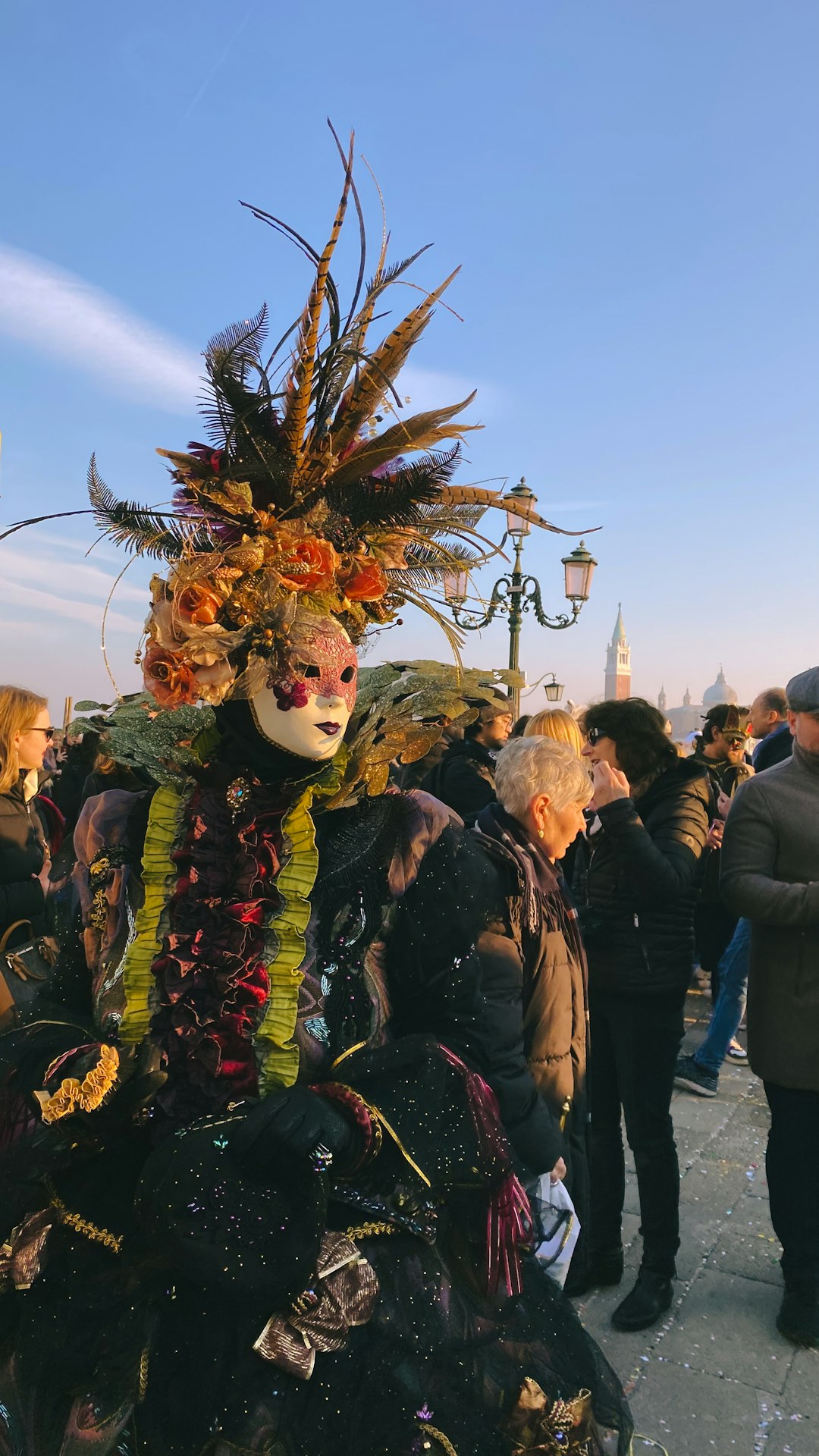
The contemporary revival replaces the social function — which no longer exists in the same form — with an aesthetic celebration. The costumes worn in the contemporary Carnival are more elaborate than most historical versions (the historical masks were simple by comparison; the lavish bejewelled silk costumes of the contemporary Carnival are largely a modern invention inspired by theatrical and operatic tradition), and the participants are a mix of Venetians, Italian visitors, and international tourists who wear costumes of varying elaborateness and photograph each other on the bridges and in the Piazza San Marco.
The Masks: A Vocabulary
The masks of the Venetian Carnival tradition have specific names and specific social functions in the historical context, and understanding them provides a lens through which to read the contemporary Italian festivals more precisely.
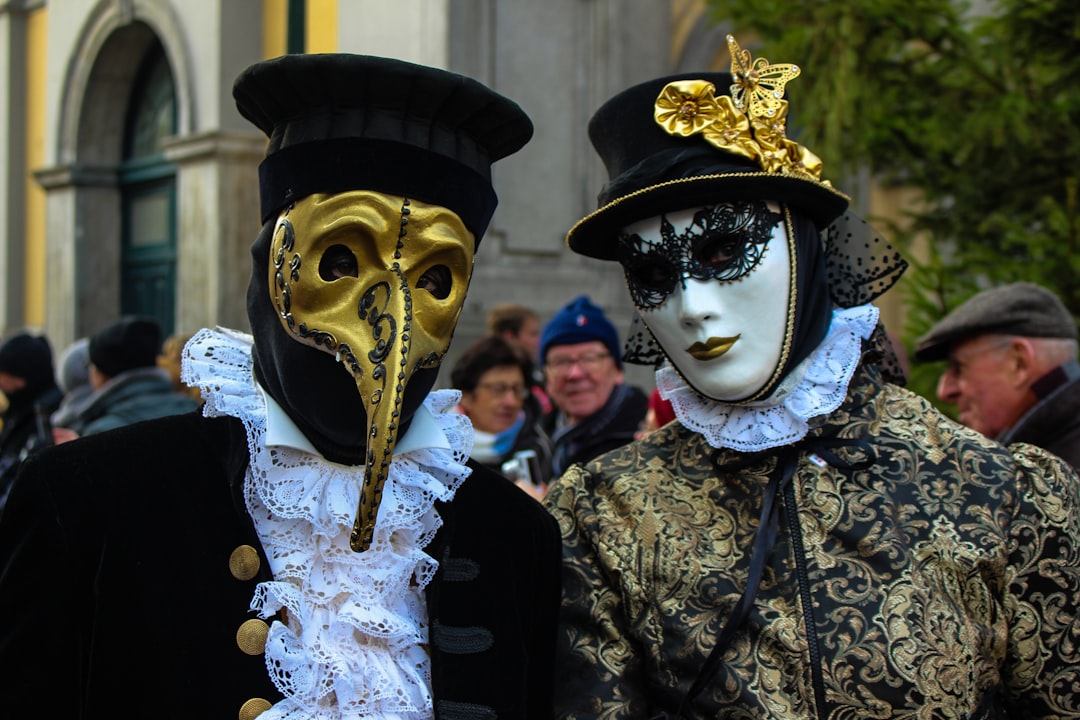
The bauta — the dominant mask of the historical Carnival — is a full white face covering that conceals the features completely and has an extended lower jaw that allows the wearer to speak and drink without removing the mask. Combined with the tabarro (black cloak) and the three-cornered hat, it created the universal disguise that the Venetian Carnival used for its social levelling function. The bauta is still the most commonly seen mask form in the contemporary Carnival, though worn now primarily for photographic effect rather than anonymity.
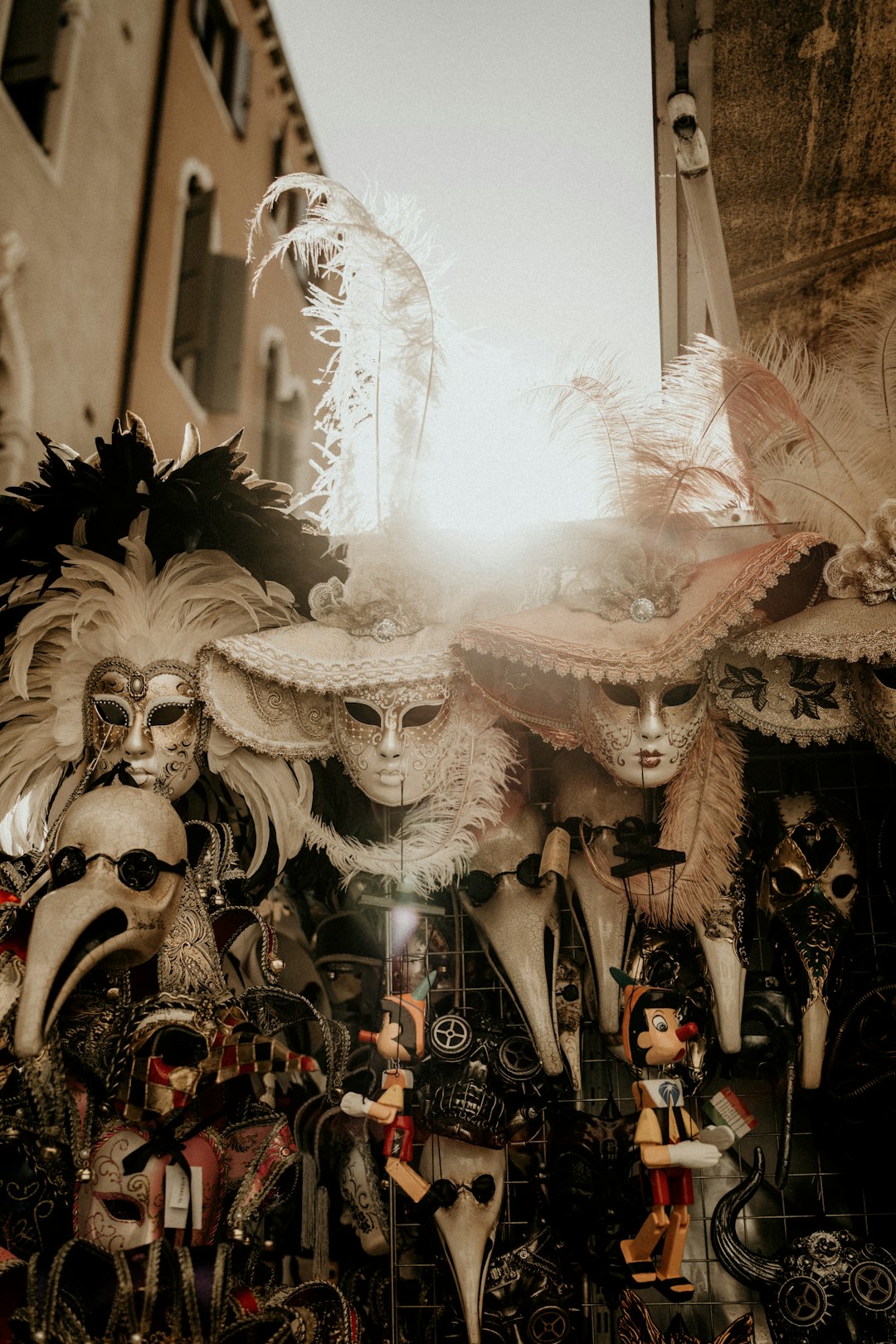
The colombina is a half-mask that covers only the upper face, historically worn by women and associated with the theatrical character of the commedia dell’arte tradition. The moretta (the “mute”), a small oval mask traditionally held in place by a button held between the teeth (which prevented speech), was historically worn by women and created a deliberately mysterious and silent presence. The medico della peste — the plague doctor mask, with its long beak originally designed to hold aromatic herbs thought to protect against disease — is one of the most visually distinctive Carnival mask forms and one of the most modern in terms of Carnival use, though the form dates from the 17th century.
The mask workshops (maschere) of Venice — there are several traditional artisan producers remaining in the city — produce these forms by hand using the papier-mâché and gilded leather techniques of the historical tradition. Visiting a workshop and watching the production process is a different engagement with the Carnival tradition than purchasing a manufactured ceramic souvenir, and the quality of the handmade masks — their weight, their paintwork, the fit of the leather — reveals the craft level that the tradition maintains.
The Contemporary Carnival Programme
The Venice Carnival runs for ten to twelve days in the period before Ash Wednesday, with dates varying by year according to the Easter calendar. The programme includes the official opening ceremony in Piazza San Marco (the Flight of the Angel, when a costumed figure descends on a wire from the campanile to the piazza — a revival of a historical tradition), a series of staged events in the piazza and throughout the city, the costume competition (La Maschera più Bella — the most beautiful mask, judged by a jury and a public vote), and the less formally organised but visually impressive spectacle of the costumed visitors and residents who use the Carnival period for their own photographic events in the city’s most dramatic spaces.
The events in Piazza San Marco are the most accessible and the most crowded. The daily programme of musical performances, mask presentations, and the gathering of costumed participants in the piazza constitutes a spectacle of colour and elaborateness that has no equivalent in any other Italian festival. The challenge is the density of visitors: the Piazza in peak Carnival hours, particularly on the central weekend, contains more people per square metre than is comfortable, and photographing masked figures without the crowd as an unwanted backdrop requires either very early morning positioning or acceptance of the crowd as part of the image.
The most effective approach to the Carnival visual experience is the early morning walk through the calli (the narrow streets) and across the bridges before the masses have arrived. The masked figures who position themselves for photography in the early morning — typically on the more photogenic bridges and along the Grand Canal — are working with the specific light quality of the Venice morning and can be engaged without competition. By 9:00, the character of the Carnival changes as visitor numbers increase.
The Ridotto and the Casino Tradition
The historical Carnival’s relationship with gambling — the Ridotto, Venice’s state-controlled casino that operated from 1638 to 1774, was the world’s first government-licensed gambling establishment — is memorialised in the contemporary Carnival primarily as a decorative theme. The Casino di Venezia (housed in the Ca’ Vendramin Calergi on the Grand Canal, one of the finest Renaissance palaces in Venice) operates throughout the year but has a specific Carnival atmosphere during the festival period. The connection between the gambling hall, the masked anonymous gambler, and the social function of the historical Carnival is one of the more historically coherent aspects of the contemporary event.
Beyond San Marco: The Rest of Venice at Carnival
The tourist focus of the Carnival is concentrated in Piazza San Marco and the surrounding areas, and the rest of Venice at Carnival time has a different character. The residential sestieri (districts) — Cannaregio, Dorsoduro, Castello — continue at a pace largely independent of the central festival programme, and the costumed figures who spread into these neighbourhoods create an entirely different aesthetic: a masked figure at a fruit stall in Cannaregio, or a plague doctor crossing the Ponte delle Guglie, has a relationship with the functioning city that the concentrated spectacle of the piazza does not.
The bacari — the Venetian wine bars that are one of the city’s most distinctive social institutions — are full at Carnival. The cicchetti (the small bites that accompany the ombra di vino, the small glass of wine that gives the institution its character), the baccalà mantecato on white polenta, the sardine in saòr (the sweet-and-sour sardine preparation typical of Venetian festive cooking), and the fritole (the carnival fritters — fried dough with raisins and pine nuts, dusted with sugar — that appear only during this period) constitute the food of the Venetian Carnival as much as the masks constitute the visual element.
Practical Notes
The Venice Carnival dates vary annually according to the Easter calendar — typically the ten days before Ash Wednesday, which falls in February or early March. The peak weekend (usually the second-to-last weekend of the Carnival) is the most visited and should be approached with accommodation booked months in advance. Accommodation in Venice at Carnival prices is significantly higher than normal; the surrounding mainland (Mestre, Padova) provides cheaper options with straightforward transport connections.
Day trips from the mainland are possible and common, but staying overnight in Venice at Carnival gives access to the masked atmosphere of the evening and the early morning that day visitors cannot experience. The vaporetto (water bus) system operates at expanded capacity during Carnival, but the queues at the main stops on peak days are long; walking the calli is often faster than waiting for a boat.
The Carnival costume dress code for Piazza San Marco events: elaborate historical costumes are welcome and rewarded with the attention of other costumed figures and photographers. Simple masks without costume are common and unproblematic. The full photographic experience of the Carnival — the reason most visitors cite for coming — requires more planning than a casual visit can achieve, and the photographers who position themselves at the best locations in the early morning hours with an understanding of the light and the typical movements of the costumed participants consistently produce images that justify the investment.