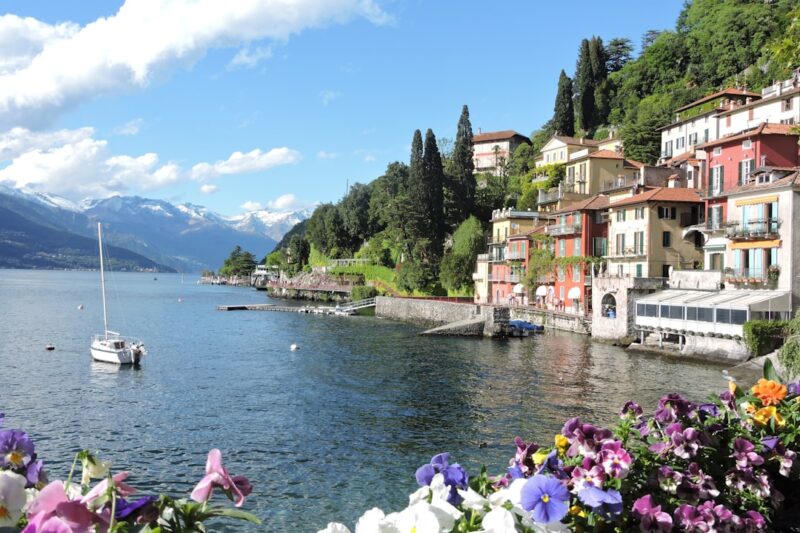
Ferragosto — August 15 — is Italy’s national holiday, officially the Feast of the Assumption of the Virgin Mary in the Catholic calendar but experienced by most Italians as the peak of the summer holiday, the day when the country collectively suspends its normal functioning and the cities empty into the coasts, mountains, and campgrounds of the peninsula. The name comes from Feriae Augusti — the holidays of Augustus — the ancient Roman festival that the Emperor Augustus established in 18 BCE as a period of rest for the agricultural workers after the first harvest. Christianity absorbed the timing into the Assumption feast, and the modern Ferragosto is the unbroken descendant of this two-thousand-year-old tradition of collective summer rest.
For the visitor arriving in Italy in mid-August expecting to find the country operating at its usual pace, Ferragosto is a revelation. The cities — particularly Rome, Milan, and the smaller inland towns — are largely empty. Many restaurants close for the two-week period surrounding August 15. Shops shutter. Pharmacies operate on reduced hours. The urban infrastructure that serves residents rather than tourists enters a low-activity state that reveals something genuine about the Italian relationship with work, rest, and the calendar: this is not a country that considers work the primary measure of value, and the collective summer holiday is an expression of a social agreement that the business priorities of the rest of the year do not override.
The Mass Migration: Where Italy Goes
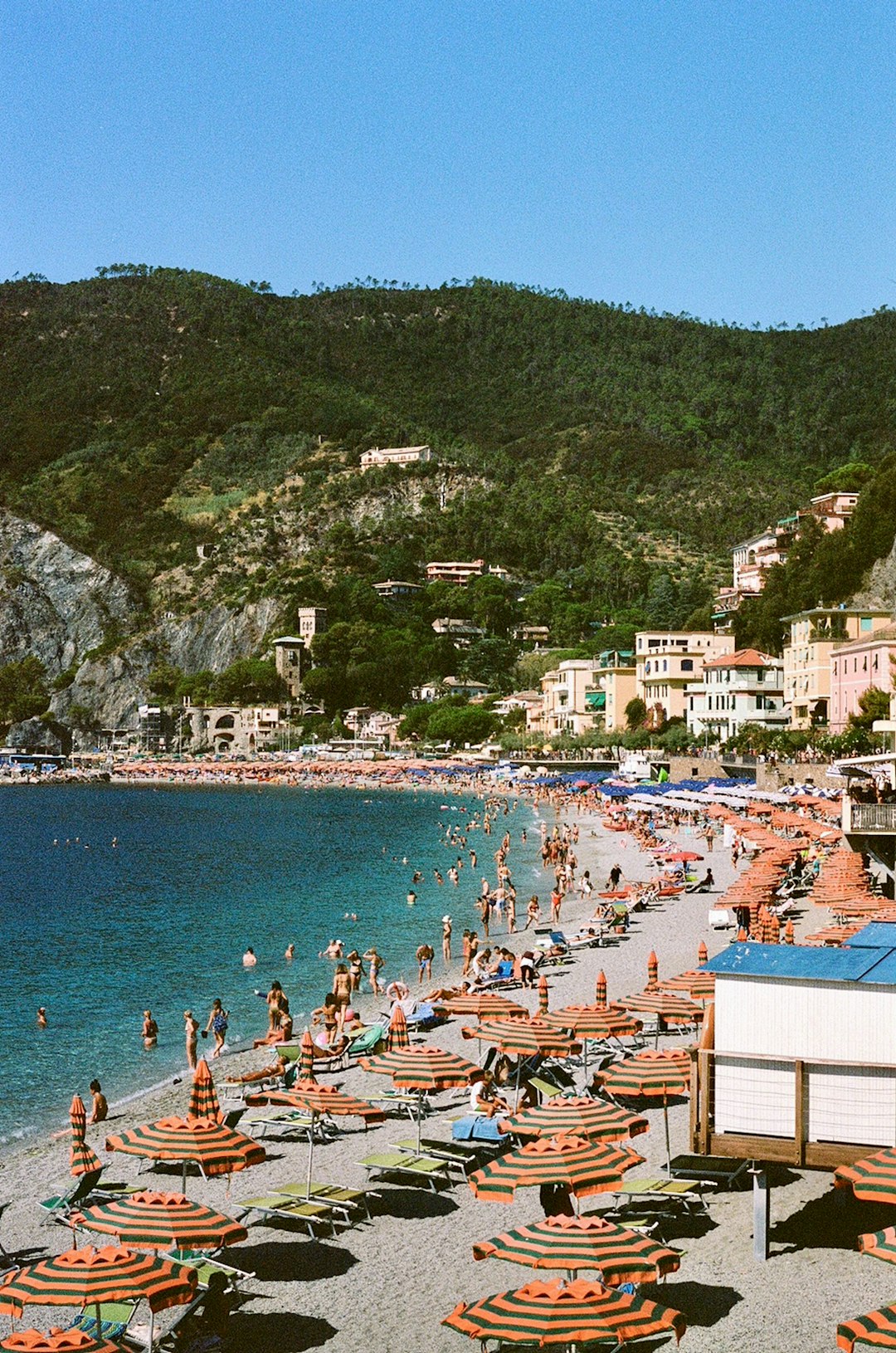
The Italian August holiday migration is one of the largest and most concentrated in Europe. Approximately a quarter of the Italian population changes location in the weeks around August 15, and the infrastructure consequences are visible on the roads (the A1 autostrada between Milan and Naples is notorious for Ferragosto traffic jams), at the airports, on the beaches, and in the coastal towns that absorb the urban population for two to three weeks every summer. The Italian coast in August is the Italian coast at maximum density: the stabilimenti balneari (beach clubs) are at full capacity, the beachside restaurants are booked weeks in advance, and the specific social atmosphere of the Italian summer beach — the afternoon card games, the ice cream vendors, the children’s beach football, the families occupying the same positions at the same beach club for the same two weeks every year — is operating at its most characteristic.
The Italian beach holiday has a specific social structure that distinguishes it from the solo traveller’s experience of a coastal destination. The stabilimento — the beach club, with its regimented rows of sun loungers and umbrellas, the bar serving granite and arancini and aperitivi, the cabine (changing rooms) that many Italian families rent for the entire season — is a social institution rather than simply a service: families return to the same beach club for generations, occupy the same position, and maintain social relationships with their beach neighbours that are a distinct feature of the Italian summer. The cost of a season pass at a good beach club in a popular location — the Versilia coast, the Adriatic Romagna, the Sicilian and Sardinian beach resorts — is substantial, but the service and social structure it provides are genuinely different from the free beach experience.
The free beaches (spiagge libere) — the sections of coastline that remain accessible without charge — are typically less equipped, often more crowded per available space, and populated by a different demographic mix from the stabilimenti. In some areas, particularly in Puglia and Calabria, the free beaches have maintained their character better than the stabilimento-dominated coasts; in others, the free beach is the resort of last choice for those who cannot afford the alternatives.
The Food of Ferragosto
The food traditions of Ferragosto vary by region but share the principle of abundance and the emphasis on ingredients that belong to the peak summer season: the peak of the tomato crop, the peak of the peach and melon season, the grilled fish of the coastal areas, the lamb and the roast meat of the mountain traditions. The Ferragosto lunch — the family gathering that organises the day around food in the manner of all important Italian occasions — typically extends for several hours and involves multiple courses in a way that the working-week lunch does not.
The watermelon (anguria or cocomero, depending on the regional Italian dialect) is the definitive Ferragosto food, eaten cold after a day at the beach, at the end of the long lunch, at the evening gathering. The specific pleasure of a cold, sweet watermelon in the heat of August, shared with a large group, is one of those simple experiences that the Italian summer ritualises with more consistency than any other culture manages. The competition to be the person who picks the best watermelon — tapping the melon to assess the resonance, checking the stem end, assessing the colouration — is a minor but genuine Italian social art.
The grilled lamb and pork preparations that appear at the Ferragosto lunches of the inland regions — Abruzzo, Molise, Basilicata, the Apennine villages — reflect the pastoral tradition of the mountain areas and the August date’s position in the agricultural calendar: the lambs born in spring are now at the age where they are most suitable for slaughter and eating, and the August lamb appears in preparations from the simple (grilled over wood with wild herbs) to the complex (slow-braised with tomatoes and wine). The specific quality of the lamb from the high-altitude pastures in August — the animals having spent the summer grazing the mountain meadows — is what makes the best preparations extraordinary rather than merely good.

The Empty City: Rome at Ferragosto
The Rome of Ferragosto is a Rome that most visitors never see and that the Romans themselves are largely absent from — a Rome of quiet streets, of monuments accessible without queues, of the specific atmosphere of a major city in the pause between its inhabiting communities. The tourist population in August replaces the resident population at the main attractions, but in the residential neighbourhoods, the Ferragosto quiet is genuine: the bars that serve the neighbourhood morning coffee close for two weeks, the greengrocers close, the everyday mechanics of the city slow to a pace that reveals the city beneath its usual functioning.
The Trastevere neighbourhood, typically one of the livelier parts of central Rome, has a different quality in mid-August: the families who live in the residential part of the neighbourhood have left, the neighbourhood bars have closed (replaced by the tourist-facing establishments that stay open year-round), and the late-evening gatherings that characterise the neighbourhood in the cooler months are absent. What remains is the architecture, the empty streets in the afternoon heat, and the occasional person who has chosen to remain in the city rather than join the migration.
Some visitors prefer Rome in August precisely for this emptiness: the Vatican Museums in early August are as uncrowded as they ever are; the major churches are accessible without the tour group delays; the fountains — the Trevi, the Piazza Navona, the Via Veneto — can be approached without significant queueing. The heat (regularly above 35 degrees in Rome in August) is the compensation for the reduced crowds, and it is a significant one that should be accounted for in planning.
The Phenomenon of Chiuso per Ferie
The sign on the door — “Chiuso per ferie: riapriamo il…” (Closed for holidays, reopening on…) — is the defining visual motif of the Italian August. The phenomenon of the mass August closure, in which businesses that are perfectly viable and well-patronised in every other month simply close for two to four weeks because their owners and staff have taken their holidays, is a distinctively Italian institution that the pressure of year-round commercial competition has eroded in the cities (many Rome restaurants now stay open through August to serve the tourist population) but that remains strong in smaller towns and in the commercial districts of the major cities where the resident customer base is absent anyway.
The cultural attitude embedded in the chiuso per ferie sign — that the summer holiday is a right of sufficient weight to override the commercial opportunities of the summer season — is as informative about Italian cultural values as the infiorata or the Palio. It is a collective social agreement that work is not the highest value, that rest and the summer holiday are legitimate uses of time even when commercial interests would dictate otherwise. The erosion of this agreement — which has been proceeding for twenty years under the pressure of globalised commercial competition — is mourned by the Italians who grew up with it, and its preservation in the towns and communities where it still operates is noted with approval by visitors who understand what they are seeing.

Traveling Italy in August: The Practical Reality
The visitor who comes to Italy in August expecting the same Italy they experienced in May or October will be repeatedly surprised. The coastal destinations are crowded with Italian domestic tourists; the inland cities are emptier of Italians and fuller of international visitors; the mountains are active but with a different crowd from the ski season. The service quality in tourist-facing establishments in August tends to be lower than in the shoulder months — staff turnover is high, the pressure of peak season creates rushed service, and the establishments that have remained open are sometimes those least interested in quality.
The August visit to Italy is best planned around either the coastal or mountain holiday experience — accepting the conditions of peak season and choosing a destination that is genuinely appropriate for it — or around the emptied cities, approaching Rome, Florence, or Milan as places to experience in their summer pause with the tolerance for heat and reduced services that this requires. The worst approach is to arrive in August expecting the cultural tourism experience of the shoulder months and being frustrated by the conditions of peak season.
Accommodation should be booked months in advance for any coastal destination or popular cultural city. The middle week of August — the week around the 15th itself — is the busiest of the entire Italian tourist year, and accommodation in the Amalfi Coast Coast, Cinque Terre, Sardinia, and similar destinations is typically sold out at all price points by June.