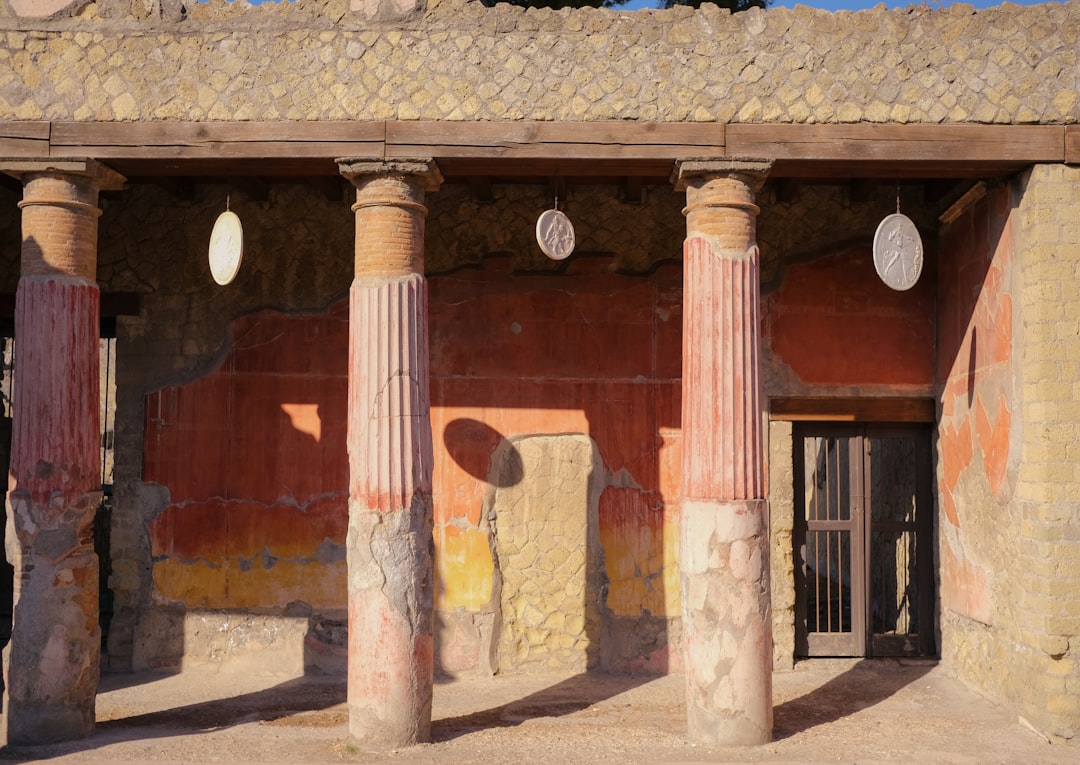
Pompeii has been under excavation since 1748, making it one of the longest-running archaeological projects in human history. In that time, roughly two-thirds of the ancient city’s 66 hectares have been uncovered, generating a body of evidence for Roman life in the first century AD that has no parallel anywhere in the world. The volcanic ash from Vesuvius that destroyed the city on 24 August 79 AD also preserved it — organic materials, foodstuffs, wooden furniture, even the expressions on people’s faces as they died, captured in the famous plaster casts — with a completeness that continues to astonish archaeologists nearly three centuries after the first spadeful of earth was turned.
The Great Pompeii Project
The Great Pompeii Project, launched in 2012 with substantial EU funding to address the chronic deterioration affecting the excavated areas, has accelerated into something much more exciting than a conservation programme. The excavations of the Regio V zone, which began in 2017, have produced a sequence of discoveries that have fundamentally revised our understanding of the city’s population, its social structure, its commercial life, and its domestic culture.
The Most Significant Recent Discoveries
The House of the Garden, uncovered in 2019, yielded a lararium — a household shrine — decorated with a serpent and surrounded by the most beautifully preserved paintings found in Pompeii in decades: vivid hunting scenes, still-life arrangements of food, erotic imagery rendered with extraordinary delicacy. In the same excavation season, archaeologists discovered a perfectly preserved snack bar — a thermopolium, in Latin — complete with its terracotta containers still embedded in the counter, some still containing the remains of the food they had been serving when the eruption struck. Analysis of the dolia revealed traces of duck, pig, sheep, fish, and snails — the ancient fast food of a busy Roman street.
Perhaps the most startling recent discovery is the skeleton of a man in his late thirties found in 2020, apparently killed not by the pyroclastic flow that overwhelmed the city but by a large stone block — possibly dislodged by the eruption’s earthquakes — that crushed his upper body while he was apparently attempting to flee. The juxtaposition of individual, human-scale tragedy against the immensity of the geological event is characteristic of what Pompeii does better than any other archaeological site: it makes the ancient world immediate, personal, and emotionally accessible in ways that no museum can replicate.
How to Visit Pompeii Today
Visiting Pompeii today requires planning, patience, and the willingness to go beyond the standard circuit of the Forum, the brothel, and the Villa of the Mysteries. The new excavations in Regio V are accessible to visitors on guided tours that must be booked in advance. The Pompeii Archaeological Park’s excellent app provides detailed information about each building. Arriving at opening time in the cooler months — October through April — gives you the best chance of experiencing the site with something approaching the contemplative attention it deserves. A natural companion to any Pompeii visit is a week along the Amalfi Coast, just an hour’s drive south, where the limestone cliffs that Vesuvius’s ash drifted over on that August morning still plunge into the same impossibly blue sea.
What the New Excavations Reveal
What Pompeii teaches us, through the accumulated detail of its new excavations, is that Roman life was more complex, more diverse, more cosmopolitan, and more like our own than the old textbook accounts suggested. The people who died here were not inhabitants of a distant civilization but recognisably human individuals, eating snacks at street counters, decorating their homes with fashionable art, arguing with their neighbours, worshipping their household gods, and planning for futures that the mountain would not permit them to reach.