In 1291, the Venetian Republic ordered its glassmakers to move their furnaces to the island of Murano, approximately two kilometres north of Venice in the lagoon. The official reason given was fire safety — the wooden buildings of Venice were vulnerable to the sparks and heat of glass furnaces. This was true. But the relocation also served a second purpose: concentrating the glassmakers on a single island made it easier to prevent the emigration of craftsmen who might take Venetian glassmaking secrets to competing European powers. Murano became, in effect, a gilded prison for its artisans — they were granted privileges that ordinary Venetians did not have, including the right for glassmakers’ daughters to marry Venetian patricians, but they were forbidden on pain of death to practice their craft outside the Republic’s territory. (See also: Venice Carnival)
This combination of privilege and isolation allowed Murano to develop glassmaking techniques of extraordinary refinement over the following three centuries. The murrine process — creating cross-sections of patterned glass rods that, when fused and sliced, reveal a flower or geometric pattern in cross-section — was a Murano innovation. So was lattimo glass, an opaque white glass resembling porcelain that competed with imported Chinese wares. The filigrana techniques — pulling and twisting threads of glass into the canes used to create lace-like patterns — are still taught in Murano workshops using methods that are fundamentally unchanged from the sixteenth century.
What Makes Genuine Murano Glass
The question of what constitutes authentic Murano glass is more complex than it might appear. The legal designation protects glass produced on the island of Murano by registered craftspeople; the Vetro Artistico Murano trademark was introduced in 1994 to provide authentication. But the trademark covers a wide range of production quality, from the factory-scale industrial pieces sold in the tourist shops of Venice to the work of individual masters who spend years perfecting a single technique.
The practical test for a visitor is not always the trademark but the making. Glass blown by a human glassblower has slight irregularities — variations in wall thickness, subtle asymmetries in shape — that are signs of hand production rather than flaws. Machine-made glass is geometrically perfect and light in weight. The filigrana canes in genuine Murano lattimo or zanfirico glass run with a precision and complexity that requires extreme skill to achieve; in copies, the pattern is simplified or the spacing uneven. Colour in authentic Murano glass — particularly in sommerso, the technique of encasing one colour within another — has a depth and clarity from the multiple glass layers that single-layer coloured glass cannot replicate.

Visiting the Island
The vaporetto to Murano from the Fondamenta Nuove in Venice takes approximately twelve minutes. The island has enough non-glass interest — the Church of Santa Maria e Donato, with its extraordinary Byzantine mosaic floor, is one of the finest Romanesque interiors in the lagoon — to justify a visit independent of the glass. The Museo del Vetro in the Palazzo Giustinian contains a comprehensive history of Murano glassmaking from the Roman period through the twentieth century, with a collection that includes pieces of historical rarity alongside contemporary work of high quality.
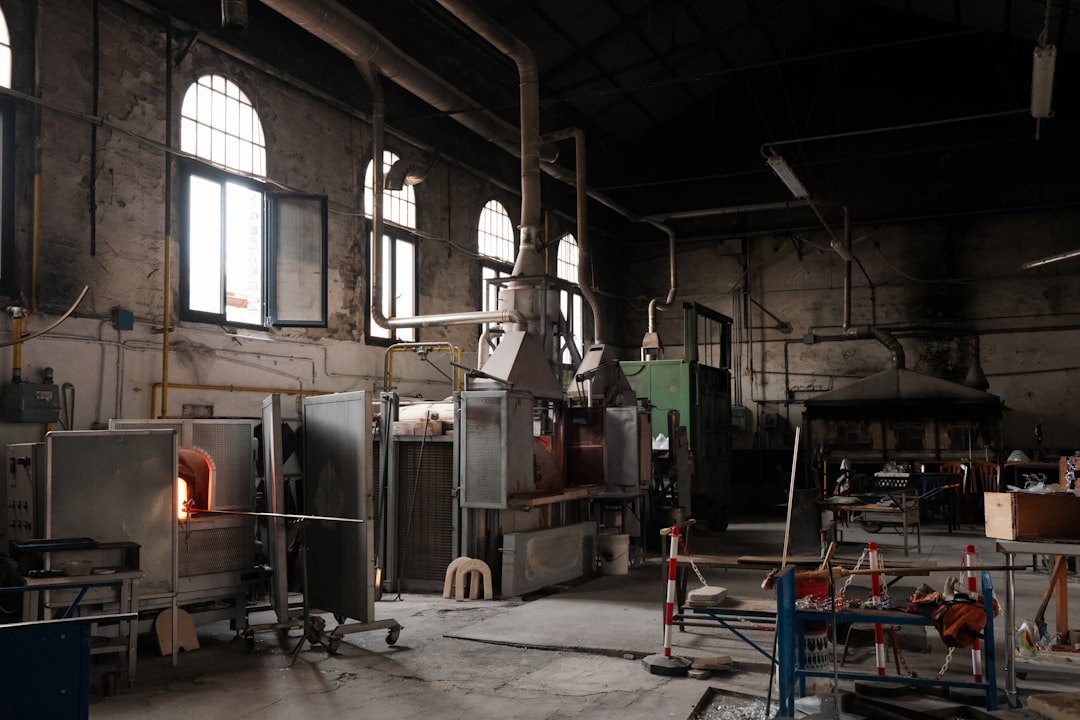
The working furnaces — the fornaci — are typically open to visitors for demonstrations during business hours. The relationship between the master glassblower and the molten material — the speed required to work glass before it cools, the precision of the shaping in the few seconds available, the physical collaboration between the master and the garzoni who assist — is more interesting than any static display. Come on a weekday morning to find the furnaces at full production rather than demonstration mode.
Photo: Tamara Malaniy on Unsplash