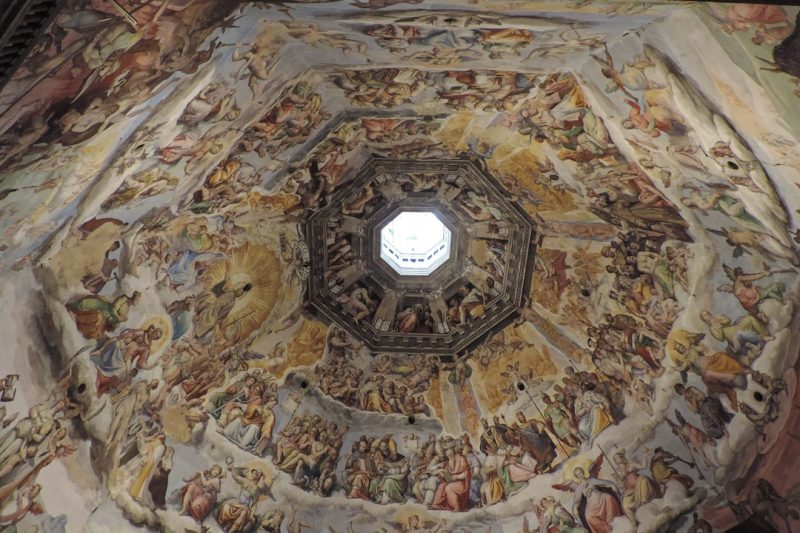
The Provincial Baroque
The churches of the Castelli Romani and the hill towns of the Lazio countryside were not built for posterity. They were built for use: for the daily mass of communities whose lives were organised around the liturgical calendar, for the periodic festivals that punctuated the agricultural year, for the accumulation of votive offerings from men and women who needed somewhere to put their gratitude or their fear. That so many of them survive, and that some of them are extraordinary, is the result of the same conservatism that preserved them: these communities did not prosper enough to replace their churches with grander ones, and so the Baroque campaigns that transformed the interior of so many Italian buildings in the seventeenth and eighteenth centuries left these interiors more or less as they had been.
The baroque that does exist in the Lazio hill towns is a different animal from the baroque of Rome — less theatrical, less confident, more nakedly devotional. It is the baroque of provincial workshops whose craftsmen had seen the work of Bernini and Borromini from a respectful distance and were doing their best to translate the principles of that work into the materials available locally and the budgets available pastorally. The result is sometimes clumsy and sometimes touching and occasionally, in the lighting conditions that obtain in a small hill church at a particular hour, quite magnificent.
The Material of the Lazio Interior

The dominant building material of the Lazio interior is tufa — the volcanic stone that underlies much of central Italy and that the Romans quarried with an efficiency that remade the landscape around their quarries. Tufa is soft when first extracted, hardening on contact with air; it carves easily when fresh and becomes durable as it ages. This combination of workability and permanence made it the default building material of the region for two millennia, and the churches of the Lazio hill towns are built of it, carved from it, and in certain cases effectively cut from the living rock.
The colour of tufa ranges from warm ochre to grey-green depending on its mineral composition and its age; a tufa building in afternoon sun has a quality of warmth that no other stone quite replicates. The churches of towns such as Nepi, Sutri, Calcata, and the villages of the Cimini hills are made of the place, and they sit in the landscape as though they had always been there.
Sutri and the Pre-Christian Substratum
The town of Sutri, in the Cimini hills north of Rome, has been inhabited continuously since at least the eighth century BCE and has a stratigraphic complexity that its modest current population does not prepare you for. The Etruscan necropolis cut into the tufa cliff at the town’s southern approach is one of the most extensive of its kind in the region: chamber tombs carved directly from the rock, their facades still bearing the marks of the tools that shaped them, their interiors open to a sky that the Etruscan occupants never anticipated.
Within this Etruscan necropolis stands a small Romanesque church — the Madonna del Parto — that occupies a tomb chamber converted to Christian use in the early medieval period. The conversion is total: the chamber’s rectangular plan was adopted as the nave, the deeper recess at the back became the apse, and a fresco programme transformed the rock walls into a surface of devotional imagery. To stand in this building is to inhabit three thousand years of continuous use: Etruscan funerary space, Roman campsite, early Christian oratory, medieval church, current place of pilgrimage.
The Castelli Romani and Their Churches
The hill towns south of Rome — Frascati, Grottaferrata, Castel Gandolfo, Nemi, Velletri — are often reduced in the tourist imagination to the summer retreat of the Roman bourgeoisie, a function they have served since the Republic and that has given them a certain residential comfort without doing much for their cultural ambitions. The churches of the Castelli are accordingly underestimated: they are visited, when they are visited, in the context of a day’s excursion from Rome — most Castelli towns are served by regional train from Termini — for the wine and the landscape, and the religious architecture is encountered as incidental.
The incidental encounter is a mistake. The baroque campaigns in the churches of Frascati and Velletri in particular produced interiors of considerable distinction — not the full programme of Roman high baroque, but the selective application of its vocabulary by workshops that understood the principles if not the scale. The carved wooden altarpieces, the painted trompe-l’oeil ceilings, the stucco reliefs that frame side-chapel niches: these are the decorative language of seventeenth-century Catholic devotion translated into local accents, and they reward the attention that a visitor unencumbered by a Rome itinerary can give them.
Calcata and the Rupestrian Villages
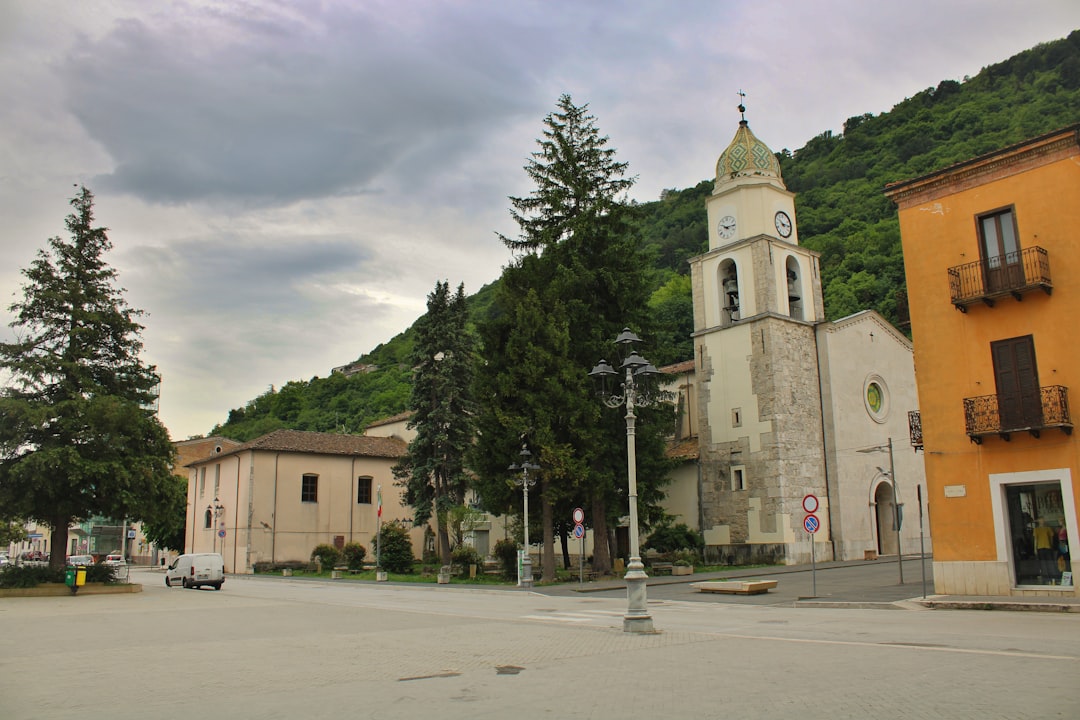
Calcata is a village built on a tufa spike — a narrow column of volcanic rock that rises from the floor of the Treja valley and that was, until the 1930s, a normally functioning rural community. The decision of the Italian authorities in that decade to declare the village uninhabitable emptied it of its original population and left it to artists and eccentrics who colonised it from the 1960s onward. It is now a village of galleries and studios and weekend visitors from Rome, but its church — a small baroque building whose interior has been maintained with the care of a community that takes its devotional obligations seriously — continues to function.
What Calcata represents, in the broader context of the Lazio sacred landscape, is the rupestrian tradition: the building of sacred spaces in and from the living rock that characterises the Etruscan and early Christian heritage of the region. The same tradition that produced the Madonna del Parto at Sutri finds one of its northernmost expressions here, in a village that is simultaneously an archaeological site, a contemporary art destination, and a functioning community with its own particular relationship to the place that shaped it.
The Etruscan Subtext
The sacred landscape of Lazio is Etruscan before it is Roman and Roman before it is Christian, and the baroque churches that crown these hill towns are the latest layer of a devotional geography whose depth is difficult to fully comprehend from ground level. The spring sanctuaries that the Etruscans established in the volcanic landscape of the Cimini hills preceded the Roman temples that succeeded them; the Roman temples became the sites of early Christian oratories; the oratories became the crypts of Romanesque churches; the Romanesque churches acquired baroque façades in the seventeenth century. The hill on which you stand in a Lazio town has been sacred, in different systems of belief, for at least two and a half thousand years. That Etruscan geography extends north of Rome to the tufa plateau, where the vie cave and necropolis cities of Cerveteri and Tarquinia preserve the original layer of this sacred landscape.
The Light at the Right Hour
The experience of these churches is inseparable from the quality of the light that enters them at particular times of day and year. The thick tufa walls of a Lazio hill church create an interior that is cool even in summer and that receives direct sunlight only when the orientation of the building and the angle of the sun align in the way that the original builders understood and that the liturgical calendar, in its assignment of feast days to specific times of year, was partly designed to exploit.
The gilded altarpiece that seems dark and heavy in the diffuse light of a cloudy morning blazes at three in the afternoon on a clear October day, when the sun enters from the west through a window that the wall’s thickness transforms into a focused beam. The fresco in the apse that is illegible in summer’s overhead light becomes legible in winter, when the lower sun reaches the surface it was designed to illuminate. None of this is accidental. It is the architectural knowledge of craftsmen who had been building sacred spaces in this landscape for a very long time, and who understood, with an intimacy that only local knowledge provides, exactly what the sun would do and when.