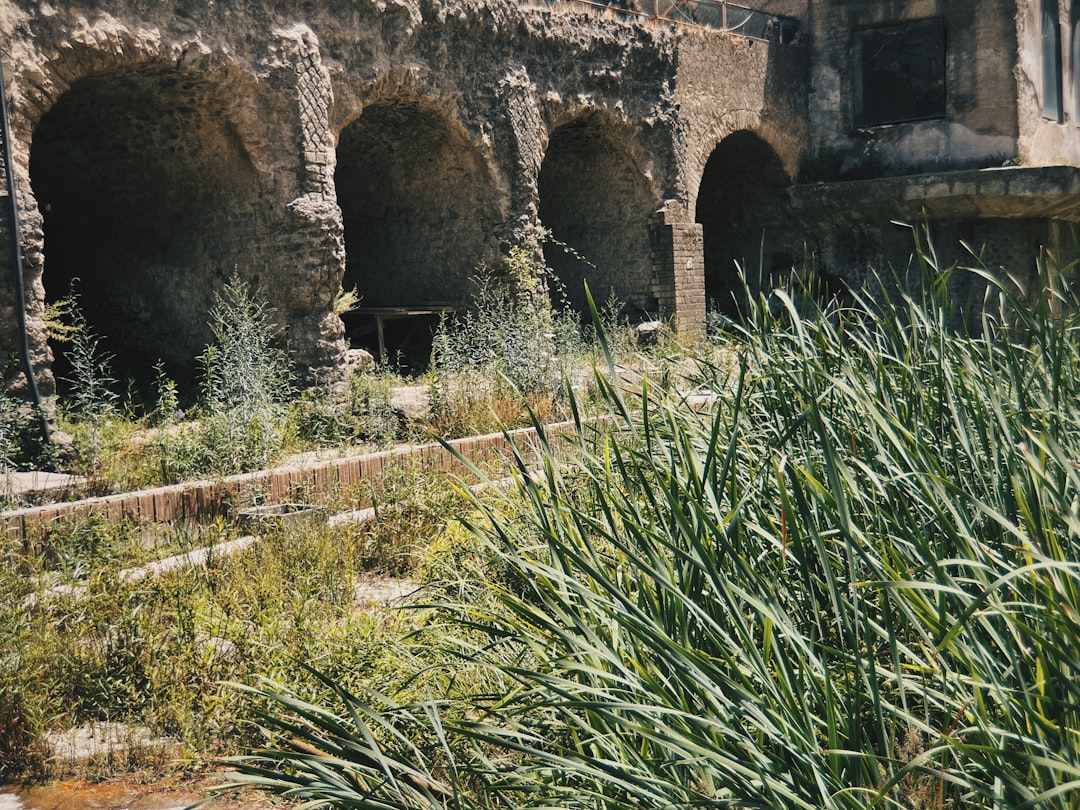
The Aqua Claudia was begun by Caligula in 38 AD and completed by Claudius in 52 AD. It ran for 68 kilometres from its springs in the Anio valley east of Rome, for much of its length underground in a covered channel cut into the rock, but for the final ten kilometres on a series of arches that rose to 28 metres above the Roman plain. Today, sections of those arches still stand in the Parco degli Acquedotti south of Rome — concrete-faced Roman masonry in excellent condition, flanked by the remains of several other aqueducts whose construction dates are separated by centuries. (See also: The Etruscans in Tuscany)
The Romans built eleven aqueducts serving the city over a period from 312 BC to 226 AD. At the system’s peak in the second century AD, they delivered a combined flow estimated at approximately one million cubic metres of water per day — enough for a city of roughly one million people, at a per-capita consumption that modern engineers calculate at about 800 litres per person per day. Contemporary developed-world average consumption is around 150 litres. The difference reflects not profligacy but the structure of Roman urban life: the baths, the fountains, the public latrines, the street washing that all drew from the same system.
How the Engineering Worked
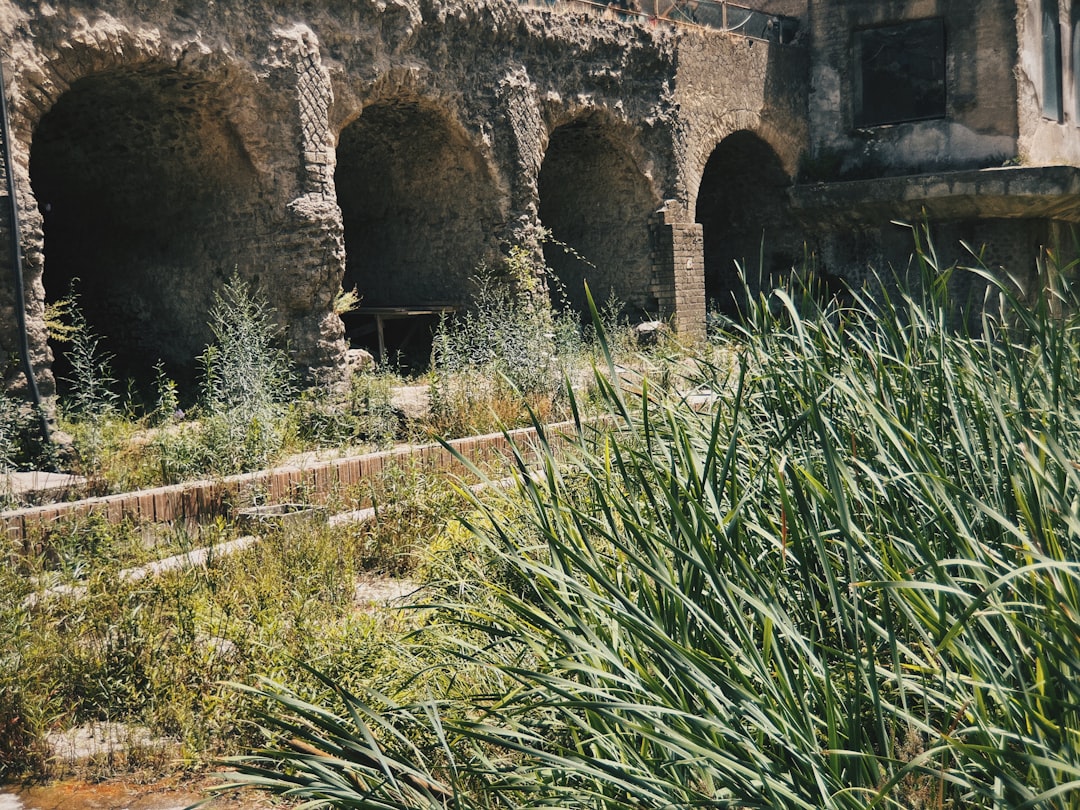
Roman aqueduct engineering solved a specific problem: how to move large quantities of water from high-altitude springs to a lower-altitude city without pumps. The solution was the gradient — a continuous, precisely calculated slope from source to destination, maintained over tens of kilometres, that kept water moving by gravity alone. The Aqua Claudia’s gradient over its 68-kilometre length was approximately 0.5 metres per kilometre. Maintaining this gradient required surveying instruments of considerable precision and construction techniques that could build channels level to within a few centimetres over long distances.
The channels themselves — the specus — were typically rectangular, about 1.2 metres wide and 1.5 metres tall, lined with opus signinum (a hydraulic cement mixing lime with crushed terracotta) that sealed the joints and prevented seepage. The water moved at approximately 0.5 metres per second — fast enough to prevent stagnation, slow enough to prevent erosion of the channel walls. Settling tanks at intervals allowed silt to fall to the bottom and be removed periodically.
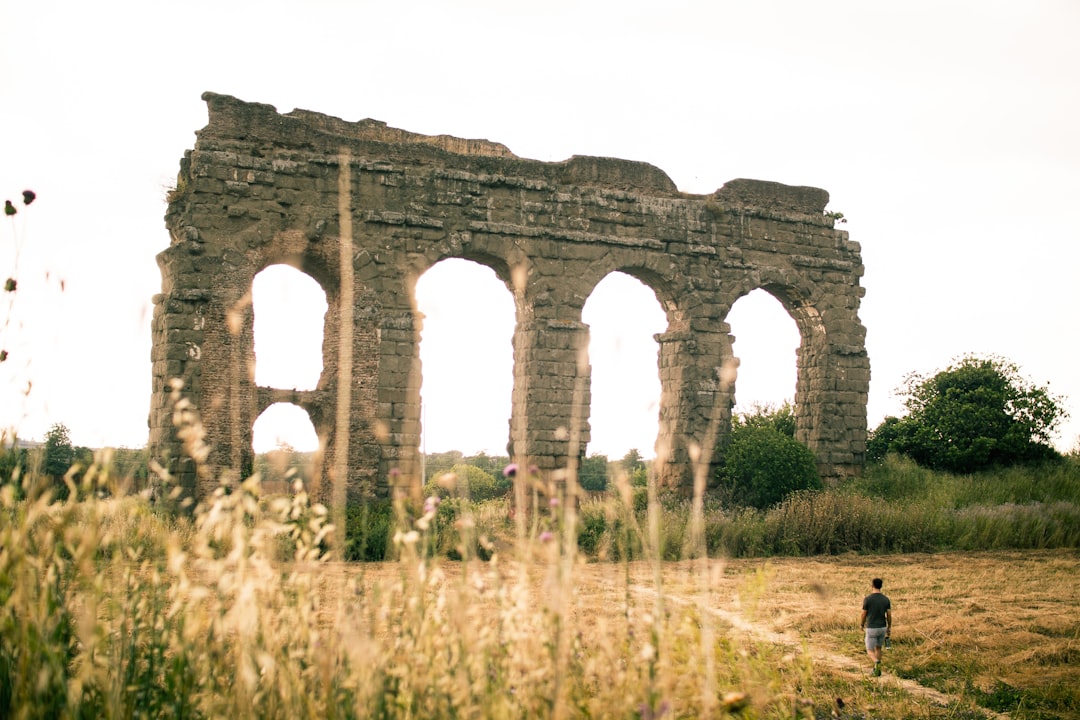
Where the gradient required the channel to descend faster than the water’s velocity could safely accommodate, the Romans used drops and cascades designed to dissipate energy. Where the topography required the aqueduct to cross a valley, they built arches. The arcade sections are the most visible and most photographed elements of Roman aqueduct engineering, but they represent only a fraction of the total system: most of any aqueduct ran underground or in covered channels at ground level, visible only as a slight mound in the landscape.
The Survivals
The Parco degli Acquedotti in Rome, accessible by Metro A from the city centre, contains the most concentrated surviving section of multiple aqueducts anywhere in the world. The remains of seven aqueducts are visible within the park; several are in better condition than the equivalent structures preserved in museums. Walking through the park on a weekday morning — before the joggers and cyclists arrive in number — is one of the more genuinely moving encounters with ancient engineering available in Italy. The scale of the arcade sections, the quality of the masonry after two thousand years, and the sheer calm functional intelligence of the design produce an aesthetic response that is different from the emotion generated by temples or amphitheatres.
Outside Rome, the Pont du Gard in southern France (technically outside Italy but built by Roman engineers for a Roman colony) is the best-preserved elevated aqueduct section in the world. In Italy, the Aqua Augusta, serving the bay of Naples, has several well-preserved sections in the Campanian countryside. The Aqua Vergine, built in 19 BC and still in use today, supplies the Trevi Fountain in Rome via a course that substantially follows the original Roman channel.
The Legacy
Roman aqueduct technology was not significantly improved upon until the nineteenth century, when industrial pumping and pressurised pipe systems created distribution networks that gravity-flow could not provide. The premise — that clean water is a public utility, not a resource each household must arrange for itself — is Roman in origin. What the intervening centuries demonstrated is how completely that premise can be abandoned once the political order that enforced it is gone.
Photo: Skyler Smith on Unsplash