The Counter as Common Ground
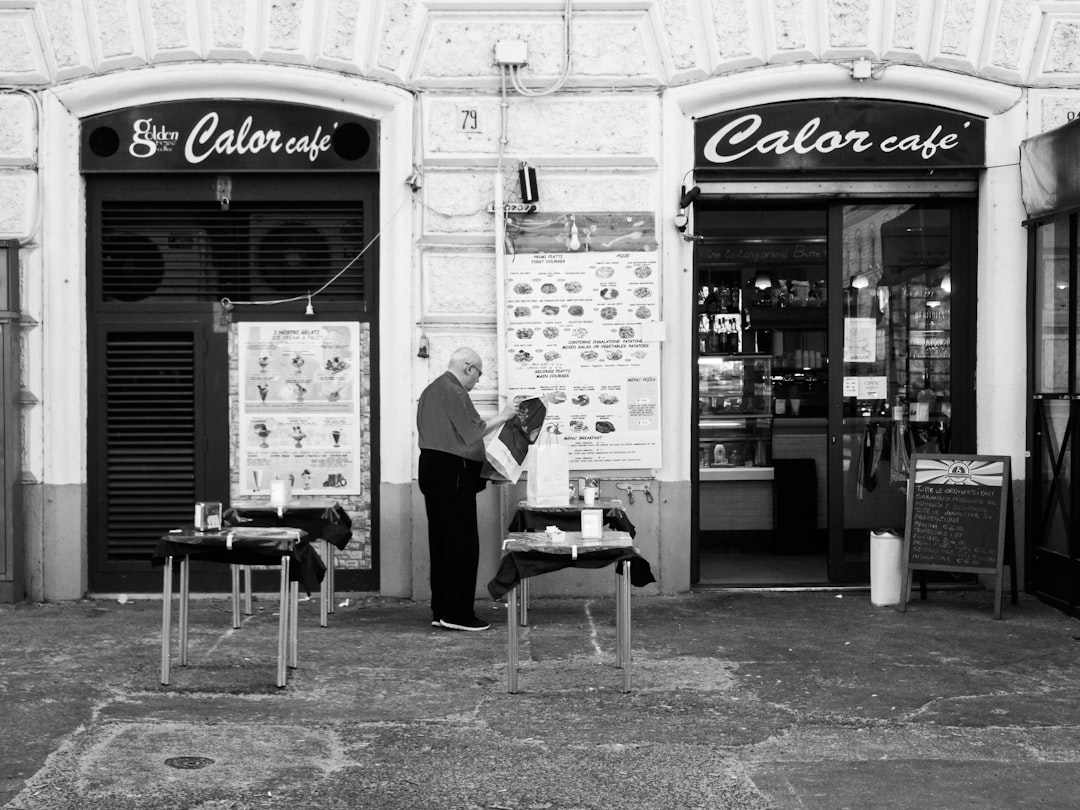
Turin is a city of ceremonies, and the most important of them takes place before nine in the morning. Not in one of the city’s spectacular gilded interiors — though those interiors exist and are genuinely extraordinary. At a zinc counter, standing, in the particular compressed sociability of the Torinese cafè at the opening hour.
The Torinese bar is democratic in the way that few urban institutions are. Everyone uses it: construction workers before their shifts, office workers, students between lectures, retirees who have been coming at the same hour for thirty years. But the rituals of the counter are precise and must be observed. You do not sit unless you intend to pay significantly more. You do not linger after the cup is empty. You order with specificity — doppio, macchiato caldo, ristretto — and the barista receives your order as an instruction, which is then executed with the speed of a person who has done this specific thing thousands of times.
The relationship between the barista and the regular customer in a Torinese bar is one of the more particular social institutions of the city. It operates largely without conversation and largely without eye contact, and yet it is deeply familiar. The order, if you are known, does not need to be spoken. The cup appears.
The Architecture of the Torinese Morning
Turin’s cafè culture cannot be separated from the city’s architectural inheritance. The portici — the arcaded porticoes that run for kilometres through the historic centre — were designed in the eighteenth century to make the city’s public life weather-independent. They succeeded completely. Rain, which falls on Turin with Piedmontese regularity, does not interrupt the morning circuit; it is simply absorbed by the architecture.
The morning circuit in central Turin is a precise geographical phenomenon. It follows the portici along Via Roma, across Piazza San Carlo — where some of the city’s oldest cafè interiors survive in a state of gilded preservation — and into the network of streets between the piazza and the river Po. These streets, particularly in the Quadrilatero Romano, contain the bars that the city considers its own rather than its visitors’: smaller, less theatrical, with the particular atmosphere of a room that has been the same since before living memory.
The Hour That Belongs to Them
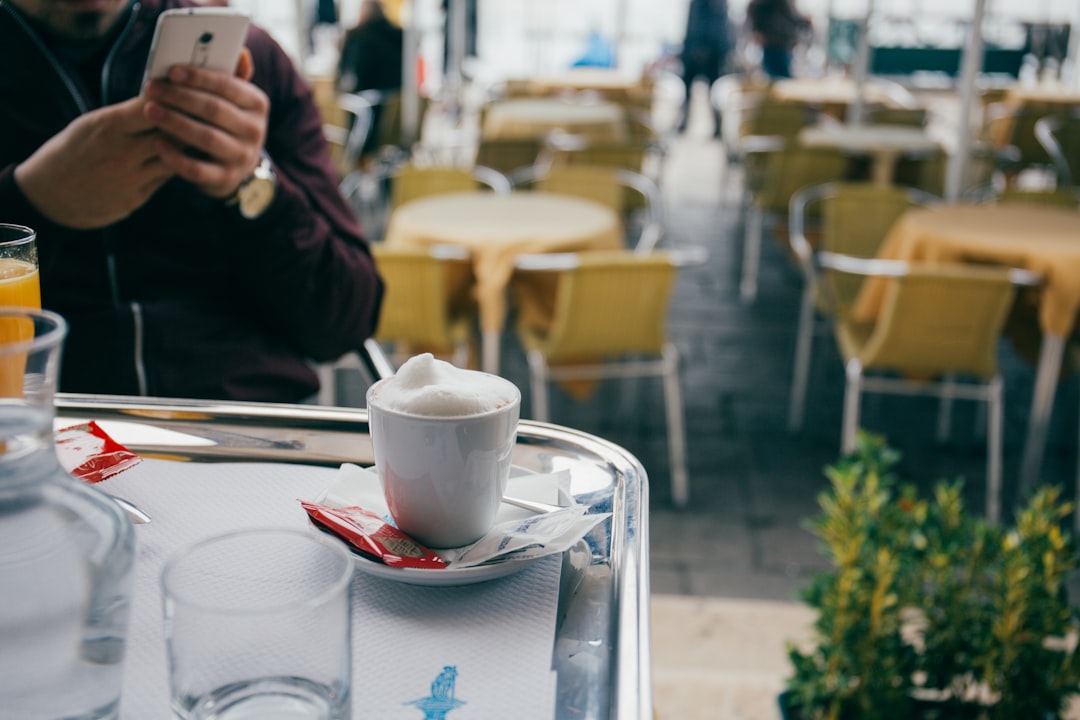
Between seven and eight in the morning, before the offices fill and before the tourist drift begins, these bars belong entirely to their neighbourhood. The clientele is regular, the conversation — where it exists — is brief, and the pace is determined entirely by how quickly the espresso cools. This is the hour that most reveals the Torinese character: precise, self-contained, taking pleasure without announcing it.
The city has a reputation, sometimes stated unkindly, for a certain coolness. What this actually describes is the Piedmontese habit of not explaining itself. Turin does not try to charm you. It goes about its business, and if you observe that business closely, you find something worth watching: a city that takes its pleasures seriously and takes itself seriously without taking either to excess.
The Bicerin and What It Represents
The bicerin — the word is Piedmontese dialect for the small glass in which it is traditionally served — is not a breakfast drink in the casual sense. It is a punctuation mark: a specific pleasure at a specific time. Its components — strong coffee, dark chocolate prepared as a liquid, and whole milk that has been heated but not frothed — are layered and then not stirred. You drink through the layers, receiving them in reverse order: milk first, then chocolate, then the concentrated coffee at the bottom.
The drink belongs to the city, and versions of it exist across Turin’s historic bars. What makes it a cultural object rather than merely a beverage is the context in which it is consumed: the standing position, the morning hour, the zinc counter, the absence of any ceremony beyond the drink itself. Turin’s relationship with chocolate is not widely understood outside Italy, and the city seems content to keep it that way. It is the capital of Italian chocolate, a fact that derives from its historical position as the gateway through which cacao was refined, in the eighteenth century, into the solid form we now take for granted.
The gianduia — chocolate combined with Piedmontese hazelnuts from the Langhe hills to the south — is the city’s most celebrated invention, and it appears in the morning in the form of the gianduiotto, the small foil-wrapped chocolate that arrives beside the espresso cup in the better bars. This detail says something about the Torinese approach to pleasure: it is habitual, and it is non-negotiable. The gianduiotto is not a treat. It comes with the espresso.
The Bars That Time Has Not Touched
There are bars in Turin’s historic centre that have been physically unchanged for a hundred years or more. Not preserved in a museum sense — they are still working bars, their counters worn smooth by elbows, their mirrors slightly foxed, their coffee machinery the most modern available despite the surrounding patina. They represent a particular Torinese attitude toward history: it is not something to be displayed or explained; it is simply the material reality of the room you are standing in.
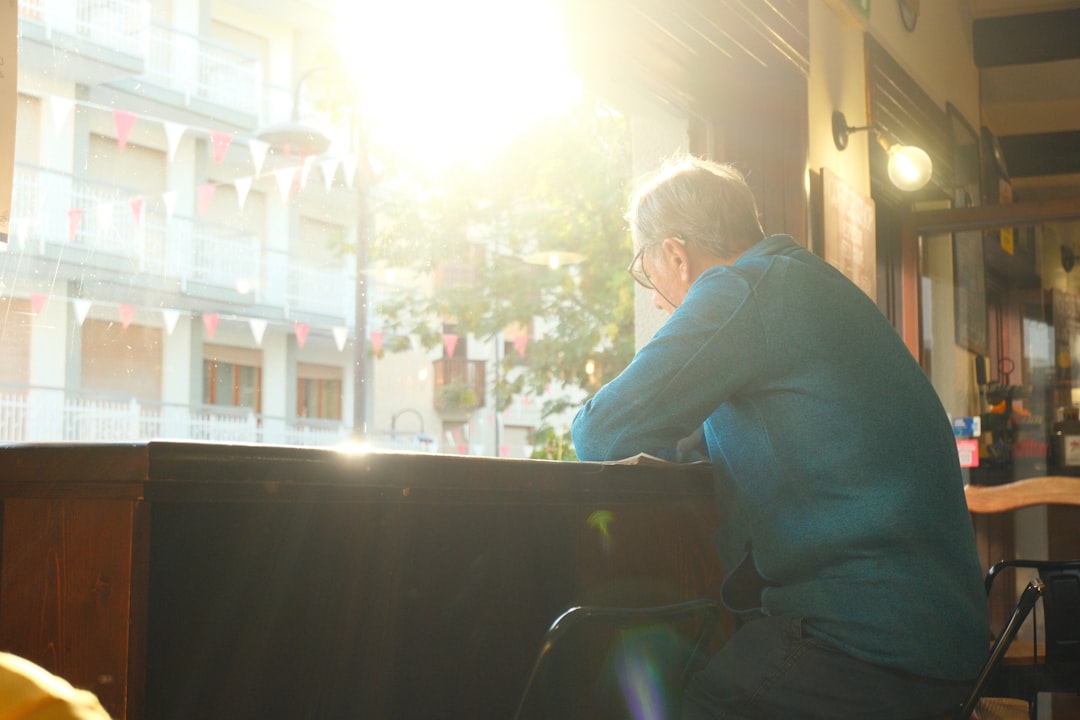
The cafè as a cultural institution in Turin is also the cafè as a political and intellectual institution. The city’s cafè culture has roots in the Enlightenment and the Risorgimento; these were places where ideas moved, where newspapers circulated, where the specific form of Italian liberalism that produced the unified nation of 1861 was debated and refined. Walking into one of these surviving spaces with that history in mind is a different experience from walking into a cafè merely for coffee — though the coffee remains the primary reason to be there.
The Afternoon Aperitivo as Mirror Image
The Torinese bar has a second great moment: the late afternoon aperitivo. Between six and eight in the evening, the same counters that served espresso in the morning become something more elaborate. The aperitivo culture of Turin — which long predates the Milanese version that has become famous internationally — involves the Vermouth di Torino, a fortified wine that the city produced and exported throughout the nineteenth century and continues to produce at levels of quality that have only recently been rediscovered.
The ritual of the early evening Vermouth, served with an olive or a slice of orange, accompanied by the small plates of food that arrive unbidden in a good Torinese bar, is the morning coffee’s twin: unhurried, embedded in the city’s social architecture. Between these two poles — the morning espresso and the evening Vermouth — Turin organises its day.
What to Do With the Information
There is a tendency, in writing about coffee culture, to produce a list: go here, order this, sit there. The Torinese bar resists this approach because the list implies a circuit, and the circuit implies tourism, and the Torinese morning bar is where the city happens to itself — not where it performs for visitors.
The appropriate approach is simpler and harder: choose a neighbourhood, find a bar that does not display its prices in four languages, order an espresso at the counter, and wait to see what happens around you. What happens will be the city in its native state: competent, self-possessed, and entirely indifferent to being observed. Observe it anyway. After three mornings, you will begin to understand it — and the regional rail network makes Turin an easy base from which to visit the Langhe wine country and the Ligurian coast beyond.


