The Architecture of Pause
The Valle d’Itria sits at the geographical centre of Puglia’s heel, a shallow limestone basin between the Adriatic and the Ionian that has always moved at a different velocity from the coastal resorts to its east and south. Its towns — white-walled, their streets barely wide enough for two people walking abreast — were never designed for traffic or commerce in any conventional sense. They were designed for living: for the particular rhythm of a morning’s first errand, an afternoon’s obligatory stillness, an evening that begins before the sun has quite decided to set.
The trulli themselves are part of this. These conical limestone dwellings, with their corbelled roofs and whitewashed walls, are not primarily a spectacle for outsiders, though they have become one. They are a building technology evolved for a specific climate: the thick walls absorb heat during the day and release it slowly through the night, making air conditioning not only unnecessary but counterproductive. Living in a trullo means accepting that the building has its own thermal logic, and that the appropriate response to a July afternoon is not to fight it but to lie down.
The culture of rest in the Valle d’Itria is structural, not aspirational. The midday pause is a live agreement, observed by shopkeepers and pensioners and the women hanging laundry from upper windows with equal seriousness. The streets empty with a decisiveness that visitors often find startling. Two hours later, they fill again.
The pace is set by the stone as much as by the people. Limestone retains heat and releases it slowly; it also creates a specific acoustic quality — softer than asphalt, more resonant than modern renders. The sound of footsteps in an old centro storico here is different from the sound of footsteps in a northern city. Slower, somehow, or perhaps simply more audible to the ear that has stopped rushing.
The Daily Measure of the Valle d’Itria
Alberobello is the most famous of these towns, but it is also the smallest and the most touristically pressured. The real grammar of the place is better read in Locorotondo, Cisternino, Martina Franca — all organized around a series of social moments that function like a daily liturgy. They happen at roughly the same times each day, in roughly the same places, and are observed with a regularity that has nothing to do with obligation and everything to do with pleasure.
Morning, and What It Means Here
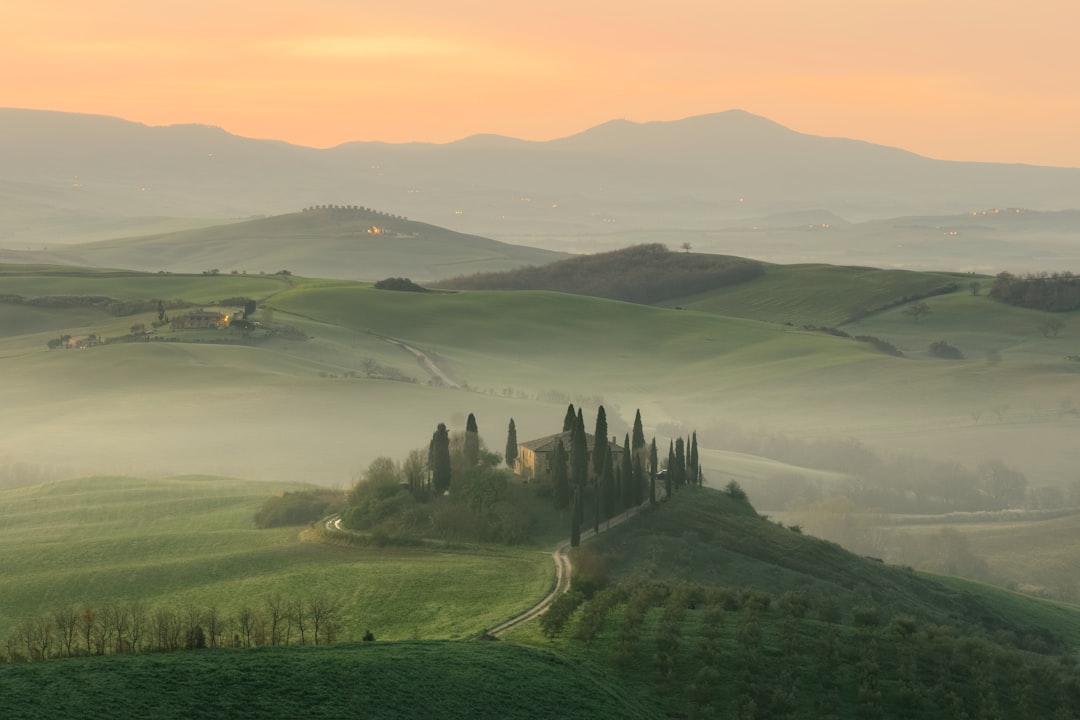
There is a particular quality to the morning light in the Valle d’Itria between late April and early June, before the high season transforms the place. It arrives horizontally across the plateau, bleaching the trulli roofs to a white that seems to radiate rather than reflect. The cafès open early but without urgency. The espresso here is taken standing at the bar — not as a productivity measure but as a social one: you drink alongside your neighbours, exchange a handful of words, and leave. The whole transaction takes four minutes. It is not intended to take longer.
The morning’s first errand — bread, vegetables from the weekly market if the day falls right, a visit to whoever is selling the season’s first fave beans from the back of a van — is a social circuit as much as a practical one. Nothing about it is efficient, and nobody expects it to be. The conversation that takes place over a bag of tomatoes is not an inconvenience attached to the purchase; it is the point.
Stone, Time, and the Economics of Restraint
The Valle d’Itria is not prosperous in any conventional economic metric. Its towns are agricultural, with an artisanal layer — olive oil, wine, cheese — that has found international markets without particularly changing its character. The wealth that exists here is old, and the poverty that also exists here is quiet. What is absent is the particular anxiety of aspiration, the sense that the current state of things is only a preliminary to something better or faster.
Nostalgia has nothing to do with it. The younger generations of the valley have smartphones and attend universities in Bari or Naples; they return for the summer and, sometimes, for good. What they come back to is not a fantasy of the past but a specific quality of the present: the capacity to be in a place rather than passing through it.
The limestone economy of the plateau created a landscape that required patience. Dry stone walls, cultivated terraces, orchards of almond and fig: you planted a fig tree knowing that you would not taste its first mature fruit for a decade. You built a wall knowing that your great-grandchildren would maintain it. The timescale of agricultural Puglia is generational, and it has left its mark on the culture’s relationship with time even now, when fewer people actually farm.
The Social Hours
In Cisternino, which sits at the plateau’s highest point and has remained largely free of the coach-tour circuits that have shaped Alberobello, the evening begins at the small square just inside the Porta Grande at a time that varies slightly with the season but is always before eight. The gathering is not organized or announced; it simply happens, as it has always happened, because that is where people go when the day’s work is done and the day’s heat is beginning to release.
People stand, or sit on the low walls, or pull chairs from inside their own front doors. Children run without particular destination. Dogs participate. The conversation is continuous but not intense — the low, unhurried exchange of people who have known each other for decades and are not trying to impress.
For the visitor who submits to this rhythm rather than observing it from outside, something interesting happens. The phone becomes less interesting. The urgency of the itinerary loosens. The question of what to do next loses its grip, because the answer is already evident: stay here, for now.
The Evening Gathering
The transition from the late afternoon passeggiata to the evening meal in this part of Puglia is gradual rather than abrupt. There is no fixed dinner hour imposed from outside. The restaurants — and in the old towns they are modest, family-run, without much in the way of décor or theatre — fill slowly, beginning around eight and reaching their peak well after nine. The menu in such places is not elaborate: it reflects what was available that morning, what is in season, what the cook’s grandmother made.
The wine is local. Primitivo and Negroamaro dominate, with an occasional white from the Verdeca grape grown on the plateau’s limestone soils. It is ordered by the carafe rather than the bottle. This is not a wine culture interested in labels or vintages, at least not at this level of daily life. The carafe wine of Puglia is honest. It is what it is, and it is very good.
What It Actually Takes to Live Slowly
There is a version of slow travel that is really just fast travel with softer edges — the same compressed itinerary of sights and meals and photographs, but with more yoga. The Valle d’Itria resists this version because it has nothing in particular to offer it. The number of classified attractions is low. The museums are minor. The churches are beautiful but not spectacular. The landscape, while extraordinary in its way, does not resolve itself into easy postcard images.
What it offers instead is duration. It requires three or four days before it gives itself fully, before the pattern of the place becomes readable and the rhythm of its hours starts to feel natural rather than foreign. The traveller who arrives on a Tuesday and leaves on a Thursday has visited. The traveller who arrives on a Saturday and leaves the following Saturday has been somewhere.
This distinction matters because the Valle d’Itria is genuinely different after the third day. The bar where you drank your first morning espresso becomes the bar where the owner knows your order. The square where you first felt like an observer becomes the square where you feel, if not exactly local, then at least present. The difference is between consuming an experience and briefly inhabiting one.
A Different Kind of Itinerary
The irony of writing about slow living is that the act of prescription tends to undo it. No article about slowing down can actually slow you down; that requires a decision made in advance and sustained under the pressure of the tourist impulse to optimise. But the Valle d’Itria is among the places in Italy most forgiving of the wrong initial pace. It is patient with impatient arrivals.
The practical architecture of a slower visit here is simple: rent a masseria or farmhouse in or near one of the hill towns rather than on the coast; plan nothing for the first full day; eat when the locals eat rather than when hunger or convention suggests; walk without destination as often as possible. The plateau’s network of dry-stone lanes — the muretti a secco paths that connect farm to farm and town to town — is navigable on foot in almost any direction. They do not lead to viewpoints or photo opportunities in the guidebook sense. They lead through the working landscape of the valley, which is beautiful precisely because it was built for use rather than admiration. Regional train connections from Bari and Brindisi make the hill towns accessible without a car.
The trulli you pass will be occupied or in ruin. The almond trees will be in blossom or in fruit depending on the month. The light will do whatever it does in this particular place at this particular time of year. None of it will be arranged for your benefit. That is, in the end, the point.


