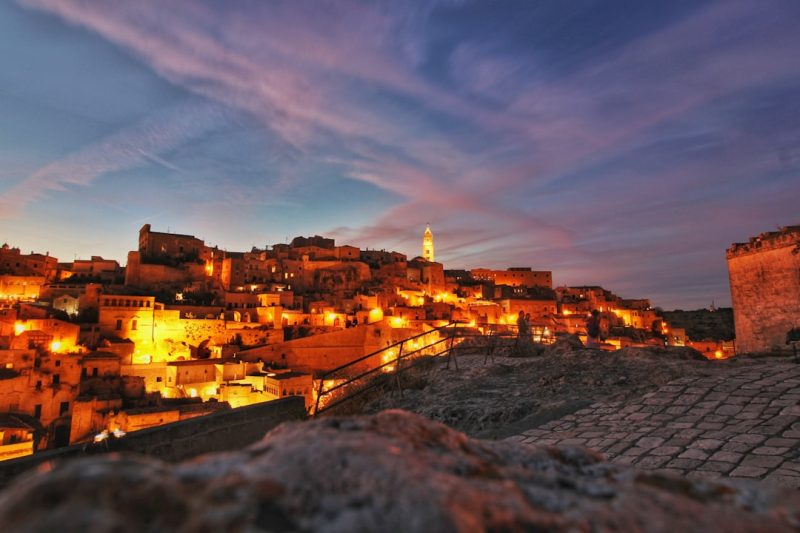
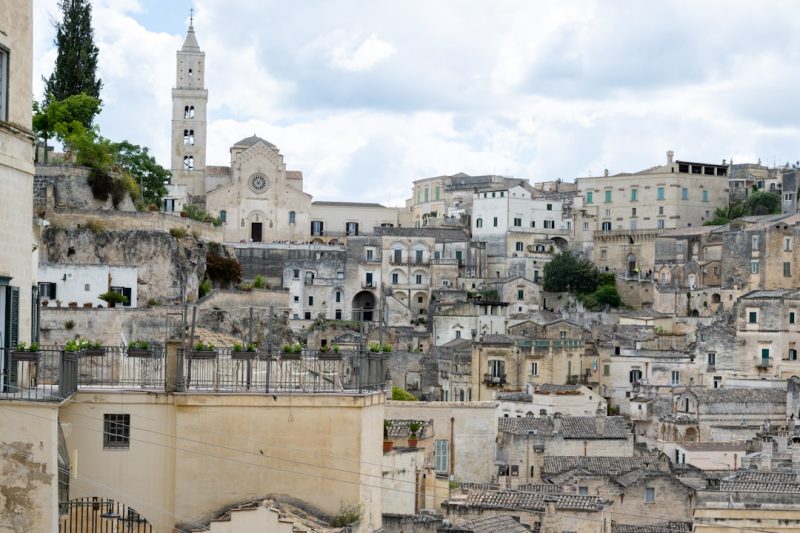
The name comes from the Greek: penta, five, and daktylos, fingers. The rock formation on which Pentedattilo is built rises from the Calabrian hillside in five distinct peaks — a natural fortress that the first settlers, almost certainly Greek colonists from the coastal cities of Magna Graecia, recognised as defensible ground. They built there. Their successors built higher. The village that accumulated on and around the rock over fifteen centuries became one of the most dramatically sited settlements in southern Italy, and one of the most isolated.
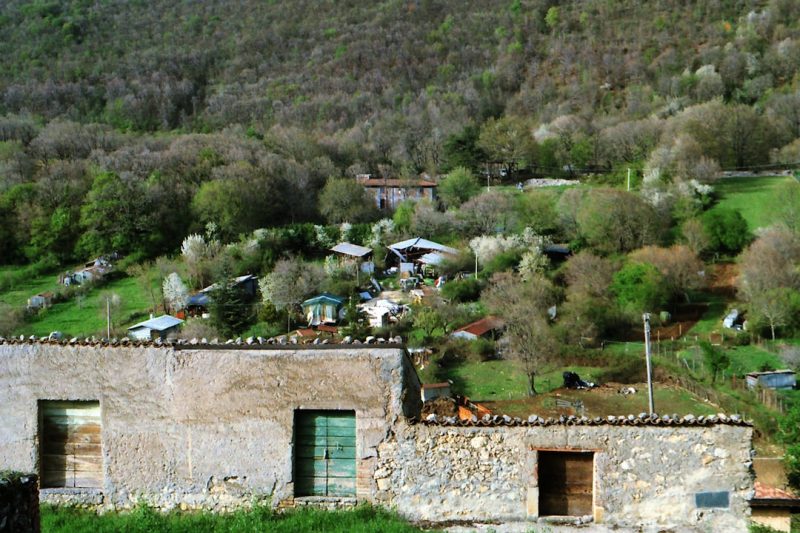
Today Pentedattilo is largely abandoned. The earthquake of 1783, which devastated much of Calabria, severely damaged the village and killed many of its inhabitants. Recovery was partial and slow. The postwar decades brought the wider demographic transformation of southern Italy — the migration north to the industrial cities, the emigration to Germany and Switzerland — that emptied dozens of Calabrian mountain villages. By the 1960s, most of the remaining population had relocated to Melito di Porto Salvo on the coast below. The houses were left. The church fell into disrepair. The stone streets, still legible under the vegetation, became quiet.
The Village Today
A small number of people have returned to Pentedattilo since the 1990s. The association Pentedattilo in Movimento has organised cultural events, restoration work, and artist residencies that have brought intermittent life back to the village. Some of the old houses have been stabilised and are used for accommodation and workshops in summer. The church of San Pietro has been partially restored. The atmosphere is that of a place in transition rather than a place that has finished its story.
The physical experience of visiting Pentedattilo is specific in ways that the description cannot fully convey. The approach road rises through orange groves and scrub maquis to the base of the rock. The village begins where the road ends. The streets are narrow and steeply inclined, stone-paved, with the ruins of houses on either side in various states — some collapsed entirely, some retaining walls and door frames, some apparently only recently vacated. The rock towers above and around, so close that in places you could touch it from an upper window. The view from the highest accessible point — over the Strait of Messina to Sicily, with Etna visible on clear days — is one of the most dramatically positioned panoramas in Calabria.
The Massacre
Pentedattilo has a specific historical memory that gives the abandonment a weight beyond the sociological. In 1686, the Marchese di Pentedattilo, Alberto Albertini, was killed along with his family by Bernardino Abenavoli, a rival noble who had been refused consent to marry Albertini’s daughter. The massacre, which killed the Marchese, his wife, his son, and several servants, has been retold in Calabrian oral tradition and folk ballads for three centuries. The daughter who was the occasion for the dispute was taken to Naples by the perpetrator and subsequently died in a convent. The event has given Pentedattilo a reputation — amplified by its visual drama and its subsequent abandonment — as a place marked by violence and grief.
This is not the right frame for visiting. Pentedattilo is not a tragedy site. It is a village whose history is as complex and long as most Calabrian villages, whose abandonment is the product of the same forces that emptied hundreds of other communities across the Italian south, and whose partial return to life is a quiet continuation of the same human persistence that put the first settlement on that rock two and a half thousand years ago.
Getting There
Pentedattilo is in the Aspromonte foothills south of Reggio Calabria, approximately thirty kilometres from the city along a road that follows the ridgeline above the coastal plain. The drive takes forty-five minutes to an hour depending on traffic at the coast. The village is not served by public transport. Visit on a weekday in spring or autumn for the best combination of decent weather and minimal other visitors.
Photo: Rainhard Wiesinger on Unsplash