Calabria has been Italy’s cautionary tale for so long that the narrative has calcified into cliche: poverty, organised crime, depopulation, isolation, the place where the state stopped working and the rules were different. There is truth in the history — the Calabrian south has endured an accumulation of structural difficulties that would test any community — but the story that visitors encounter when they arrive in 2026 is more complicated, more interesting, and considerably more hopeful than the received version.
A generation of Calabrians who left for the north or for abroad and then chose to return. A creative sector that is building on cultural inheritance rather than trying to escape it. A food and wine tradition that has been quietly exceptional for decades but is only now receiving the broader attention it deserves. A coastline of extraordinary natural quality. An interior — the Aspromonte massif, the Sila plateau, the Pollino highlands in the north — that offers wilderness experiences that the more marketed mountain areas of Italy cannot match. And, threading through all of it, a particular intensity of landscape and light that has always been there and is finally being noticed by the world beyond Reggio Calabria and Cosenza.

The Coast: Tyrrhenian and Ionian, Two Different Seas
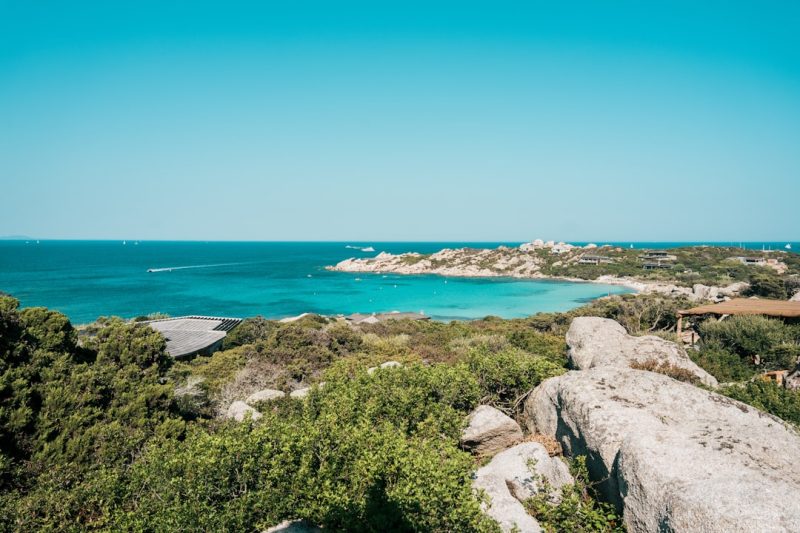
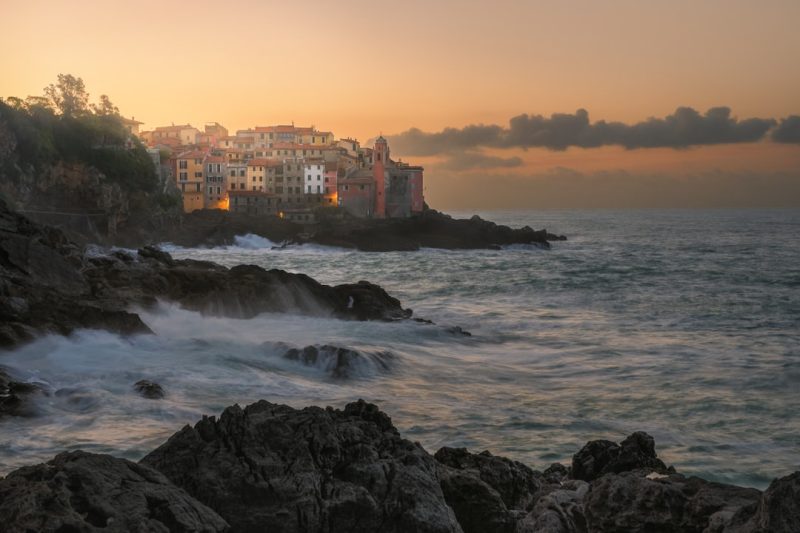
Calabria is unusual among Italian regions in having significant coastlines on two entirely different bodies of water. The western coast faces the Tyrrhenian Sea and has the character of a cliff-and-cove landscape — limestone headlands, fishing villages on rocky promontories, small beaches accessible by road or by sea. The eastern coast faces the Ionian, an older and deeper sea, and is characterised by long sandy beaches backed by flat coastal plain and, beyond that, the immediate rise of the Aspromonte massif. The two coasts produce different experiences in water, landscape, and the settlements built along them.
The Tyrrhenian coast north of Tropea — the Riviera dei Cedri, named for the citron groves that have characterised this stretch of coast since antiquity — is one of the most dramatically beautiful on the Tyrrhenian. The cedro (citron) cultivated here is a distinct variety used in traditional Jewish communities for the Sukkot ritual and exported globally for that purpose. The combination of cliff, sea, citrus, and the Greek and Norman architectural history of the settlements along this coast gives it a density of interest that the more uniform beauty of the beach resorts to the south does not provide.
Tropea: The Famous One
Tropea is the most visited point on the Calabrian coast and its fame is entirely justified by the visual quality of the site: a town perched on a sandstone cliff above a beach of white sand and water that runs from pale green in the shallows to deep blue at the horizon. The red onion grown in the area around Tropea — sweet, mild, with a particular flavour that distinguishes it clearly from standard varieties — has become a regional emblem and appears in dishes, preserves, and on market stalls throughout the south. In summer, Tropea is busy. Outside of July and August, it is manageable and genuinely beautiful.
The Ionian Coast and the Greek Inheritance
The Ionian coast of Calabria carries the deepest historical layer of any part of the Italian south. This was the heart of Magna Graecia — the area of southern Italy and Sicily’s southeast colonised by Greek city-states from the 8th century BCE onward — and the density of Greek colonial foundations along the Ionian shore means that every significant settlement has roots that predate Rome by several centuries. Locri, Crotone, Sybaris (now Sibari), Reggio: these were major cities of the ancient Greek world, and their ruins and museum collections represent a layer of history that is consistently undervisited relative to the Pompeii or Rome equivalents.

The Riace bronzes — two full-size Greek bronze statues found on the seabed off the Ionian coast in 1972 and now in the Museo Nazionale della Magna Grecia in Reggio Calabria — are among the most important works of ancient art in existence. They were found by a snorkeller diving in shallow water, which gives some sense of the archaeological density of this coast. The museum that houses them is one of the finest in Italy and should be a primary destination for anyone interested in Greek antiquity. It is visited at a fraction of the rate of the archaeological museums in Naples or Florence.
The Interior: Three Massifs, One Region
The Calabrian interior is divided into three distinct highland zones, each with its own character and ecological identity. The Pollino massif in the north (shared with Basilicata) has been addressed in this magazine’s coverage of that region and represents the wildest and highest terrain. The Sila plateau in the centre is a high upland — averaging around 1,200 metres, with peaks above 1,900 metres — that functions as the water tower of the region, its forests of Calabrian pine and beech feeding the rivers that flow to both coasts. The Aspromonte massif in the south, between the Ionian and the Strait of Messina, is the most isolated and the most intensely characterful of the three.
Aspromonte is a name that carries, in Italian culture, connotations of remoteness, banditry, and impenetrability — associations that belong mostly to the past but that still colour the way the massif is perceived from outside. The reality is a national park of considerable ecological richness, with beech forests at altitude, Mediterranean scrub on the lower slopes facing the coast, and a network of walking routes that offer access to a landscape that feels genuinely wild by Italian standards. The villages of the Aspromonte interior — many of them with Greek cultural roots dating from the Byzantine period, speaking a dialect of Greek that survived centuries of isolation — are among the most culturally distinctive in Italy.
The New Energy: What is Actually Changing
The change in Calabria over the past decade is real and observable, but it requires some calibration to understand correctly. It is not a transformation of the kind that tourism marketing tends to describe — it is not a region that has suddenly become easy to visit, or that has built the infrastructure to receive large numbers of visitors efficiently. What has changed is more specific and more significant: a cohort of Calabrians who have returned with skills and capital acquired elsewhere and are applying them to projects rooted in the specific character of the region.

This shows up in the food and wine sector most clearly. Calabrian wine production — built around the Gaglioppo variety in the Cirò DOC, one of the oldest continuously produced wines in Italy — has attracted serious winemaking attention from producers who are working with existing old-vine material and local knowledge to produce wines of genuine complexity. The Ciro’ Classico zone, on the Ionian coast, has been producing wine on the same hillsides since at least the period of Greek colonisation, and the wines being made from this inheritance now are among the most interesting in southern Italy.
The Nduja of Spilinga — the spreadable, fiery pork sausage that has become globally known through its adoption by pizza and charcuterie culture worldwide — represents a different kind of attention: a local product that is finding markets internationally and supporting artisanal production at home. The broader preserved meat and charcuterie tradition of Calabria, built on pork in its various forms, is one of the most developed in Italy and is now receiving the curatorial attention it deserves from producers who are recovering traditional recipes and ageing techniques.
The Food: Heat, Pork, and Complexity
Calabrian food is organised around a few key principles: the peperoncino (chilli pepper) as a defining flavour element rather than an incidental addition; preserved pork in all its forms as the protein backbone of the cuisine; fresh vegetables at their seasonal peak prepared without unnecessary complication; and the particular intensity that comes from a Mediterranean climate at its most extreme, where heat, light, and volcanic soil push flavour development to its limit.
The peperoncino culture here is distinct from how chilli is used elsewhere in Italian cooking. It is not simply heat for heat’s sake — the varieties cultivated in Calabria range from mild to very hot, and the understanding of how to deploy them at different stages of cooking, in different concentrations, with different fats and base flavours, constitutes a genuine culinary vocabulary. A ragù made with the right Calabrian sausage and a measured amount of chilli has a complexity that cannot be produced by adding commercial chilli flakes to a generic tomato sauce.
Expect to spend €12-22 per person for a full meal in a local establishment in the smaller towns and interior villages. The coast in peak summer commands higher prices at restaurants catering to beach visitors, but the quality premium does not always accompany the price increase.
Getting There and Practical Matters
Calabria has two significant airports — at Reggio Calabria in the south and at Lamezia Terme in the centre — with connections to major Italian cities and a limited range of European destinations. The high-speed rail network reaches Salerno, from which the journey to Reggio continues on the conventional line — a beautiful coastal route along the Tyrrhenian that takes approximately three hours from Salerno. Within the region, a car is essentially necessary for exploring beyond the main coastal corridor and the larger cities.
The optimal season for coastal visits is June, early July, and September — before and after the August peak when the Italian domestic demand is at its highest. The interior mountains are at their best from May to October, with the June wildflower season in the Sila and Pollino particularly rewarding. Winter is mild on the coasts and cold and snowy in the mountains.
The Right Moment
The question of whether Calabria is “ready” for international visitors is less useful than the question of what kind of visitor Calabria suits. A visitor who requires the smoothed infrastructure and predictable experience of a well-developed tourist destination will find gaps and inconsistencies. A visitor who values the encounter with a place in the process of understanding its own potential — and who can contribute to that process with curiosity rather than demanding that it already be resolved — will find Calabria at precisely the right moment in its own evolution. The energy that is building here is not yet performing for outside consumption. It is still primarily directed inward. That quality is, for the right traveller, exactly what makes it worth attending to now.