The train from Bari to Lecce takes between one and a half and two hours on the Ferrovie del Sud Est, depending on which service you board. It is not a high-speed journey — the FSE is a private regional network with rolling stock and infrastructure that belongs to a different era of Italian rail travel — and the pace of it is the point. The Puglia that passes outside the window on this journey is not the Puglia of the Amalfi comparisons or the international travel media’s current enthusiasm. It is the flat, sun-bleached, olive-grove-saturated interior of the Murge and the Salento that tourists move through too quickly in cars, and which the train delivers at the speed the landscape deserves.
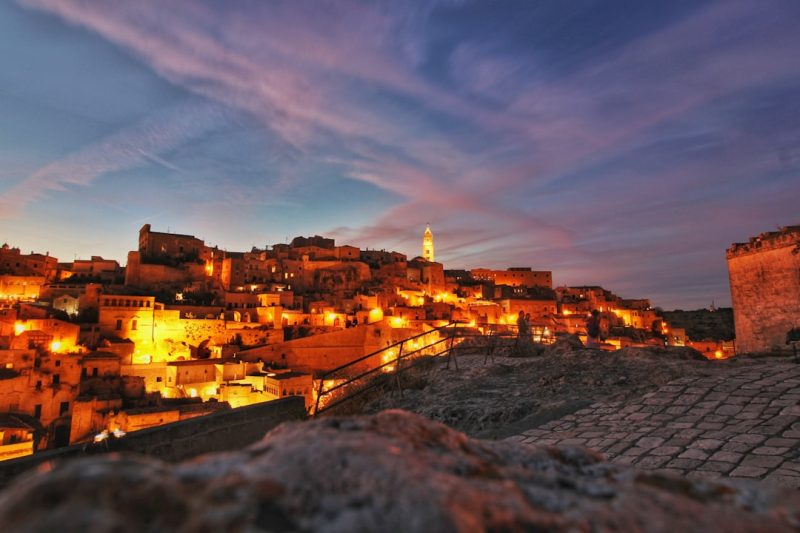
Puglia has become, in the past decade, one of the most visited regions in Italy for international travellers. The trulli of Alberobello, the Sassi-adjacent profile of Matera (just across the Basilicata border), the baroque of Lecce, the beaches of the Salento peninsula, and the food — burrata, orecchiette, focaccia barese, the finest olive oil in the world by some measures — have combined to make the region a destination that manages simultaneously to be authentic and intensely photographed. The challenge for visitors arriving now is to find the version of Puglia that predates the photogenic packaging.
Starting in Bari: A Port City with Its Own Logic
Bari is the regional capital and the largest city in Puglia, and it functions as one — a working port, an administrative centre, a university city with a street life that is primarily organised around the needs of people who live here rather than those passing through. The old town (Bari Vecchia) occupies a peninsula that juts into the Adriatic and contains a density of medieval architecture — the Basilica of San Nicola, the Norman-Swabian castle, the cathedral — compressed into a network of lanes narrow enough that two people walking abreast fill the street. The women who make orecchiette by hand in the doorways of Bari Vecchia have become a documented spectacle rather than an unremarked domestic habit; this is the tourism-local relationship in compressed form. The product they are making, purchased directly from them, is genuinely good.
The focaccia barese — flat, thick, with the olive oil baked into every layer and topped with halved cherry tomatoes and olives — is the primary street food of Bari and is available from bakeries throughout the city. The quality varies, the best version requiring warm from the oven and eaten standing. A piece of properly made focaccia barese, olive oil running through the fingers, the tomatoes still slightly acid-sweet from the heat, in the street outside the bakery in the early morning: this is among the simplest and most satisfying food experiences in southern Italy, and it costs approximately €1.50.
The Trulli Country: Alberobello and the Valle d’Itria
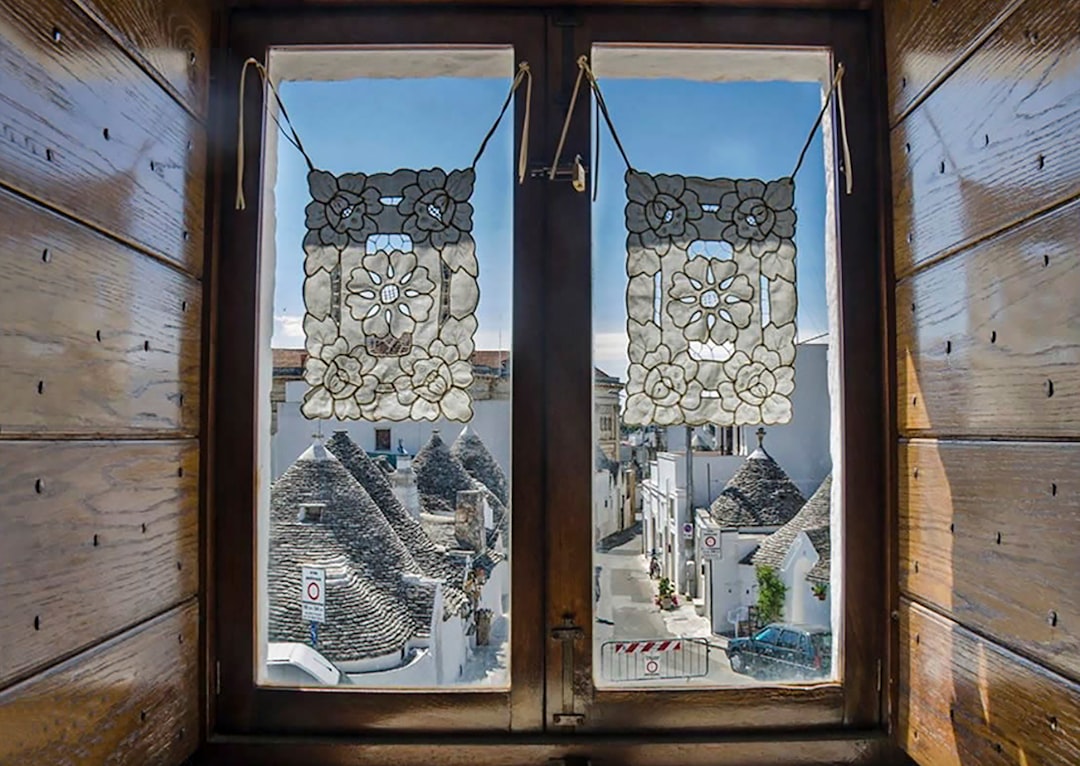
Alberobello, the UNESCO World Heritage Site whose concentration of trulli — the distinctive cone-roofed dry-stone dwellings unique to this part of Puglia — has made it the single most visited town in the region, sits between Bari and the Taranto coast on the Ferrovie del Sud Est network. A change of line at Bari or at Taranto makes it accessible from the main Bari-Lecce line.
The trulli district of Alberobello (the Rione Monti, north of the main square) has been managed as a tourist attraction since the 1920s and is now almost entirely given over to shops, accommodation, and restaurants. The experience of walking through the trulli zone in high season — July-August particularly — is one of managed heritage consumption rather than encounter with a living architectural tradition. The most interesting engagement with trulli culture is available in the surrounding Valle d’Itria, where the farm and agricultural landscape still contains working trulli used for storage and shelter, and where the form can be seen in its functional context rather than its tourist-industry one.
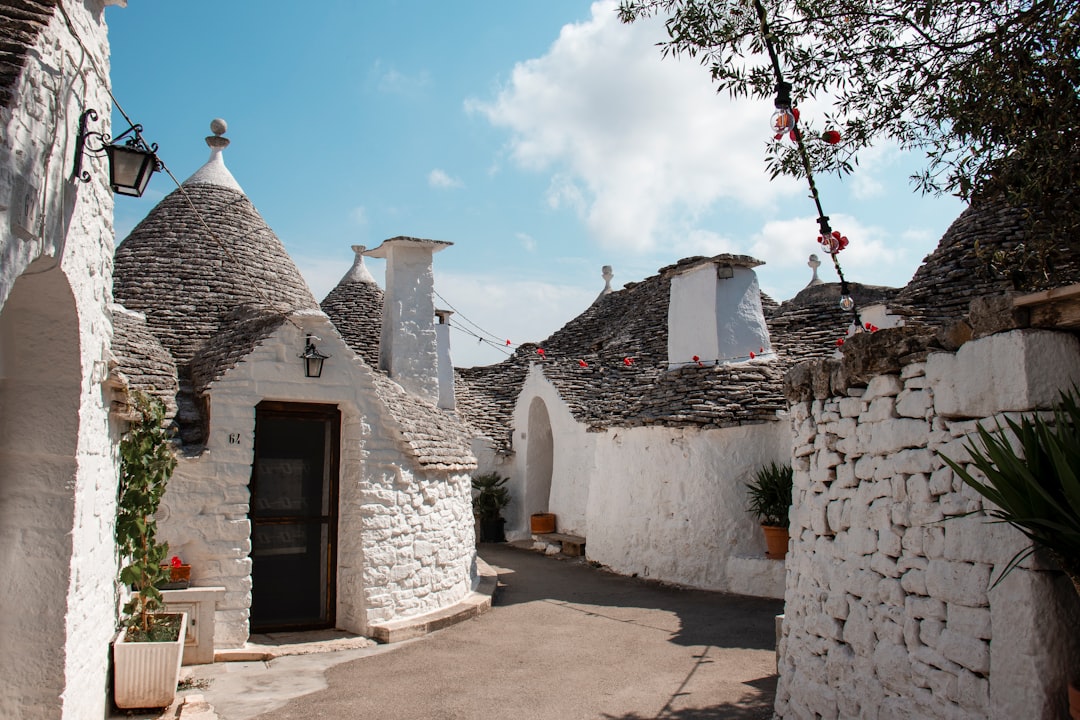
The towns of Locorotondo, Martina Franca, and Cisternino in the Valle d’Itria have the trulli landscape as their backdrop without Alberobello’s concentration of tourist infrastructure. Martina Franca, in particular, has a baroque town centre of considerable quality and an annual opera festival (the Festival della Valle d’Itria) that runs through July and August in the courtyard of the Palazzo Ducale. The festival draws serious audiences from across Italy and internationally for a programme that emphasises rarer operatic repertoire.
The Train: FSE and What It Reveals
The Ferrovie del Sud Est network, connecting Bari with Taranto and Lecce via a series of branch lines through the interior, is one of the most characterful rail experiences in Italy. The trains are not modern — the rolling stock is older, the stations small and sometimes unmanned, the timetables reflecting the needs of workers and students rather than tourists. The slow pace of the journey through the olive groves and the flat limestone country of the Murge and the Salento produces the kind of encounter with a landscape that the car, with its insistence on movement toward a destination, tends to prevent.
The journey from Bari to Lecce direct takes approximately two hours on the Trenitalia mainline (via Brindisi). The FSE alternative routes — through Alberobello, Locorotondo, Martina Franca, and Taranto — take three to four hours and provide more of the interior. For a slow travel itinerary, combining the mainline for speed where necessary with the FSE for the interior stages provides the best balance of coverage and experience.
Lecce: The Capital of Baroque
Lecce has a legitimate claim to being the most complete baroque urban environment in Italy, and perhaps in Europe. The local stone — Lecce stone, a fine-grained golden limestone that carves with exceptional precision — made possible an elaboration of baroque decoration across the city’s churches, palaces, and public buildings that has no equal anywhere. The facade of the Church of Santa Croce, which absorbed the creative energies of a succession of architects and craftsmen over two centuries from the late 16th century onward, is the most famous single expression of this tradition, but the density of comparable — if less extreme — decoration throughout the historic centre is what makes the experience of walking through Lecce genuinely cumulative rather than dependent on any single building.
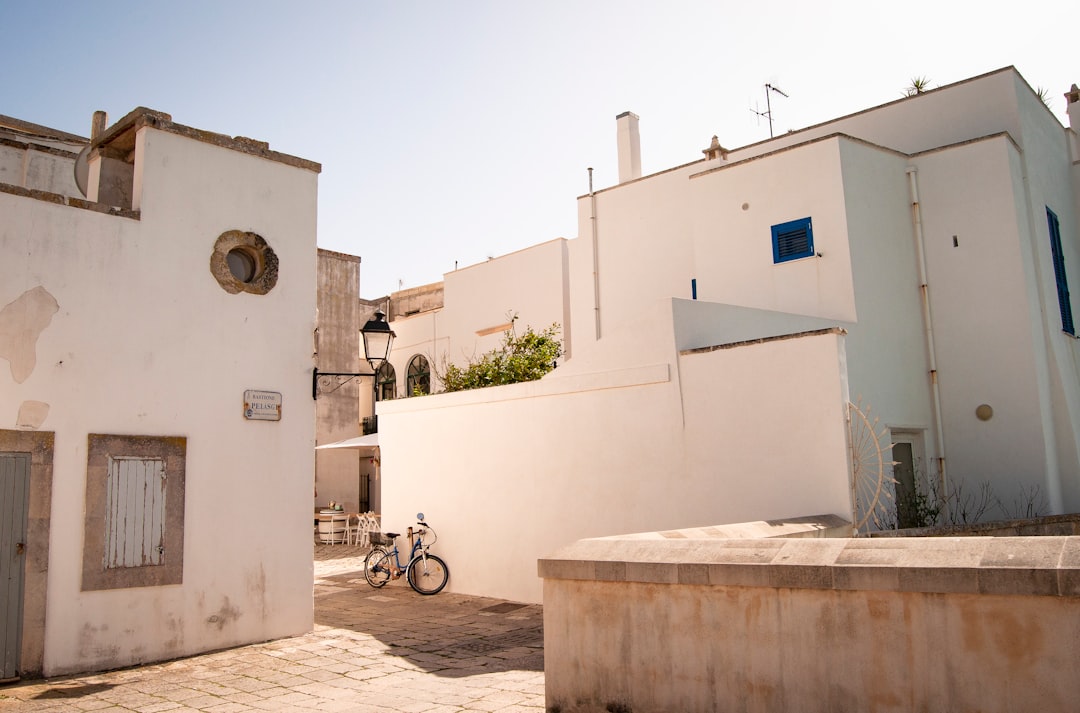
Lecce is also a living city — the university gives it a student population that generates the bar culture and evening energy that purely monument-city tourism cannot produce. The Salento café tradition — caffè in ghiaccio, espresso poured over ice, consumed at speed with a brioche in the morning heat of June — is one of the more specific pleasures of arriving in Lecce after the train from Bari and finding that the city has its own relationship with temperature and time.
The Salento Peninsula
South of Lecce, the land narrows toward the tip of the Italian boot — the Salento peninsula, which terminates at the dramatic rocky headland of Santa Maria di Leuca. The Ionian coast to the west of the peninsula has a different character from the Adriatic coast to the east: the Ionian is calmer, the water clearer, the coves more sheltered, and the summer swimming more reliably comfortable. The Adriatic coast has more energy — the characteristic wind of the Adriatic (the bora’s southern equivalent, the tramontana) makes the sea more active and the beaches more atmospheric in the afternoons.
The towns of the Salento interior — Gallipoli on the Ionian coast, Otranto on the Adriatic — have specific characters worth the detour. Otranto’s cathedral contains the most extraordinary medieval floor mosaic in Italy — a complete cosmological programme executed in the 12th century by a monk named Pantaleone, covering the entire nave floor with images from scripture, classical mythology, and medieval bestiaries. It takes considerable time to read, and the experience of walking slowly across it, following the narrative from west to east, is unlike anything else in Italian ecclesiastical art.
The Food of the Salento
The food of the Salento differs from that of the northern Puglia in its emphasis on vegetables — the pitta di patate, the ciceri e tria (chickpeas with fried and boiled pasta strips, one of the oldest dishes in the Italian south), the frisa (a dry bread ring soaked in water and dressed with tomatoes, olive oil, and oregano), and the various preparations of wild herbs and foraged greens that belong to a cucina povera tradition with deep historical roots. The olive oil from the Salento, produced from ancient Ogliarola Salentina and Cellina di Nardò olives, has a different profile from the oil of the Gargano or the Murge — fruitier, less intensely peppery — and is used with a generosity that reflects its centrality to the local economy.
Expect to spend €15-25 per person for a full meal in a local establishment in the smaller towns; the beach restaurants on the Ionian coast command higher prices in summer. The quality of the produce is consistently high throughout the peninsula, and the simplest preparations — a plate of raw vegetables with oil and salt, a bowl of pasta with tomato and basil — are often the most satisfying.
Practical Notes
The Bari-Lecce mainline (Trenitalia) runs approximately hourly and takes between one hour twenty minutes and two hours. Regional passes for the FSE network are available at stations and provide unlimited travel on the internal network for a set period. Accommodation ranges from €50-90 for basic hotels in the smaller towns to considerably more for the masserie — the fortified farmhouses that have been converted to upscale accommodation throughout the region. The optimal period for this itinerary is May-June or September-October; July and August in the Salento are intensely popular with Italian holiday-makers and accommodation books out months in advance.