The drive from Genova to Portovenere covers approximately 110 kilometres and, depending on how it is approached, can take anywhere from two hours to two days. The two-hour version uses the A12 motorway, which runs through a series of tunnels cut through the Ligurian Apennines and delivers you to the La Spezia area having missed the coast almost entirely. The two-day version follows the Via Aurelia — the old coastal road — through a succession of cliff villages, fishing ports, and beach resorts that constitute the Riviera di Levante, the eastern arm of the Italian Riviera, and produces the kind of encounter with a landscape that the motorway was specifically designed to bypass.
Liguria is the narrowest region in Italy, squeezed between the Ligurian Alps and Apennines and the Tyrrhenian Sea into a strip that rarely exceeds 30 kilometres in width. The consequence of this compression is that everything that exists in the region exists in extreme proximity to everything else: the coast is immediately behind the hills, the hills immediately behind the coast, the olive groves and vineyards growing on terraces cut into slopes that in any other Italian region would simply be too steep to farm. This compression gives the Ligurian landscape its characteristic intensity — it is not a landscape of generous space and easy access but of difficulty and density, and the things produced in it (the oil, the basil, the Ligurian wine, the dried fish, the preserved vegetables) carry the flavour of that difficulty.

Genova: The Start That Demands Its Own Day
Genova is one of the most underappreciated large cities in Italy — a fact that its inhabitants tend to attribute to the city’s famous reserve toward outsiders and that visitors who penetrate the reserve tend to attribute to the accumulated texture of a port city whose glory was built and sustained over six centuries of commercial empire. The historic centre of Genova, a UNESCO World Heritage Site, contains a density of late medieval and Renaissance architecture — the Rolli palaces, the caruggi (narrow medieval lanes), the harbour area — that rivals any comparable area in Italy for historical complexity.
The Palazzo Ducale, the Via Garibaldi (formerly Strada Nuova, one of the most extraordinary sequences of 16th-century noble palaces in Europe), and the old port area restructured by Renzo Piano for the 1992 Colombo Expo provide three different temporal layers of the city’s history that reward a full day. The food of Genova — focaccia, pesto, the trofie pasta, farinata (chickpea flatbread cooked in wood-fired ovens) — deserves at least as much time as the architecture.
Genova to Camogli: The First Headland
Leaving Genova eastward means immediately engaging with the Portofino peninsula — the headland that closes the bay to the east of the city and provides the Riviera di Levante with its first significant geographical drama. Camogli, on the western flank of the peninsula, is a fishing village of painted houses stacked above a harbour that functions with enough commercial reality to distinguish it from the more purely resort-oriented towns of the coast. The daily fish market, the boats still going out at night, the community dimension of the harbour — these are not performances. The village has resisted the monoculture of luxury tourism that has settled over nearby Portofino more completely than anywhere else on this stretch of coast.
Portofino itself — the village on the eastern tip of the peninsula, with its famous harbour and the characteristic coloured facades — is the most expensive and least authentic-feeling point on this drive. It is worth visiting briefly, from the water if possible (the ferries from Camogli provide the best approach and the best view), but the experience of trying to have an ordinary lunch in Portofino in season at anything approaching a normal Italian price is instructive about the economics of extreme desirability. The promontory itself, away from the village on the coastal path, is protected natural park land with a coastal character and water clarity that the village crowds obscure.
The Cinque Terre and Its Edges
The five villages of the Cinque Terre — Monterosso, Vernazza, Corniglia, Manarola, Riomaggiore — have become one of the most internationally recognised coastal landscapes in Italy and, in season, one of the most congested. The carrying capacity of the footpaths between the villages has been exceeded on summer weekends to a degree that has prompted the park authority to introduce access restrictions and numbered reservations for the most popular trail sections. This is not a criticism of the place but a description of what happens when a finite, spectacular, and accessible landscape meets unlimited demand.
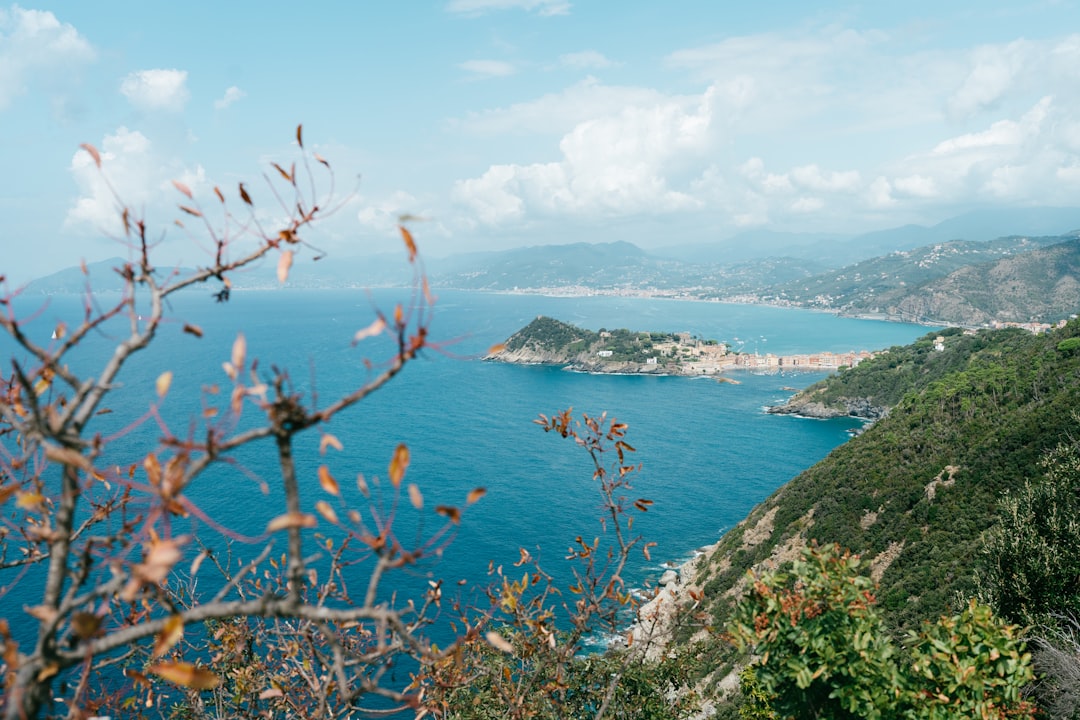
For the purposes of this drive, the most useful approach to the Cinque Terre is from outside the peak season (September or October, or April-May before school holidays), from the water rather than the roads (ferries connect the villages from Levanto and La Spezia), and with realistic expectations about the experience on the main inter-village path on a sunny August Saturday. The less-walked paths — the higher routes between villages that require more elevation gain — offer the landscape qualities without the footpath compression.
The sciacchetrà wine produced in the Cinque Terre from Bosco, Albarola, and Vermentino grapes grown on the terraced vineyards above the villages is among the most labour-intensive wines produced in Italy: the steep terraces require entirely hand harvesting, and the yields are low. It is produced in very small quantities and is almost impossible to find outside the area. Tasting it in one of the villages, looking at the terraces that produced it, closes a narrative loop that is one of the more memorable food-and-landscape moments available on this coastline.
Levanto: The Alternative Base
Levanto, just north of the Cinque Terre park boundary, deserves attention as a travel decision. It is a proper town rather than a village — with a functioning commercial centre, a long beach, and accommodation at prices significantly below those inside the park — and provides easy access to the Cinque Terre by both ferry and train while operating on its own rhythms. The Levanto area has its own stretch of coast, its own coastal path (the Blue Trail extending north from the park boundary), and a set of inland walking options in the hills behind the town that receive a fraction of the traffic on the park trails.
La Spezia and Portovenere: The End of the Road
La Spezia is a working city — the largest naval base on the Tyrrhenian is here, along with significant commercial port activity and an urban life organised around naval industry and commerce rather than tourism. The Naval Museum in the old arsenal is one of the most important maritime collections in Italy and is poorly attended relative to its content. The Amedeo Lia museum in the historic centre contains a private art collection of extraordinary quality, ranging from medieval illuminations to Renaissance paintings, assembled over decades by a local collector and now housed in a deconsecrated church. Both deserve more time than the transit toward Portovenere that most visitors allocate.

Portovenere is the southern terminus of this drive and one of the most dramatically sited settlements on the Italian coast: a village on a narrow peninsula terminating in a rocky promontory where the 12th-century church of San Pietro stands on the edge of a cliff above the open sea. The combination of the church, the coloured facades of the medieval houses along the main harbour street, the castle above the village, and the view across the bay to the Palmaria island constitutes one of the most satisfying single-view compositions available on this coast. Lord Byron swam from here across the bay to San Terenzo, where Shelley and Mary Godwin were staying — an act that says something about both the physical quality of the water and the particular early-Romantic enthusiasm for experiencing landscapes as directly as possible.
Practical Information
The full drive from Genova to Portovenere, following the coastal road and stopping at the main points described, is best divided over two days with a night in or near the Cinque Terre. The Via Aurelia (SS1) is the coastal option; for sections where it becomes congested, parallel inland routes are available and often more interesting. Parking in the Cinque Terre villages requires patience in season; using the paid parking above the villages and descending on foot or using the ferry system within the park is the most rational approach.
The best season for this drive is May-June or September-October. July and August bring the full weight of Italian and European beach summer to this coast, and the experience of moving through the Cinque Terre on a August weekend has little to recommend it. The shoulder months offer the landscape and the sea with manageable visitor levels and prices that reflect actual hospitality economics rather than peak-season surcharges.