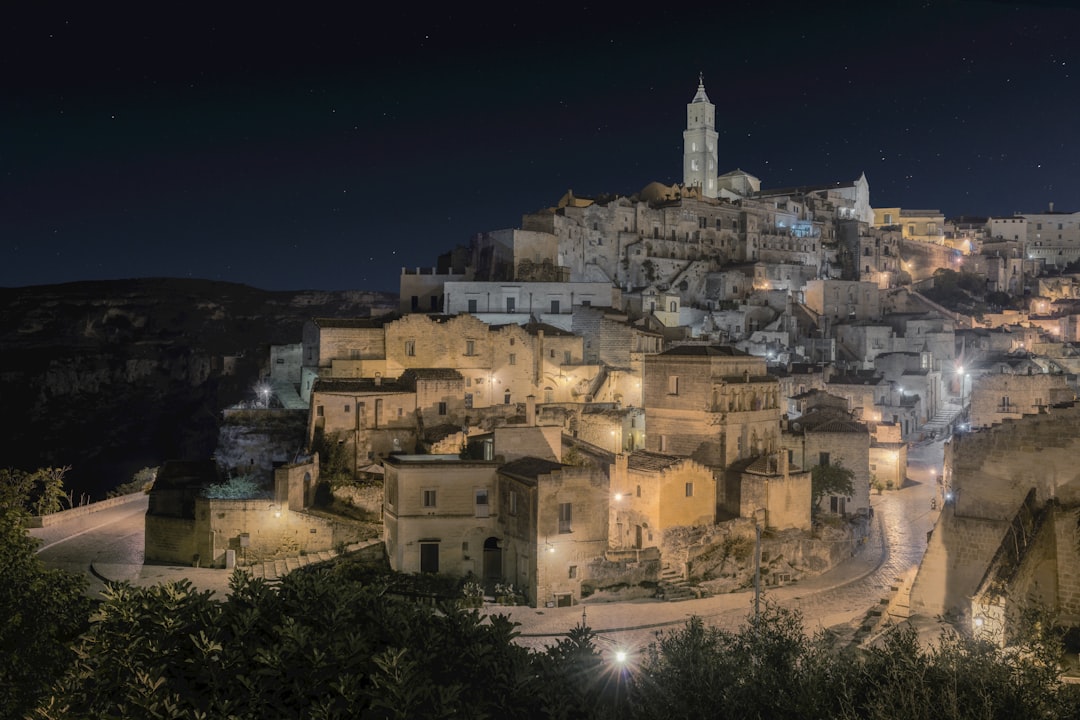
Matera is one of those places that generates an almost physical shock on first encounter — for the broader region, see our Basilicata guide. You stand at the edge of the gravina — the deep gorge that splits the Basilicata landscape — and look across at two vast natural amphitheatres packed with cave dwellings, churches carved from the rock, narrow lanes that wind between facades cut from the tufa, and you feel the weight of continuous human habitation stretching back nine thousand years pressing down on the present moment with unusual force. No other city in Europe looks like this. Possibly no other city in the world does either.
The Shame and the Redemption
The sassi — the cave neighbourhoods of Sasso Caveoso and Sasso Barisano — were home to sixty thousand people at their peak in the 1950s, many of them living in single-room cave dwellings shared with their livestock, without running water or sanitation. When Carlo Levi described them in his memoir Christ Stopped at Eboli as a national disgrace, he helped trigger a government decision to forcibly relocate the entire population to modern housing on the plateau above. The sassi were emptied, sealed, and forgotten.
Matera Today: From Disgrace to Cultural Capital
The rehabilitation that followed, decades later, is one of the great stories of Italian cultural redemption. The cave dwellings were reopened, restored, and gradually transformed into hotels, restaurants, museums, and homes. When Matera was named a European Capital of Culture for 2019, the world arrived and has been arriving ever since. The city that Levi called shameful became fashionable almost overnight.
How to Visit Matera Before the Crowds
The trick, then, is timing. Arrive at dawn, before the tour buses from the coast have negotiated the switchbacks up from Taranto. Walk down into the sassi while the light is still horizontal and golden, when the only sounds are the bells of the rock-cut churches and the distant bark of a dog echoing off the gorge walls. The views from the rupestrian church of Madonna delle Virtù, carved into the cliff face above the gorge, across to the cave dwellings on the opposite bank, are among the most extraordinary in Italy at any time of day, but at sunrise they are transcendent.
What to Eat and Drink in Matera
The local cuisine of Basilicata — one of Italy’s least-known regional tables — deserves more attention than it typically receives. The bread of Matera, baked in wood-fired ovens using a sourdough method that has been maintained for centuries and protected by a IGP designation, is magnificent: a dark-crusted, dense-crumbed loaf that improves over three days and sustains you through a morning of climbing the sassi’s stone stairways. The lamb, seasoned with the local peperoni cruschi — sweet dried red peppers that crumble to a powder — is the region’s signature preparation, simple and deeply flavoured. The Aglianico del Vulture wine, made from the same grape as Campanian Taurasi in the volcanic soils around the extinct volcano of Monte Vulture, is serious, age-worthy, and criminally underpriced.
How Long to Stay
Stay at least two nights. Matera requires time to understand, and its magic intensifies rather than diminishes with familiarity. The city at dusk, when the cave dwellings light up like a nativity scene across the gorge, is one of the great spectacles of European travel — for the experience after the tour buses leave, see Matera after dark. At dawn the following morning, when you have it almost to yourself, it is something else entirely — a reminder that the world’s most extraordinary places yield their best gifts to those who make the effort to be present at the right moment.