Eating in Italy requires understanding a set of codes and conventions that differ significantly from the restaurant culture of northern Europe or North America, and the visitor who arrives without this understanding tends to make decisions — ordering at the wrong time, expecting modifications that cannot be made, misreading the sequence of a meal — that produce a less satisfying experience than the one available to those who understand how the Italian restaurant actually works. This is not about rigidity or exclusion: Italian restaurant culture is genuinely welcoming, and the codes are not designed to trip up the uninitiated. But they reflect a specific understanding of what eating is for, how a meal should be structured, and what the relationship between the diner and the kitchen should be, and the visitor who understands these things eats better and more enjoyably.
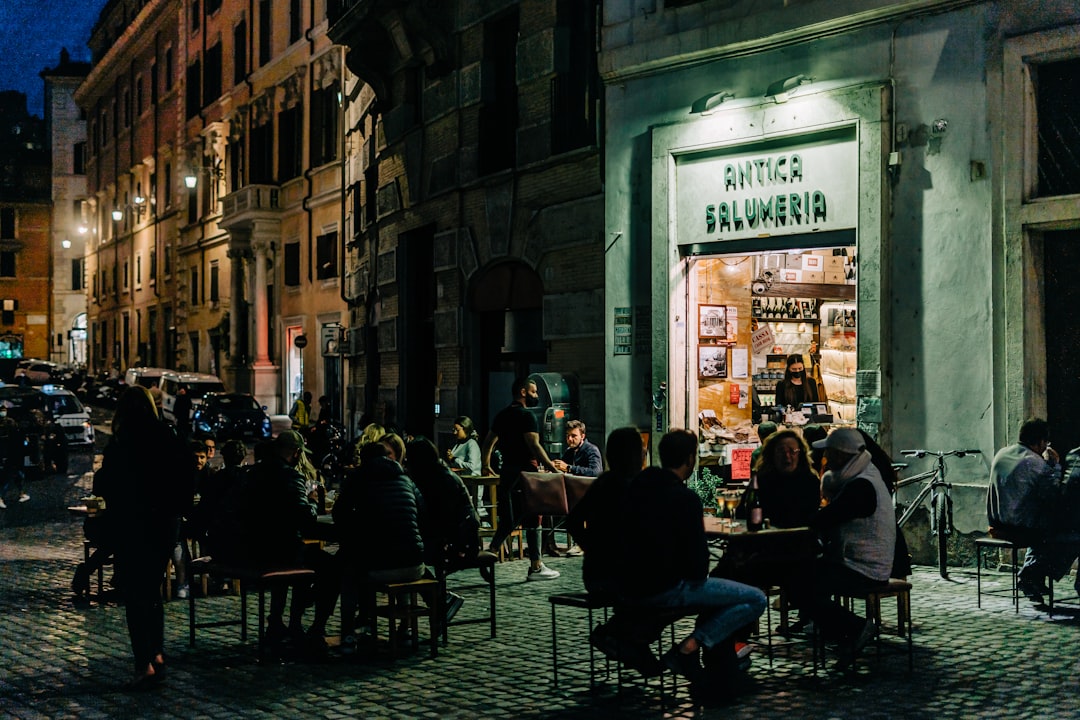
The first thing to understand is the taxonomy of the Italian eating establishment, since the distinctions between types of restaurant are meaningful in Italy in a way they are not always elsewhere. The ristorante is typically the most formal establishment: it has a full menu, often printed on heavy paper, with antipasti, primi, secondi, contorni, and desserts clearly delineated, and an expectation of a multi-course meal. The trattoria is more informal, often family-run, with a shorter menu that changes more frequently to reflect what is available and what the kitchen does best; the trattoria’s atmosphere is convivial rather than ceremonial, and the service is typically brisk and friendly rather than formal. The osteria — originally a wine shop that served food as an accompaniment to drinking — has evolved in contemporary Italy into a broader category that can mean anything from a simple neighbourhood restaurant to an upscale establishment that uses the word for its authenticity connotations. The pizzeria, the braceria (grill restaurant), and the panineria (sandwich shop) are further variations, each with its specific context and expectations.
The Meal Structure: What Comes in What Order
The Italian meal has a structure that is not optional: the sequence of antipasto, primo, secondo, contorno, and dolce exists for reasons of gastronomy and digestion, and the kitchen is organised around this sequence. The visitor who orders a primo and a secondo and eats them as intended — the pasta or risotto first, the meat or fish afterwards — will have a significantly better meal than the visitor who orders both together and eats them simultaneously, or who asks for the secondo to arrive with the pasta. Italian kitchens do not typically accommodate these requests, not out of inflexibility, but because the timing of the two courses is coordinated in the kitchen and simultaneous service would compromise both.
The antipasto is the beginning: a selection of cured meats, marinated vegetables, bruschette, or regional specialities served to stimulate the appetite and begin the meal’s conversation. At a trattoria, the antipasto may be a fixed selection brought to the table without specific ordering — the bruschetta and the crostini and the olives that constitute the standard opening — or a formal menu selection. Either way, it is light enough not to fill the appetite that the primo requires.
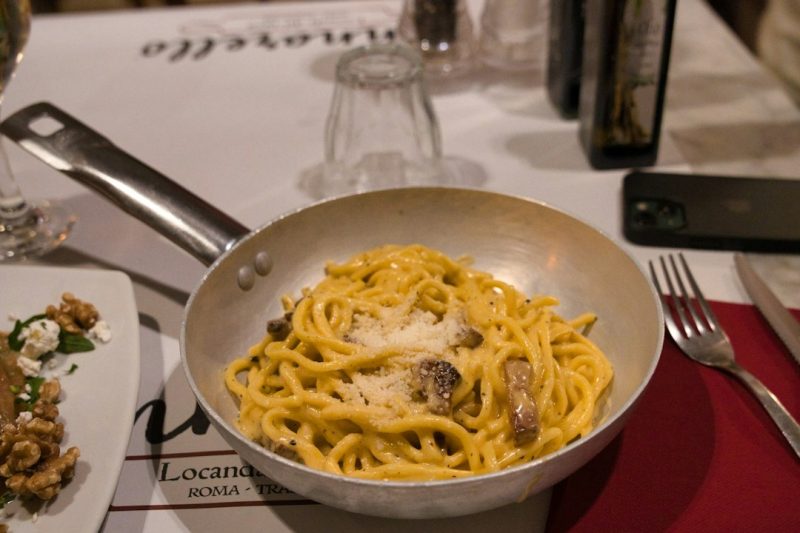
The primo is the first course of substance: the pasta, the risotto, the gnocchi, or the soup. In Italy, the primo is not a starter in the sense of a small plate before the main course: it is a substantial course in its own right, and the diner who has ordered carefully — selecting a primo that complements rather than duplicates the secondo — will be appropriately hungry for both. The practice, common among visitors, of ordering only a primo and calling it a meal is entirely acceptable in Italian restaurants for lunch, where the lighter meal structure (un primo or un piatto unico) is normal. At dinner, skipping the secondo is also acceptable, though the kitchen will often seem faintly puzzled.
The secondo is the main course: the meat, the fish, or (in the more contemporary kitchens) the vegetable main course. It comes without accompaniment — the contorno (the vegetable side dish) is ordered separately, which surprises visitors from cultures where the main course arrives with vegetables and potatoes already included. The contorno must be ordered separately and will be charged separately; this is not an oversight but a structural feature of the Italian meal. A secondo without a contorno is incomplete in the Italian understanding; a secondo that arrives with vegetables already on the plate is a restaurant adaptation to the northern European and American expectation, not the Italian original.
Wine: How to Order It
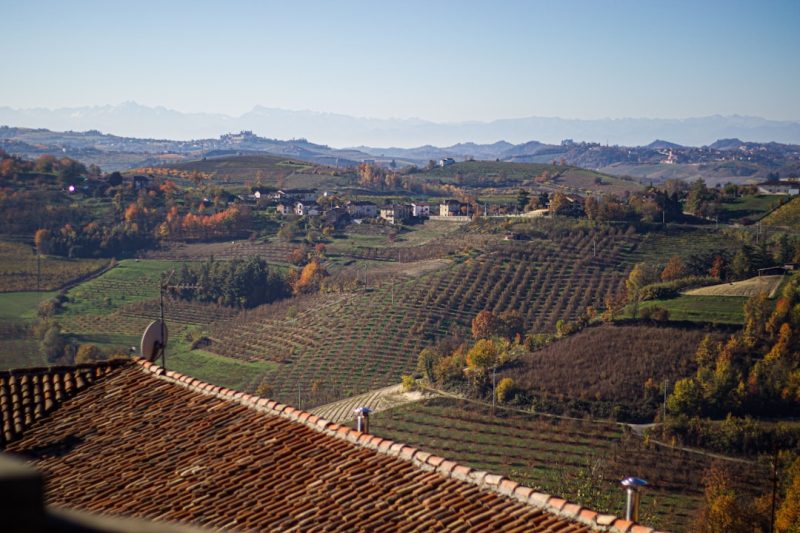
Ordering wine at an Italian restaurant involves a set of conventions that are less formal than the wine service of a high-end establishment but more deliberate than the casual ordering that a tourist might expect. The house wine (vino della casa) is the first option: available in carafes of 250ml, 500ml, or 1 litre, the house wine is the restaurant’s everyday wine, typically a local variety served at a price that reflects the neighbourhood’s expectations. In many Italian restaurants — particularly in the south and in the countryside — the house wine is genuinely excellent, produced by the owner’s cousin or supplied by the local cooperative that presses the grapes from the fields visible through the window.
The carafe (caraffa) is the most Italian way to order wine: it commits to a quantity rather than a label, and it implies trust in the restaurant’s choice of everyday wine. The visitor who insists on a specific label from the wine list, while entirely within their rights, is making a different kind of dining choice — one that is more formal and more expensive, and that in a simple trattoria may create a slight mismatch between the occasion and the wine service. In a restaurant with a serious wine programme, the wine list approach is correct; in a neighbourhood trattoria, the carafe is the native mode.

What Not to Order and Why
The question of what the Italian restaurant does not accommodate is revealing of the philosophy underlying the entire food culture. Modifications to dishes — removing an ingredient, substituting one element for another, asking for a sauce on the side — are genuinely difficult in Italian restaurants, not because the staff are unwilling but because Italian cooking is conceived as an integrated whole: the pasta alla amatriciana is not a pasta with tomato sauce plus guanciale plus pecorino, each element independently variable; it is a specific flavour composition in which each element exists in relation to the others, and removing one changes the dish in ways that cannot be compensated.
This does not mean that reasonable dietary needs cannot be accommodated — Italian kitchens are generally good at providing simple preparations for people with genuine intolerances — but it does mean that the Italian restaurant is not a customisation platform, and the visitor who approaches it expecting the kind of individual modification that American restaurant culture has normalised will have a more difficult experience than the visitor who orders what is on the menu and trusts the kitchen to have composed it correctly. The Italian chef’s relationship with the recipe is one of custodianship: the dishes exist as they are for reasons developed over generations, and deviation from the recipe is a matter requiring serious justification.
The cappuccino after the meal is the most frequently cited cultural mismatch between Italian and non-Italian dining habits. Italians drink cappuccino only in the morning — the logic being that the milk in the cappuccino disturbs the digestion after a full meal. Whether this is gastronomically correct is debatable, but the cultural code is strong enough that ordering a cappuccino after a dinner in Italy marks the diner immediately as foreign. The correct post-meal drink is an espresso (short, strong, possibly with a drop of grappa — the caffè corretto), followed by the digestivo of choice.
Regional Eating Culture and Its Variations
The restaurant culture of Italy varies significantly by region, and understanding these variations allows the visitor to calibrate their expectations appropriately. The Roman trattoria — informal, noisy, with paper tablecloths and a menu that features the five traditional Roman pasta dishes (cacio e pepe, carbonara, amatriciana, gricia, and cacio e uova) prominently — operates differently from the Milanese restaurant, which tends toward more formal service, a greater willingness to accommodate contemporary dietary preferences, and a food culture that is more openly influenced by the international fine-dining world. The Neapolitan dining experience is different again: the pizzeria is the central institution, the service can be improvised and chaotic, and the food is produced with an intensity and a confidence that brooks no interference.
In Sicily, the street food tradition is a genuine competitor to the sit-down restaurant: the arancini (the rice balls, stuffed with meat ragù or cheese and peas, fried in abundant oil), the panelle (chickpea fritters), the pani ca’ meusa (the spleen sandwich of Palermo, served hot from the street cart), and the sarde a beccafico (sardines stuffed with pine nuts, raisins, and breadcrumbs) are among the finest things to eat in Italy, and they are eaten standing at a street stall or a local bar rather than at a restaurant table. The visitor to Palermo who restricts themselves to sit-down restaurants will miss the most vivid and most authentically Sicilian part of the food culture.

Practical Notes for Eating Well in Italy
Lunch in Italy is from about twelve-thirty to two-thirty; dinner from seven-thirty to ten or later in the south. Arriving at a restaurant before twelve-thirty or after two-thirty at lunch, or before seven-thirty at dinner, will often find it not yet open or beginning to wind down. The Italian lunch break — the pausa pranzo — is a serious institution, particularly in the smaller cities and the countryside, and restaurants that serve lunch are typically at their fullest between one and two. Booking for lunch is rarely necessary except at the most popular or prestigious places; booking for dinner is advisable at any restaurant above the neighbourhood trattoria level, and always on Friday and Saturday evenings.
The bill (il conto) is not brought automatically in Italy: you must ask for it (il conto, per favore, or with the internationally understood gesture of writing on the palm). The pane e coperto — the cover charge that appears as a line item on the bill — is a fixed charge per person for the bread and the cover setting, ranging from one to four euros depending on the establishment. It is legal, standard, and not negotiable; the visitor who challenges it is making an error. The service charge (servizio) may or may not be included; if it is, it says so on the bill (servizio incluso), and adding an additional tip on top of it is generous but not expected. If the service is not included, a tip of ten percent is appropriate in restaurants; rounding up the bill is the typical gesture in simpler establishments.