Cacio e pepe is three ingredients: pasta course, Pecorino Romano, and black pepper. It is also one of the technically demanding preparations in the Roman kitchen — a dish in which the difference between correct execution and a greasy, clumped, or bland result depends on the management of starch, fat, and temperature in a sequence that experienced cooks perform without thinking and that beginners typically ruin once or twice before understanding why. The simplicity is the difficulty. When the ingredients are three and two of them are as inflexible as Pecorino Romano and black pepper, there is nowhere to hide.
The Roman pasta canon — cacio e pepe, carbonara, amatriciana, gricia — is the most argued-over set of dishes in Italian cuisine, and the arguments are productive because they illuminate something genuine about the nature of traditional cooking. Each of these preparations has an established form that practitioners defend with intensity: the correct pasta format, the correct cheese, the correct technique, the acceptable variations, the unacceptable adulterations. The argument is not pedantry. It is the mechanism by which traditional forms are preserved against the drift toward approximation that commercial cooking tends to produce. Understanding what cacio e pepe actually is — rather than what the phrase is sometimes used to describe — requires engaging with these arguments rather than dismissing them.
The Ingredients: No Substitutions
Pecorino Romano — the aged sheep’s milk cheese produced from the milk of the Sarda sheep grazing in Lazio, Sardinia, and Tuscany — is the cheese of cacio e pepe. Not Parmesan, not a mixture of the two (though some recipes use a blend), not a younger or softer sheep’s milk cheese. Pecorino Romano is sharp, salty, and intensely flavoured in a way that Parmesan is not, and the relationship between that sharpness and the heat of the pepper is the flavour logic of the dish. The cheese should be aged enough to grate finely — freshly grated from the block, never pre-grated, because the pre-grated product has dried out in ways that affect its ability to melt smoothly into the sauce.
The pepper is Tellicherry or Lampong black pepper, whole peppercorns toasted in a dry pan and coarsely ground rather than finely milled. The grinding matters: fine powder produces a different flavour profile and a different texture experience than the coarser grind of freshly cracked pepper. The toasting in the dry pan develops volatile aromatic compounds that disappear when the pepper sits pre-ground. The amount is more generous than most non-Romans expect — this is a dish called “cheese and pepper,” and the pepper is not a seasoning but a primary flavour.
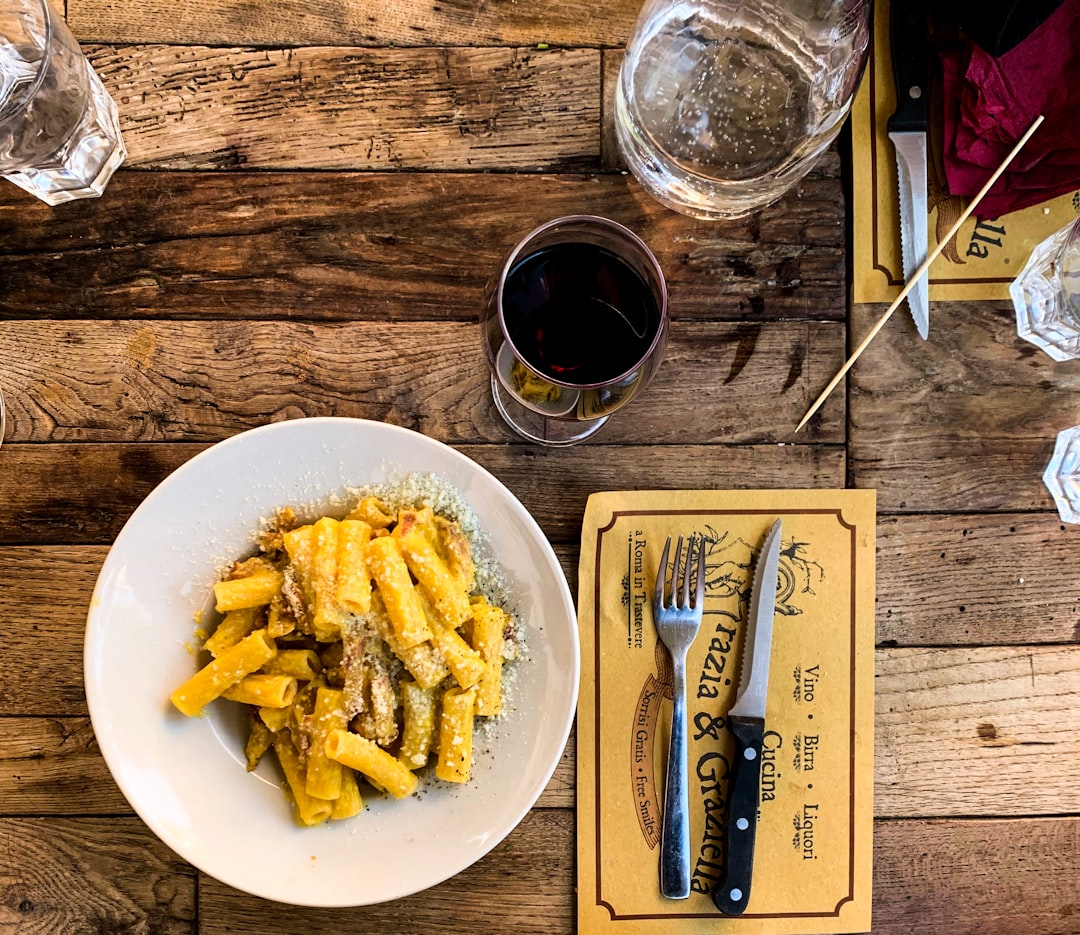
The pasta format is most commonly tonnarelli — a square-section pasta similar to spaghetti alla chitarra — or spaghetti. Rigatoni appears in some treatments and produces a different but acceptable result. The pasta should be cooked in water with significantly less salt than usual (the Pecorino Romano is very salty, and the starchy cooking water that will be used in the sauce should not add more salt than necessary). This is the one technical note that most recipes underemphasise and that experienced cooks learn through a ruined dish.
The Technique: Starch and Temperature
The emulsification of the sauce — the transformation of grated cheese and cooking water into a smooth, coating cream rather than a greasy lump — depends on temperature control and the starch content of the pasta cooking water. The cheese must be added off the direct heat, mixed with pasta that is hot but not scalding, and combined with starchy cooking water (the water of pasta that has been cooking for some time, with the starch content that provides the emulsifying agent) in a specific sequence that keeps the proteins of the cheese from seizing into clumps.
The classic technique: toast the pepper in the pan, add a ladle of cooking water to bloom the pepper aromatics, drain the pasta two minutes before it is fully cooked and finish it in the pan with the pepper and a further addition of cooking water, then remove from heat and work in the grated Pecorino in stages, adding water as needed to maintain a fluid, glossy consistency. The pan should be off direct heat for the cheese addition. The pasta should be moving continuously. The water should be added in small amounts — enough to keep the sauce fluid, not enough to dilute it.
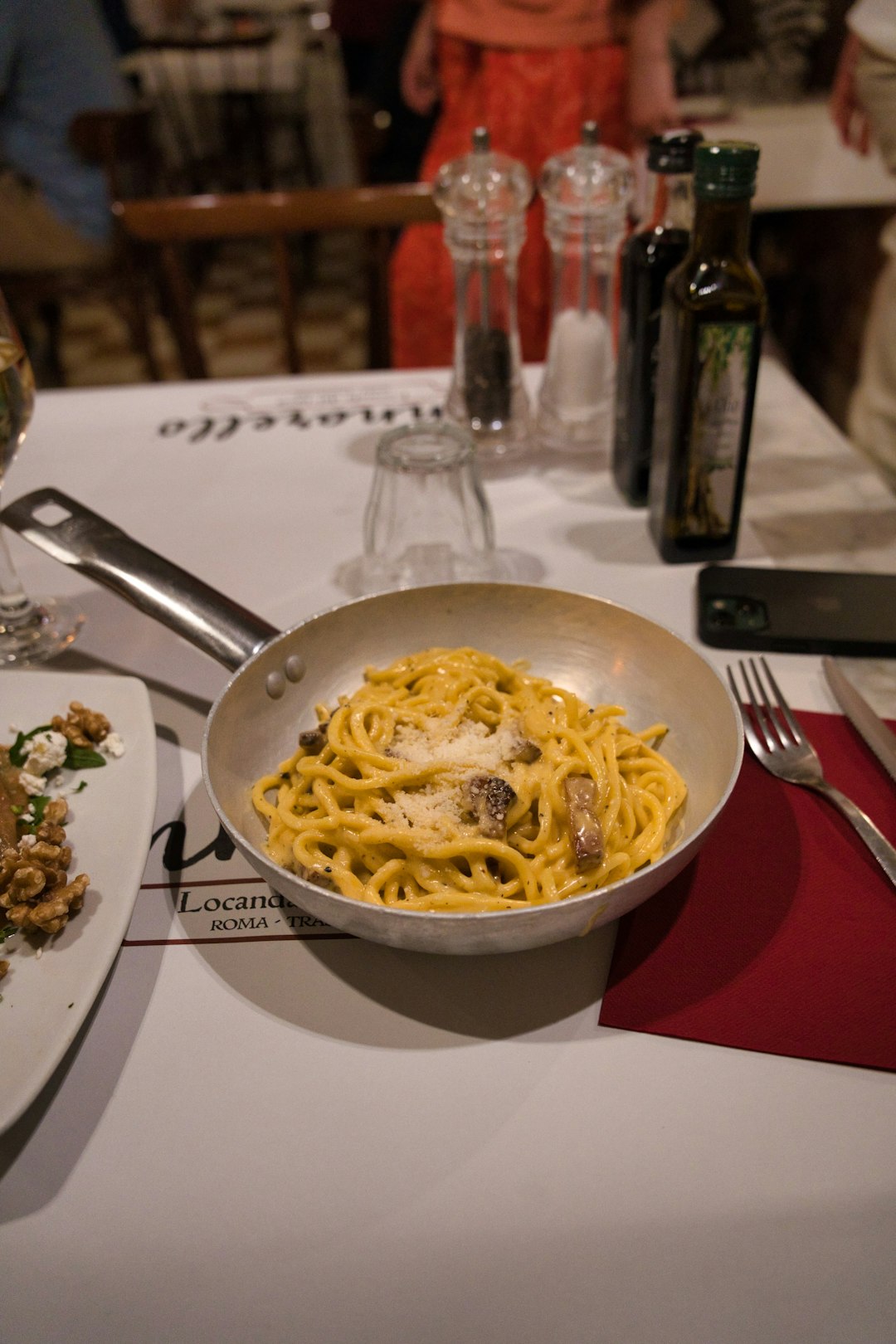
The result, when correctly executed, coats each strand of pasta in a thin, shiny layer of cheese sauce with pieces of black pepper distributed throughout. The flavour is direct and intense — dairy fat, salt, peppercorn aromatics — and the texture of the pasta (still with some resistance, not fully soft) is part of the total experience. Overcooked pasta makes cacio e pepe worse in a way that overcooked pasta in a complex sauce does not, because there is nothing else to distract from the texture problem.

Where to Eat It in Rome
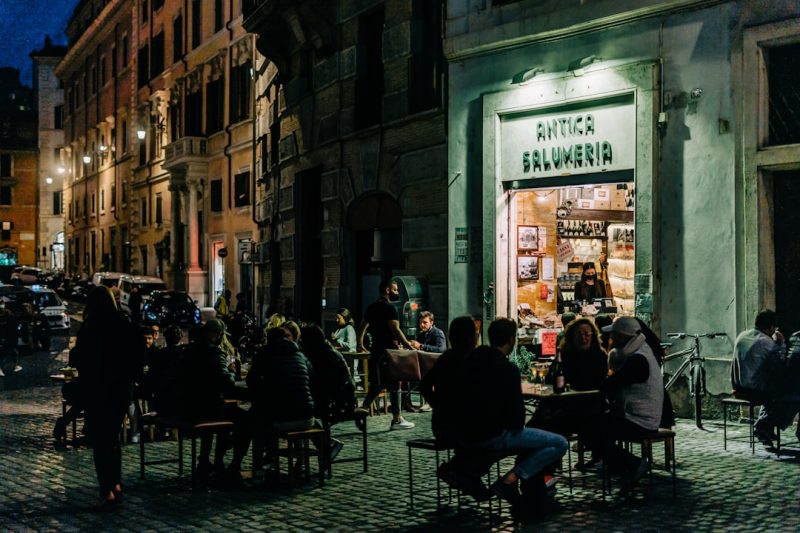
Rome has hundreds of restaurants that list cacio e pepe on the menu, and the quality ranges from technically correct to actively bad. The versions served in tourist-facing restaurants in the Centro Storico and near the major monuments are often padded with cream (which makes the sauce easier to achieve but is not cacio e pepe), made with inferior Pecorino, or simply under-peppered because non-Italian customers have complained. None of these versions are worth seeking out.
The authentic version is available in the working-class neighbourhoods that have preserved the Roman trattoria culture: Testaccio (the neighbourhood built around the former slaughterhouse, whose food culture remains the most uncompromising in Rome), Pigneto, Prati, and the less glamorous parts of Trastevere. The restaurants in these areas that serve cacio e pepe to regular Roman customers rather than tourists are operating under social pressure to get it right — the Roman table is not forgiving of bad pasta preparations, and the regulars will tell the trattoria owner directly if the cacio e pepe is not correct.
The Roman pasta canon is also a useful guide to the authenticity of a Roman restaurant in general: a place that does carbonara correctly (no cream, egg and guanciale only, Pecorino Romano and black pepper) is likely to do cacio e pepe correctly as well, because the technical understanding required is similar. A place that puts cream in carbonara should be left for tourists.
The Roman Pasta Canon in Context
Cacio e pepe is one of four preparations that constitute the Roman pasta canon, and understanding all four as a system gives a clearer picture of the Roman approach to pasta than examining any one in isolation.
Gricia — often described as the ancestor of all four — is cured pork cheek (guanciale) rendered in a hot pan until crisp and some of the fat has been released, then combined with pasta and Pecorino Romano. It is the simplest of the four and the one least known internationally. Amatriciana adds tomato to the gricia base (and is technically from Amatrice, a small town in the mountains north of Rome, rather than Rome itself, though Rome has long claimed it). Carbonara adds eggs to the pork-and-cheese base of gricia, the eggs creating the sauce when properly emulsified with the hot pasta and the guanciale fat.
The four preparations are all variations on a core principle: pasta, cured pork fat and/or sheep’s milk cheese, and flavouring (pepper, tomato). The simplicity of each is the expression of a food culture that developed these forms in conditions of limited ingredients and perfected them through repetition over generations. The arguments about correct technique and correct ingredients are the mechanism by which that perfection is maintained.
Making It at Home: A Practical Guide
For 2 people: 200g tonnarelli or spaghetti, 100g Pecorino Romano freshly grated (fine microplane grater), 2 teaspoons whole black peppercorns toasted in a dry pan and coarsely ground, cooking water.
Bring a large pot of lightly salted water to boil (less salt than usual — perhaps half the normal amount). Toast the peppercorns in a dry wide pan over medium heat until fragrant, then grind coarsely. Add a ladle of pasta water to the pan, heat briefly to bloom the pepper aromatics, and remove from heat.
Cook the pasta until 2 minutes before done. Transfer directly to the pan with the pepper and pasta water. Finish cooking in the pan over medium heat, adding more pasta water as needed and tossing continuously. Remove from heat. Add Pecorino in stages (two or three additions), tossing vigorously and adding small amounts of water as needed. The sauce should be creamy and coat each strand. Serve immediately.
The most common failure is adding cheese to a pan that is still on direct heat — the cheese seizes and clumps. The second most common failure is insufficient pasta water in the mixing stage — the sauce becomes dry rather than creamy. The third most common failure is insufficient pepper. Err on the side of more.
Buying the Right Pecorino Romano
Pecorino Romano with the PDO designation (Denominazione di Origine Protetta) is produced in Lazio, Sardinia, and the province of Grosseto in Tuscany from sheep’s milk. The label will specify the producer and the designation. It should be sold in wedges from the wheel rather than pre-grated or pre-sliced; the pre-packaged versions have lost the volatile aromatics that give the cheese its character. The ageing should be a minimum of five months for the basic version; the longer-aged versions (8-12 months) are more intense and more suitable for cacio e pepe.
In Rome, the cacio e pepe experience is inseparable from the specific quality of the Pecorino Romano that can be bought from the producers and specialist shops — the Roscioli alimentari, the shops of the Testaccio market — where the provenance and ageing of the cheese is known. The dish that can be made with this quality of raw material, and the dish that can be made with a mediocre substitute, are not the same dish, even if the technique is identical.