The Italian lakes most people have heard of form a predictable hierarchy: Lake Como first, Garda second, Maggiore third. This ordering reflects marketing success rather than merit, and the traveller who follows it uncritically will find themselves in landscapes that have been extensively colonised by the tourism infrastructure that recognition generates — queues for ferries, accommodation priced to international demand, an experience calibrated to the preferences of visitors rather than to the character of the place. Lake Iseo, Lake Orta, and Lake Trasimeno offer a different proposition: three lakes of genuine natural beauty and historical interest, each with its own distinct character, each receiving a fraction of the visitors who crowd the famous three.
The argument for visiting these lesser-known lakes is not primarily economic — though the price differential is real and significant — but qualitative. A lake that is primarily visited by Italian holiday-makers from the surrounding regions, rather than by international tourists following a predetermined circuit, tends to have its services, rhythms, and social life calibrated to actual use rather than to visitor management. The ferry from a small harbour in a village on Lake Iseo, populated by local families and retirees rather than tour groups, is a different experience from the Bellagio ferry, however beautiful the backdrop in both cases.

Lake Iseo: The Island in the Lake
Lake Iseo sits in the Franciacorta zone of the Lombardy pre-Alps, east of Brescia and south of the Val Camonica. It is the fourth largest of the Italian pre-Alpine lakes and contains Monte Isola — at approximately 12 square kilometres, the largest inhabited island in any European lake — which rises steeply from the centre of the lake to a summit above 600 metres and supports a permanent population of around 1,700 people who have no cars on the island. The ban on private motor vehicles gives Monte Isola a quietude and a pace that, combined with the lake views from its various hamlets, makes a visit there the primary experience of Lake Iseo for most travellers.
The ferry from Sulzano on the eastern shore takes approximately ten minutes and runs frequently. The island has a lakeside promenade and several hamlets connected by paths and a single electric shuttle bus. Walking from the main landing village of Peschiera Maraglio to the sanctuary church at the summit takes approximately two hours and provides views across the entire lake system — to the snow-capped peaks of the Val Camonica at the northern end and to the flat plain of the Po valley dissolving southward in haze.
Franciacorta
The hills between Lake Iseo and Brescia constitute the Franciacorta zone — the production area for one of Italy’s finest sparkling wines, made by the classic method from Chardonnay, Pinot Nero, and Pinot Bianco grapes. The Italian wine has been produced in this area since the 1960s and has developed a quality and consistency that makes it the most serious Italian competitor to Champagne — not an identical product but a different expression of the same technique and grape varieties in a different terroir. Visiting producers in the Franciacorta hills, which lie between the southern shore of Lake Iseo and the city of Brescia, is a natural complement to the lake experience and considerably cheaper than comparable winery visits in Champagne itself.
Lake Orta: The Romantic Alternative
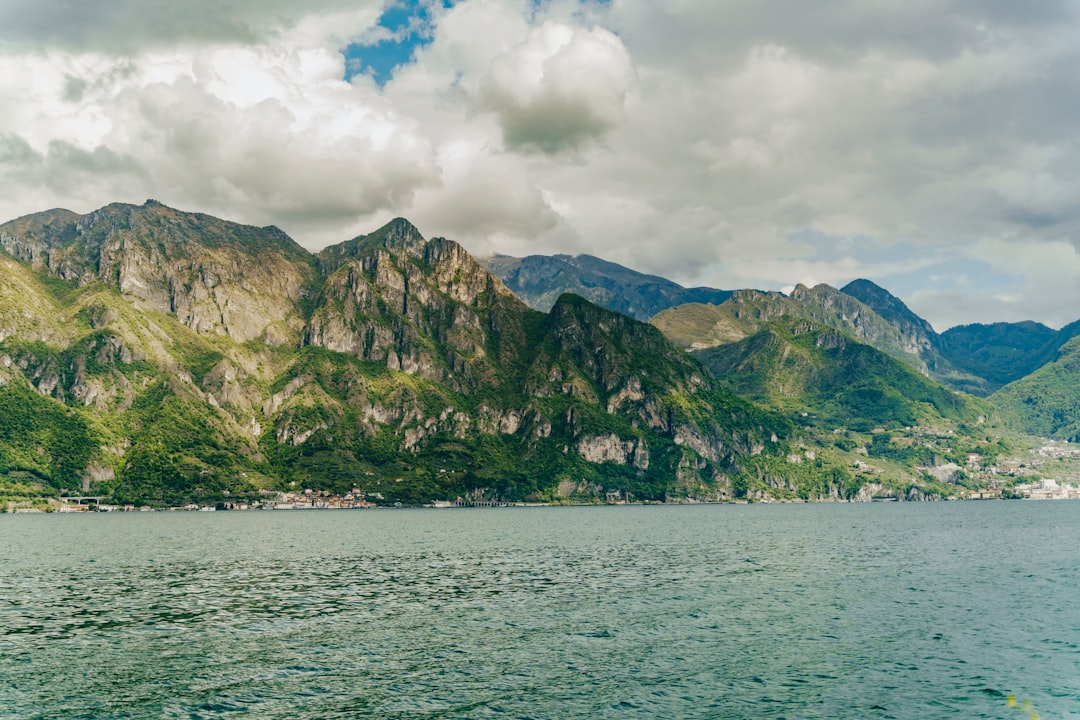
Lake Orta is the smallest of the major pre-Alpine lakes, lying in a basin separated from Lake Maggiore by a mountain ridge — a physical separation that has preserved its character as the quietest and most intimate of the northern lakes. The town of Orta San Giulio on the western shore and the Isola San Giulio in the middle of the lake constitute an ensemble that is frequently described as the most romantic lake view in Italy, by people who mean the specific combination of architectural quality, reflective water, and surrounding wooded hills that the view from the Orta piazza toward the island provides.
Orta San Giulio is a walking town — the historic centre is closed to traffic, and the narrow streets, the piazza with its palazzotto (the 16th-century town hall), the lakeside promenade, and the climb to the Sacro Monte di Orta (a UNESCO World Heritage Site of chapels built between 1591 and 1770, depicting the life of Saint Francis with life-size terracotta figures) are all on foot. The Sacro Monte takes approximately two hours to walk completely; the combination of the religious art with the forest setting and the lake views visible between the chapels produces an experience that is both devotional and scenic in a proportion that makes it interesting to visitors of any persuasion.
The island of Giulio, accessible by small motorboat from the Orta piazza, contains the Basilica of San Giulio — one of the oldest Christian sanctuaries in northern Italy, with Romanesque elements from the 12th century and a treasury of considerable importance. The island is inhabited by a Benedictine community whose presence gives it a specific character: the silence enforced on visitors, the absence of any commercial activity, and the quality of the Romanesque interior create a contemplative atmosphere that the tourist lake experience rarely provides.
Lake Trasimeno: Umbria’s Inland Sea
Lake Trasimeno belongs to a different world from the pre-Alpine lakes. It sits in the middle of Umbria, surrounded not by mountains but by gently rolling hills, and at an altitude of approximately 260 metres it has the quality of a Mediterranean lake — shallow, warm in summer, fringed by reeds rather than alpine forest, the surrounding landscape agricultural rather than alpine. It is the fourth largest lake in Italy by surface area but shallow enough that in drought years the water level drops noticeably.
The lake is best known historically as the site of the Battle of Lake Trasimeno in 217 BCE, where Hannibal’s Carthaginian army ambushed and destroyed a Roman force under the consul Flaminius with a tactical skill that is still studied in military history. The surrounding landscape of hills and marshland, visible from the lakeside towns of Castiglione del Lago and Passignano sul Trasimeno, has not changed dramatically enough in two thousand years to prevent a reasonably clear visualisation of the engagement.

The islands of Trasimeno — Isola Maggiore and Isola Polvese — are accessible by ferry from the main lakeside towns. Isola Maggiore has a permanent (though small) resident population and a characteristic handmade lace tradition; Isola Polvese is now a nature reserve with a medieval castle and monastic ruins. Both offer the combination of water crossing and island quiet that makes lake travel rewarding at a scale and price that the northern lakes cannot match.
The Fishing Tradition
Trasimeno has sustained a freshwater fishing economy for centuries, and the local cuisine reflects this: perch, carp, eel, and the specific Trasimeno tench (tinca del Trasimeno) appear in preparations that are unique to the region. The tench is typically cooked in the porchetta style — stuffed with herbs and slow-roasted — or simply fried in olive oil, and eating it at a table on the lakeside in a local restaurant with a view of the water that produced it closes a narrative that the restaurant scene in more tourist-oriented destinations cannot replicate. Expect to spend €18-30 per person for a full meal at a local lakeside restaurant.
Practical Notes
Lake Iseo is accessible by rail from Brescia or Bergamo, with the line running along the eastern shore. Lake Orta is reached by train from Milan (via Novara and Orta-Miasino station) or from Turin. Lake Trasimeno is on the main Florence-Rome rail line (Terontola-Cortona station, then bus or taxi to the lake). A car is useful for exploring the surrounding hills and vineyards at Iseo and Orta, but the lakes themselves are navigable by ferry. The optimal season for all three is May-June and September-October; July and August at Trasimeno in particular can be very hot and the shallow lake warms significantly. Accommodation at all three is significantly less expensive than equivalent options on Como or Garda.