The Grand Tour was not a single journey with fixed routes. It was a cultural institution — lasting roughly from the Restoration period in England in the 1660s through the Napoleonic disruptions of the early nineteenth century — in which the sons of European aristocratic and wealthy mercantile families completed their formal education with an extended journey through France and Italy. The duration varied from six months to several years. The itinerary was broadly standardised: Paris, the Alps crossing (typically at Mont Cenis or the Simplon), Turin, Genoa, Florence, Rome, Naples. Some travellers extended to Venice, some to Sicily. The point was Italy, specifically its classical and Renaissance heritage, and the cultural formation that direct encounter with that heritage was supposed to produce.
The Tour shaped European culture in ways that are still measurable. The paintings brought back — Canaletto’s views of Venice, landscape paintings by Italian artists depicting the Roman Campagna and the Bay of Naples — established the visual iconography of Italy that is still the dominant reference in popular imagination. The Grand Tourists who became collectors built the foundations of many of the great European museums: the Elgin Marbles in the British Museum, much of the Wallace Collection in London, significant portions of the Hermitage in St Petersburg, arrived via Grand Tour networks. The archaeological excavations at Herculaneum (1738) and Pompeii (1748) began partly in response to Grand Tourist demand for ancient finds.

What They Were Looking For
The Grand Tour was explicitly an educational project, and its stated educational objectives were classical: the travellers came to see the monuments of ancient Rome, to learn the Italian language, to study painting and sculpture in their original contexts, and to return home with the cultural polish that the Tour was supposed to impart. The assumption was that exposure to the greatest art and architecture ever made would produce, in the receptive young man, a refinement of taste and judgment that no domestic education could provide.
The reality was more complicated. Many Grand Tourists were poor students who spent more time gambling and pursuing romantic intrigues than examining statues. The travel memoirs and diaries of the period are full of complaints about the discomforts of Italian roads, the quality of Italian inns, the persistence of Italian beggars, and the difficulty of finding good English food south of the Alps. The cultural formation was real but uneven, and it was accompanied by a condescension toward living Italians that sits awkwardly against the reverence for ancient ones.

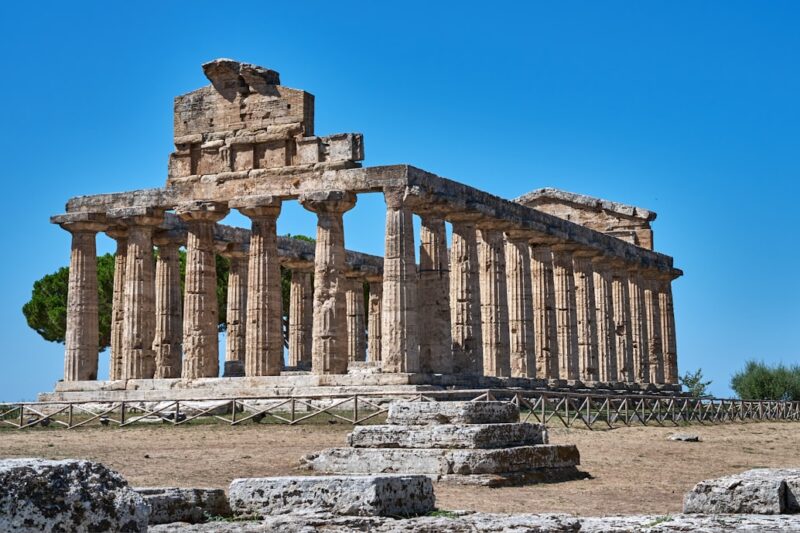
Johann Wolfgang von Goethe’s Italian Journey — the account of his 1786-1788 travels, published much later — is the most searching self-examination of what the Tour was supposed to provide and what it actually delivered. Goethe came to Italy in something close to cultural crisis, needing what he called a rebirth. What he found was primarily the Campagna romana, the light over the Bay of Naples, and the remains of Paestum — and, in his own account, the dissolution of his northern preoccupations in the physical fact of the Mediterranean world.
The Permanent Legacy
The Grand Tour ended as a viable institution with the Napoleonic Wars, which closed many of the routes and made sustained European travel impossible for nearly two decades. When tourism resumed, the railway transformed the economics and speed of travel in ways that changed the social profile of the traveller: the Tour was no longer exclusively aristocratic. Thomas Cook’s organised tours to Italy in the 1860s were the democratic descendant of the eighteenth-century practice, accessible to the middle classes who lacked the time and money for the extended original version.
The expectations the Tour installed — that Italy is primarily about ancient Rome and Renaissance art, that the Italian peninsula exists to be viewed and judged by northern eyes, that the experience of great art is an educational obligation rather than a pleasure — are still present in the way many people approach Italy as a destination. The Grand Tour did not invent Italy, but it invented the idea that Italy must be consumed as culture. Much subsequent travel thinking has been an attempt to recover from that premise.
Photo: Kelly Mulvehill on Unsplash