The Logic of Rewilding
Rewilding — the process of restoring degraded land to a more ecologically complex state by reducing human management and, in some cases, reintroducing species that were once native — has been applied in various European contexts since the 1990s, always with a mixture of ecological conviction, political difficulty, and the particular challenge of reconciling conservation ambitions with the interests of communities that have lived in the landscapes in question for generations. In Basilicata, it has taken a form that is neither purely ecological nor purely touristic but something more interesting than either: a renegotiation of the relationship between the people of the interior and a landscape they have, for a century, been trying to leave.
The demographic context is essential. The population of the Basilicatan interior has been in continuous decline since the late nineteenth century, when the failure of southern agriculture and the attraction of northern industry set in motion an emigration that reduced some communities to a fraction of their nineteenth-century size. The villages that remain are supported by a population that is on average older than almost anywhere else in Italy, and the land that has been abandoned — the terraces that are no longer tended, the pastures that are no longer grazed, the chestnut forests that are no longer harvested — is reverting, at different speeds in different places, to something closer to its pre-agricultural state.
The Val d’Agri and the Wolf
The wolf returned to the Basilicatan Apennines not as a result of a rewilding programme but as a result of the abandonment that preceded any conscious conservation strategy. As the pastoral economy of the interior contracted — the sheep that the wolves had followed south on the transhumance routes were no longer there in the numbers that had sustained the conflict between shepherds and predators — the wolf population expanded from its Abruzzo refuge into territories it had not occupied for a century. The return was not welcomed by everyone. The remaining shepherds of the Val d’Agri and the Pollino area lost animals to the returning predators, and the compensation mechanisms established by the regional authorities were, in the first years, inadequate to the losses.
The rupestrian and sacred landscape that the wolves now share with the region’s human communities is explored in our guide to the cave churches and ravine paths of Basilicata. The current situation is more nuanced. The compensation system has improved; several agricultural operations in the interior have adopted guardian dog programmes that reduce livestock losses without requiring the elimination of the predators; and the wolf has become, in the eco-tourism economy that is developing around the rewilded landscapes of the Pollino National Park, an asset rather than a liability. The guided tracking programmes — not wolf-watching in the sense of expectation, since the animal is not reliably observable, but wolf-tracking in the sense of reading the landscape for the signs of a presence — are among the more genuinely wild experiences available in Italian natural tourism.

The Pollino National Park
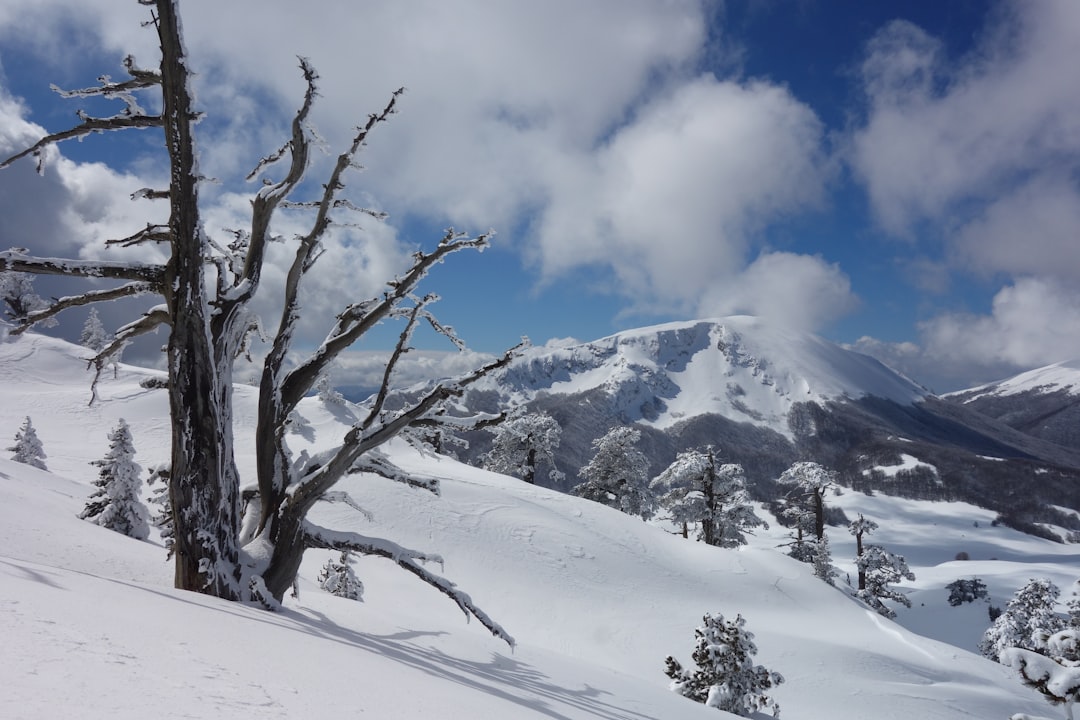
The Pollino National Park, which straddles the Basilicata-Calabria border and encompasses the highest peaks of the southern Apennines, is the largest national park in Italy and one of the least developed for tourism. Its core is a botanical conservation area — the Pino Loriceto, the Bosnian pine, grows here at the southernmost point of its European range on the limestone peaks above two thousand metres — but its broader significance is as a demonstration of what the southern Apennine landscape looks like when human management is reduced to a minimum. The answer is: more complex, more diverse, and, in certain respects, more dramatically beautiful than the managed landscape around it.
The rewilding that is occurring in the Pollino is not planned or managed in any systematic sense; it is the spontaneous recovery of a landscape from which human pressure has been reduced. The returning species — wolf, golden eagle, red deer, otter in the river systems — are following ecological logic rather than conservation programme. The result is a dynamic rather than a stable landscape, one that is changing at a pace that can be observed over years rather than decades, and that presents a different face to each season’s visitor.
The Agri Valley and Its New Economy
The Val d’Agri is known primarily, and somewhat incongruously, for oil: it contains the largest onshore oil field in Western Europe, whose extraction has been the subject of environmental debate and legal dispute for two decades. The oil economy sits alongside an emerging agri-environmental economy that is, in some respects, its mirror image: where oil extraction depends on the subsoil and contributes to the perception of the valley as an industrial landscape, the new agricultural economy depends on the surface and on the recovery of the ecological quality that industrial activity has compromised.

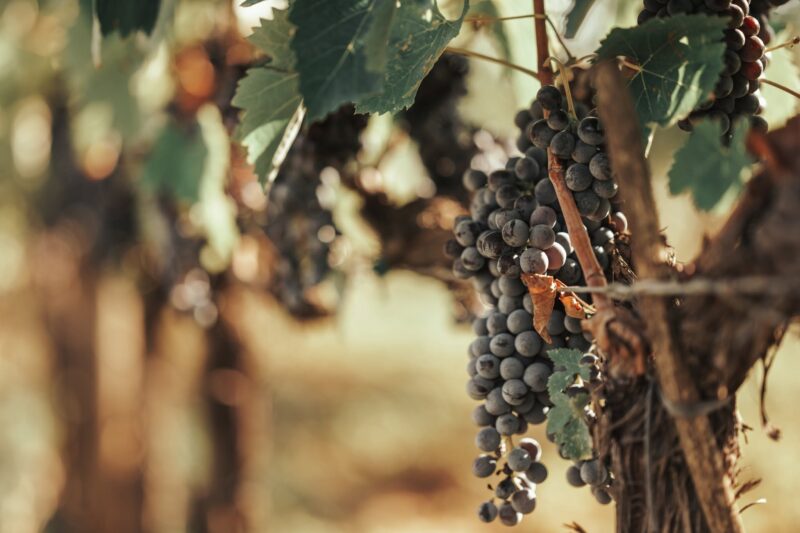
The farms that are attempting this recovery are predominantly small: family operations that have returned to the territory after a generation’s absence, attracted by the combination of available land, artisanal market premiums, and the specific quality of place that the Basilicatan interior offers. Heritage grain varieties milled on stone, legumes from dry-farming systems, honey from the wild flora of the abandoned terraces: the products are positioned in a food market that values the story of production alongside the product itself. The story here — return and recovery — has particular traction in contemporary food culture.
What Responsible Tourism Looks Like Here
The eco-tourism that is developing around the rewilded landscapes of Basilicata is still at an early stage, and the infrastructure that supports it — the guides, the accommodation, the transport connections — is less developed than in equivalent contexts in northern Europe. This is a disadvantage in the practical sense and an advantage in the experiential one: the visitor who engages with the rewilding economy of the Basilicatan interior at this stage is engaging with something that is still being worked out, in which the relationship between conservation and community is still being negotiated, and in which the presence of a visitor who is genuinely interested in that negotiation is more welcome than the presence of a visitor who wants a managed experience.
The most direct way to encounter the rewilded landscape of Basilicata is through the networks of the communities that are managing it: the national park authority, the agricultural cooperatives, the guide associations of the Pollino and the Val d’Agri. These are not tourist-facing organisations; they have a primary purpose, and tourism serves them, when it serves them at all, as a secondary function. Visitors who approach them on those terms tend to find a quality of encounter that the standard tourism infrastructure cannot replicate. The organic farming economy of Umbria operates on a comparable logic — small producers, primary purpose first, tourism as secondary function.