A Brescian spring born at 1,864 metres above sea level is quietly challenging the multinational dominance of Italy’s mineral water industry — one elegant bottle at a time.
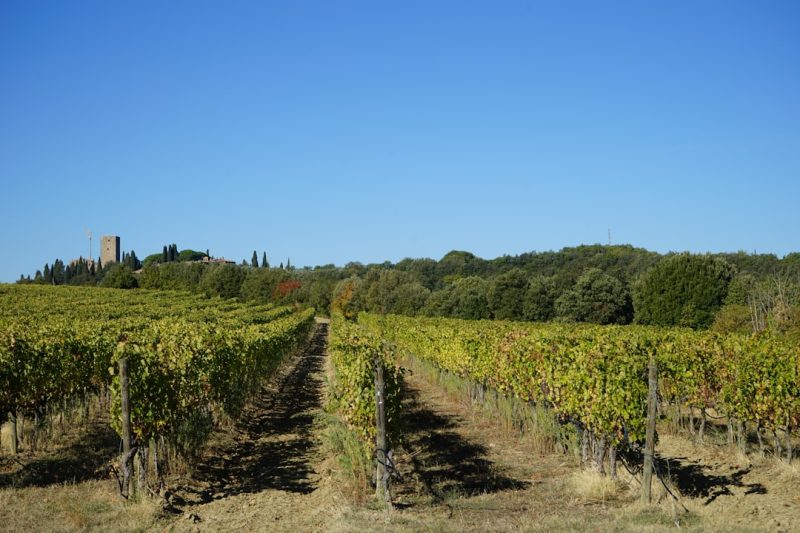
At 1,864 metres above sea level, where the slopes of Monte Maniva descend steeply into the narrow valley cradling the medieval hamlet of Bagolino, three springs begin their journey through the mountain’s interior. The geology here is particular: the southern reaches of this Alpine terrain are riddled with micro and macro-fissures — natural channels that prolong and deepen the contact between water and rock, producing a mineral composition of remarkable character. The result is an water of notable purity and lightness, with an alkalinity measured at pH 8 that sets it apart from the vast majority of Italian mineral waters. It is this combination of circumstance and geology that gives Acqua Maniva its identity, and upon which a company of genuine ambition has been built.

Maniva Spa was established in 1998 in the shadow of the mountain that lends the brand its name, within the Rhaetian Alps of Lombardia. The Italian mineral water sector is a densely crowded one, fragmented across dozens of labels yet increasingly concentrated in the hands of large international groups. Against this backdrop, the Maniva Group has carved out a position of quiet solidity. In 2003, the company extended its portfolio with the acquisition of Verna, a spring rising in the protected natural oasis of the Casentinesi Forests in the province of Arezzo — a source with a history stretching back, by local account, to 1666, when Count Ubertini of the noted Tuscan Ghibelline consortium was said to appreciate its therapeutic qualities.
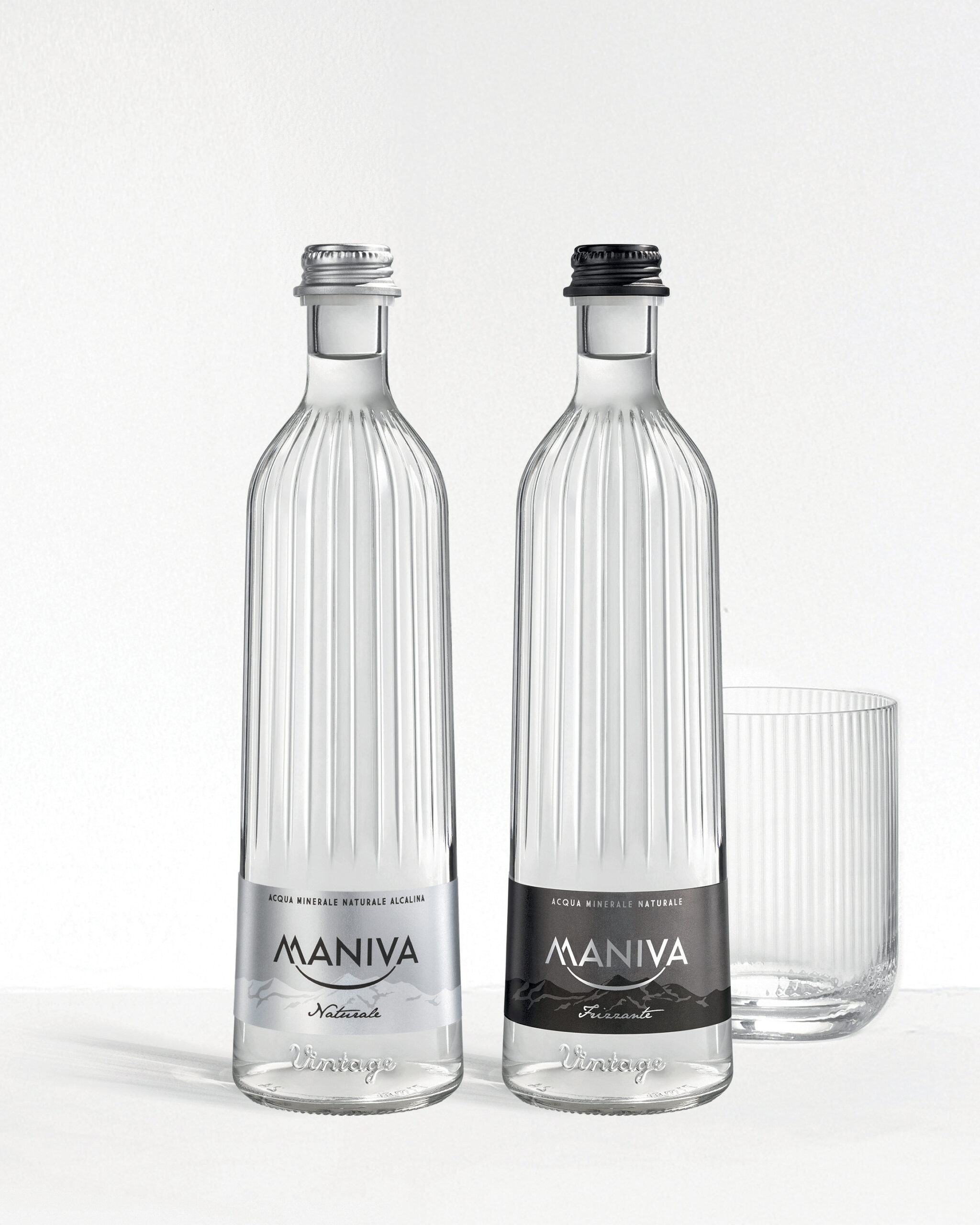
It is in the hospitality and restaurant trade — the Italian Ho.Re.Ca. market — that Maniva has concentrated much of its creative energy in recent years. The company’s returnable glass bottles in 0.75-litre and one-litre formats have become a recognisable presence across restaurant tables, with four mid-to-premium lines available: Classica and AQ Verna, both drawing from the Casentinesi oasis; Maniva Chef, sourced from Monte Maniva itself; and AQ Balda, also in the 0.75-litre format. The most recent addition to this range is Vintage Maniva — available in both one-litre and 0.5-litre formats, in still, sparkling, and lightly sparkling versions. Its conical form, ribbed flanks, and embossed lettering give it a visual distinctiveness that is rare among nationally distributed brands, positioning it as an object of design consideration as much as a functional vessel.
Innovation at Maniva extends beyond glass. The Smile-Box — a resealable, ergonomic brick offered in 0.5-litre and one-litre formats — represents the company’s response to the limitations of conventional PET and glass packaging. Made from materials that are predominantly plant-based and fully recyclable, it reflects a broader corporate commitment to sustainability that runs through production processes, packaging investments, and energy consumption alike. Equally considered is Mineral Seltz Maniva, developed specifically for bartenders and baristas who require a sparkling water capable of maintaining consistent carbonation through to the final pour — a practical tool for cocktail preparation that draws on the same Alpine source qualities as the rest of the range.
Maniva’s sense of responsibility extends inward as well. The company recently obtained UNI/PDR 125:2022 certification, a formal recognition of its commitment to gender equality in the workplace. With a workforce of over seventy people, the company has implemented a strategic plan encompassing equal pay, equitable access to employment, female recruitment, and broader measures for staff inclusion and wellbeing. It is a dimension of the business that sits alongside, rather than apart from, the product itself — a signal that for Maniva, the mountain is only the beginning of the story.