The Other Season
The Trentino winter is, in the imagination of most of its visitors, a skiing proposition. The valley towns are winter resorts; the lifts carry their loads from before eight in the morning; the accommodation infrastructure — the Gasthof, the pension, the family hotel with its sauna and its drying room — is calibrated to the skiing guest whose days are structured by the mountain and whose evenings are structured by hunger. This is a legitimate and, in the right conditions, excellent way to spend a week in the Alps.
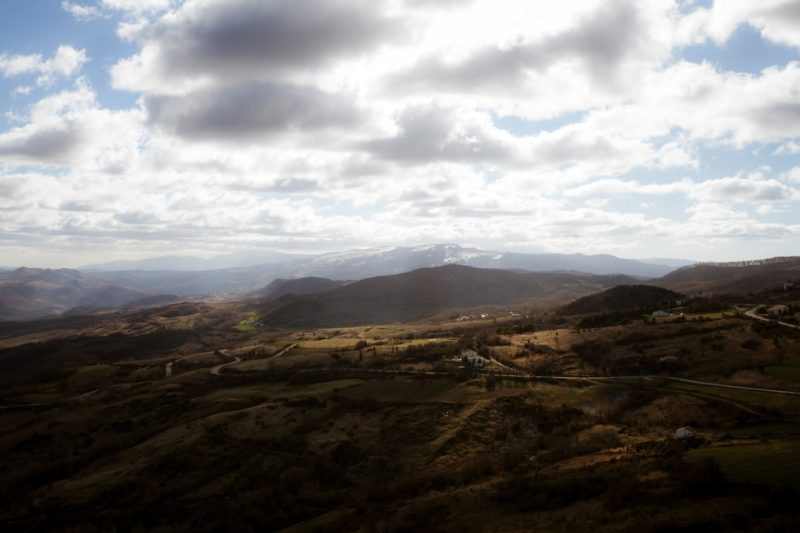
It is not the only way. A comparable case for the non-obvious season exists in the autumn Molise, where the quietest region in mainland Italy becomes its most itself between October and November. The Trentino that exists between the ski areas — the inn-keeping valleys that descend from the resort plateaux into the deeper cuts of the Adige and its tributaries, the small towns whose economy is agricultural and artisanal rather than touristic, the trails and roads that connect these places without going anywhere that a chairlift serves — is a winter landscape of considerable character that requires no particular athletic ability to access and that offers the specific pleasures of the mountain off-season: space, silence, and the sensation of being in a place that has been preparing to receive you, in exactly this form, for several hundred years.
The Inn-Keeping Tradition
The Trentino inn — the Gasthof that predates the ski resort by several centuries and that has survived the resort era by maintaining a relationship with its guests that the larger hotels cannot replicate — is an institution of remarkable consistency. The family that runs the Gasthof has typically been running it for three or four generations; the rooms are modest, the beds comfortable, the meals produced from ingredients that are largely local and largely seasonal. The dining room in winter is heated to a temperature that an alpine evening makes immediately comprehensible, and the cooking — the canederli in brodo, the gulasch with polenta, the apple strudel whose pastry is thinner than you expect — is the cooking of a culture that has spent several centuries working out what to eat when the snow has been on the ground for three months.
In the non-ski winter, the dynamic between the Gasthof and its guests is different. The guests are fewer, more diverse in their reasons for being there, more likely to be present in the morning after breakfast, more likely to talk. The owner has time to sit at the corner table with a coffee and explain the history of the building, or the history of the valley, or the difference between the Trentino Gewurztraminer that he makes from his own small vineyard and the South Tyrolean version that is better known.
The Valleys in Winter
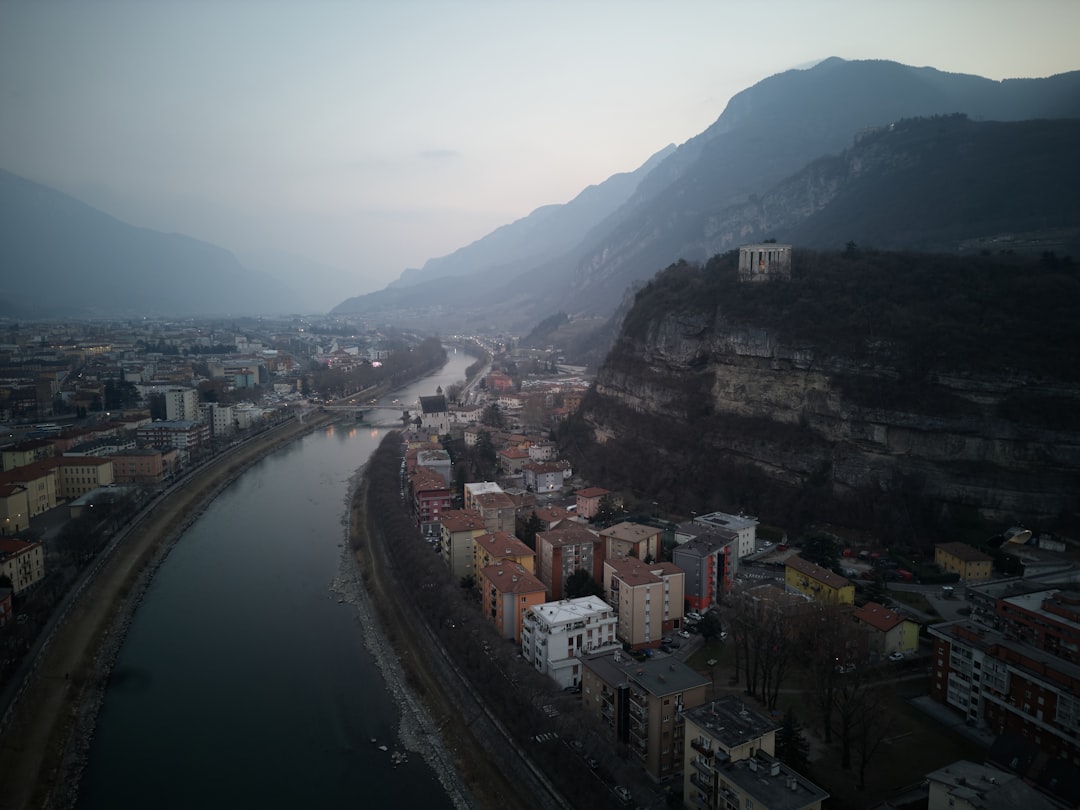
The lateral valleys of the Trentino — the Val di Non to the northwest, the Valsugana to the southeast, the Valle dei Laghi between Trento and the Garda escarpment — are the winter Trentino that the ski maps do not show. Trento, at the hub of this network, is served by regional train from both Verona and Bolzano, making the valleys accessible without a car. Their character in January and February is that of working agricultural landscapes under snow: the apple orchards of the Val di Non, whose rows of trees become a geometric pattern in the white fields, the vineyards of the Valle dei Laghi whose bare vines are trained on pergolas that become abstract sculptures in the frost, the hazelnut groves of the Valsugana that the local confectionery industry processes in quantities that make the air sweet on still days.
The towns in these valleys are, in winter, for the people who live in them rather than the people who visit: a distinction that becomes visible in the rhythms of the shops, the market day that operates for local rather than tourist purposes, the church that opens for mass at times that suit the working week of the congregation rather than the leisure schedule of the visitor.
The Thermal Tradition
The thermal baths of the Trentino — the stabilimenti termali that draw on the mineral springs of the Alpine geology — are a winter institution rather than a summer one in the traditional sense: the waters that were historically prescribed for the relief of respiratory and rheumatic conditions were most needed in the cold months, and the culture of the thermal cure that developed around them was calibrated to the winter visitor. The contemporary version of this tradition is more broadly wellness-oriented, but the best establishments maintain something of the medicinal seriousness that distinguished the cure from the spa experience.
The thermal tradition of Comano Terme, in the valley of the Sarca river between Trento and the Garda lake, is among the most historically significant in the region: the sulphurous waters here have been documented since the sixteenth century and were prescribed for skin conditions with a specificity that distinguished them from the more generic thermal waters of competing establishments. In winter, the baths are visited primarily by people who are there for therapeutic rather than recreational reasons, and the atmosphere is correspondingly quieter and more purposeful than in the summer season when the recreational element dominates.
The Food of the Alpine Winter

The winter food of Trentino is a distinct tradition from the summer one, and it is the winter tradition that most fully expresses the cultural character of the region. The canederli — bread dumplings made from day-old bread mixed with speck, herbs, and egg, poached in broth or pan-fried in butter — are the defining dish of the Trentino winter. They use stale bread rather than fresh, which is economical. They warm you up after a morning walk in sub-zero temperatures. And the recipe varies from family to family in ways that are defended with mild but genuine conviction. All of this is very much the point.
The cheese of the Trentino winter deserves equal attention. The Trentingrana — the regional version of the hard grana-type cheese — is aged for a minimum of fifteen months and achieves, at its best, a granular texture and a depth of flavour that the better-known Parmigiano-Reggiano does not surpass. The smoked cheeses — the puzzone di Moena, whose pungency is one of the more assertive in the Italian repertoire — are winter cheeses in the sense that they were originally produced as a way of preserving summer milk through the cold months, and they are most naturally encountered in the season that shaped them.
The Winter Walk
The non-skiing winter walker in Trentino has access, paradoxically, to trails that the summer walker cannot use: the paths that traverse the lower slopes of the valley sides, too warm and too crowded in summer, are empty in winter and covered in snow that has been compressed by the occasional local passage into a surface that is walkable in the right footwear without specialist equipment. The views from these paths — across the valley to the opposite slope, up to the peaks that are hidden in summer by the depth of the foliage and revealed in winter in their full vertical extent — are different in character from the summer views: harder-edged, more dramatic, less softened by the vegetation that clothes the lower slopes in warm months.
The light in the Trentino valleys in January arrives at a low angle and for a short duration; the south-facing slopes receive it in the morning, the north-facing slopes in the afternoon, and the valley floor may be in shadow for most of a clear winter day. This distribution of light is itself an education in the Alpine geography, and the walk that crosses from shadow to sun and back again gives you a physical understanding of why the settlements on the south-facing slopes are older and more numerous than those on the north-facing ones.