The Pleasure of Arriving Nowhere Famous
Molise is the smallest and least populated region of mainland Italy, and it has achieved in the national consciousness an unusual distinction: it is the region that is most often said not to exist. The joke — that Molise is an invention, that no one has actually been there, that it is a placeholder on the administrative map — is a form of backhanded recognition. You cannot make the joke about a region that really does not exist in the imagination; you can only make it about a region that exists enough to be overlooked.
The autumn in Molise — October and November, when the chestnuts fall and the truffle season opens and the small medieval fairs that animate the hilltop villages return to their annual positions — is the moment at which the region is most itself. The tourist season that briefly inflates the Adriatic coast to the east has ended; the summer emigrants who return in August have returned to their cities; the plateau communities settle back into the rhythms of a year that has not fundamentally changed in its essentials for several generations.
The Chestnut Economy

The chestnut forests of the Molise interior — concentrated on the slopes of the Matese massif to the southwest and the Mainarde range on the Lazio border — were, until the middle of the twentieth century, the economic foundation of the mountain communities. The chestnut was the primary crop, not a supplementary one: ground into flour for bread, eaten fresh in autumn, dried for the winter months, fed to the pigs that produced the cured meats that constituted the other major element of the local diet. The collapse of the chestnut economy — driven by a fungal disease that ravaged the forests from the 1930s onward, and by the rural exodus that made the labour-intensive harvest increasingly impractical — is the economic history of the Molise interior in a single narrative.
The recovery of that economy, partial and tentative and driven by the quality premiums that artisanal food production commands in contemporary markets, is one of the more interesting agricultural stories in southern Italy. The chestnut groves that were abandoned when the harvest ceased to be economically rational are being reclaimed by a generation of producers who have combined traditional knowledge with contemporary market sensibility. The sagre — local food festivals — that celebrate the chestnut harvest in the October villages of the Matese are simultaneously a cultural continuity and a marketing event, and there is nothing wrong with that.
The Truffle of the Molise Interior
The truffle of the Molise interior is not the white truffle of Alba — the Tuber magnatum pico that commands the prices of a luxury commodity and attracts the international attention that transforms a provincial agricultural product into a global brand. It is the black truffle and the scorzone, varieties of lower commercial value that the local market absorbs without ceremony and that appear on the tables of the region’s trattorias in autumn without the theatrical presentation that the Piedmontese truffle trade has made standard.
The truffle fairs of the Molise interior — held in several towns in October and November, on dates that have been fixed by tradition rather than promotional calendar — are markets in the practical sense: buyers and sellers, prices negotiated in cash, the product examined and assessed by people who know exactly what they are looking at. The visitor who attends one of these markets as an observer is watching an economic activity that has been conducted in more or less the same way for centuries, and that owes nothing to the heritage industry that has transformed similar activities in Umbria and Piedmont into tourist experiences.
The Medieval Fairs
The autumn fairs of the Molise hilltop villages — the fiere that appear on the local calendar in October and November — are among the oldest continuously functioning market events in the region. Their origins are in the medieval period, when the hilltop towns served as the commercial centres of their surrounding agricultural territory and the annual fair was the occasion at which animals were bought and sold, debts settled, contracts signed, and the social relationships of the rural community renewed.
The contemporary fiera in a Molise hill town has a different economic function — livestock markets have largely been replaced by agricultural machinery and seasonal produce — but it retains the social function intact. It is the occasion on which the community assembles in a way that the ordinary weekly market does not require: with a density of people, a volume of noise, and an energy that the quiet of the ordinary hilltop afternoon does not prepare you for. The smells — roasting meat, frying dough, the animals whose presence is reduced now to a corner of the fair rather than its centre — are part of the experience in a way that sitting here describing them makes clear enough.
The Towns

The towns of the Molise interior are, almost without exception, medieval in their street plan and Baroque in their church facades: the combination that characterises the hilltop settlement culture of the Apennines from the Marche to Calabria, accessible in several cases by regional train from Campobasso and Isernia, and that in Molise has been left largely unmodified by the tourist development that has altered equivalent towns in Umbria and Tuscany. They are quiet in the way that genuinely depopulated places are quiet — not the managed quiet of a heritage zone but the organic quiet of a place where there are simply fewer people than there used to be.
Agnone, in the northern Molise uplands, is the town most associated with an artisanal tradition that has survived the depopulation intact: the bell foundry, whose origins in the medieval period make it one of the oldest continuously operating metal foundries in Italy, produces bells for churches throughout the world using methods that have changed less than the foundry’s surrounding context. The autumn visit to Agnone combines the foundry with the town’s medieval festival programme and with the chestnut harvest in the surrounding forests in a sequence that requires two or three days rather than two or three hours.
What Autumn Does to the Light
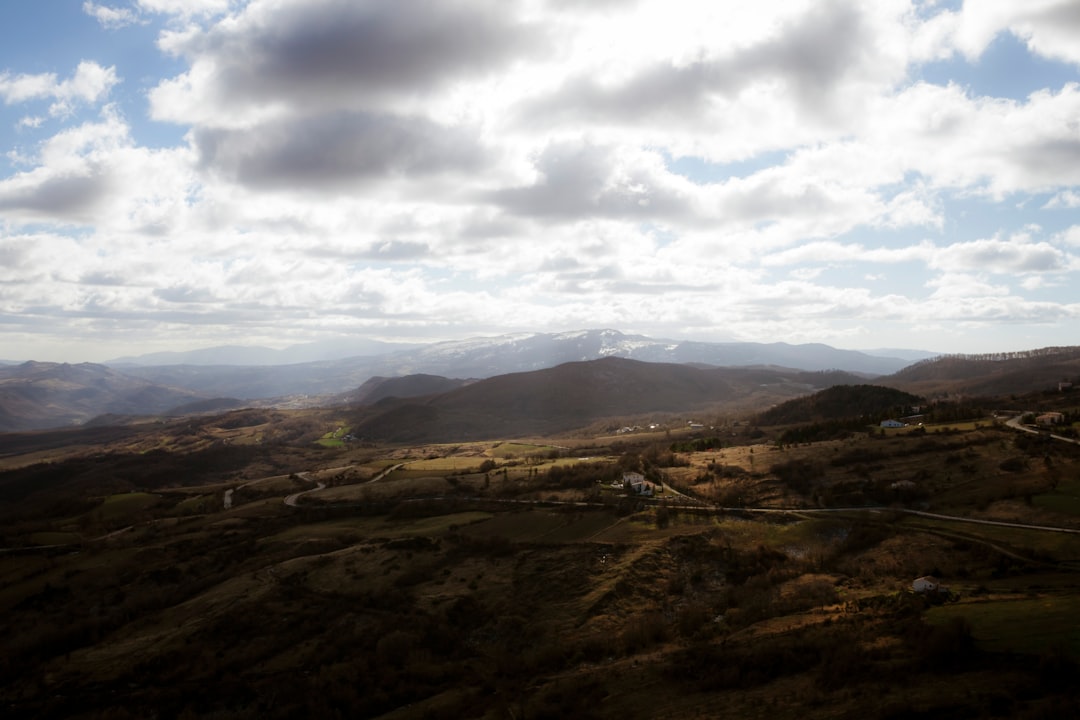
The specific quality of autumn light in the Molise interior deserves mention because it is, in the end, the reason why October is the right time to be there. The summer haze that softens the views from these hilltops in July and August lifts with the first autumn rains, and the landscape that is revealed — the successive ridges of the Apennines stepping south toward Campania and north toward Abruzzo, the valley floors still green from the late-season grass, the chestnut forests turning in the particular graduated progression from green to yellow to rust that the altitude arranges in bands on the hillside — is a landscape that rewards contemplation at a pace that the summer visitor, always en route to somewhere else, never allows it.
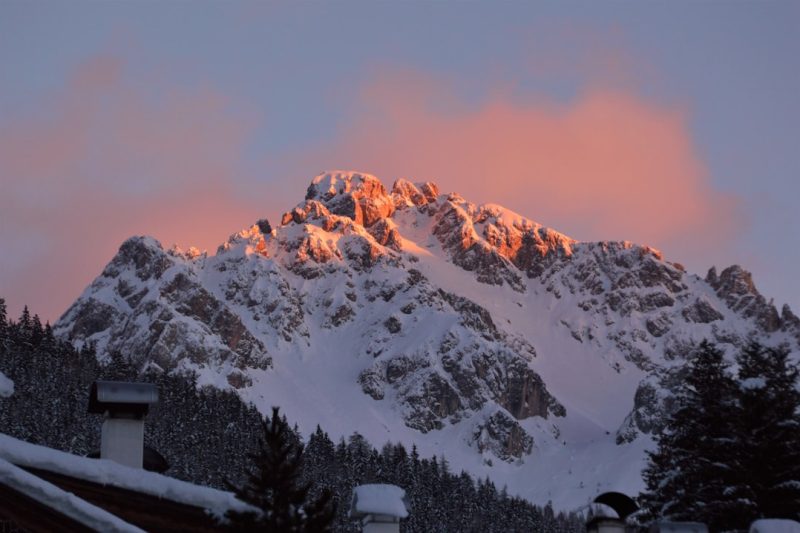
A companion quietness — different in landscape and latitude — is available in the winter Trentino, where the inn-keeping valleys between the ski resorts offer the same exchange of crowds for character. There is a specific hour in the Molise autumn — the hour before sunset on a clear day, when the light is coming from below the horizon of the nearest ridge and illuminating the far hills at an angle that turns them a colour between gold and copper — that belongs to this landscape and nowhere else. No photograph gets it right. You have to be there.