In a Roman neighbourhood far from the tourist circuit, a small pasta kitchen has spent a decade making the case that craftsmanship and informality are not opposites.
There is a particular kind of discipline required to slow down deliberately in a city that never quite stops. In Centocelle, one of Rome’s most characterful and historically layered neighbourhoods, L’Ingrediente Segreto has been practising exactly that discipline since 2014. Founded by Andrea and Francesca, the project was conceived around a precise conviction: that artisan fresh pasta — one of the most eloquent expressions of Italian culinary culture — deserved to be returned to the everyday table, stripped of ceremony but not of care.

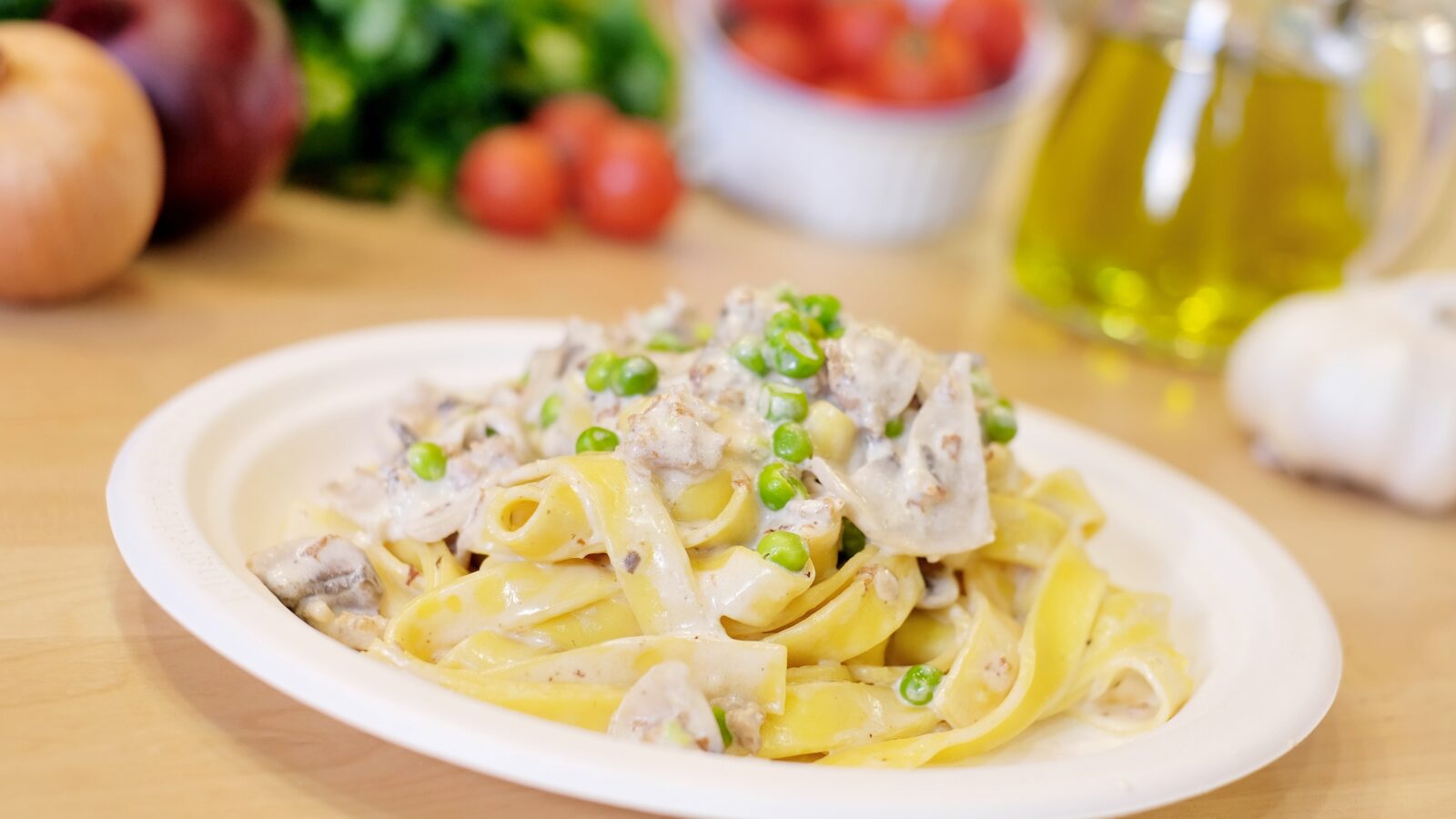
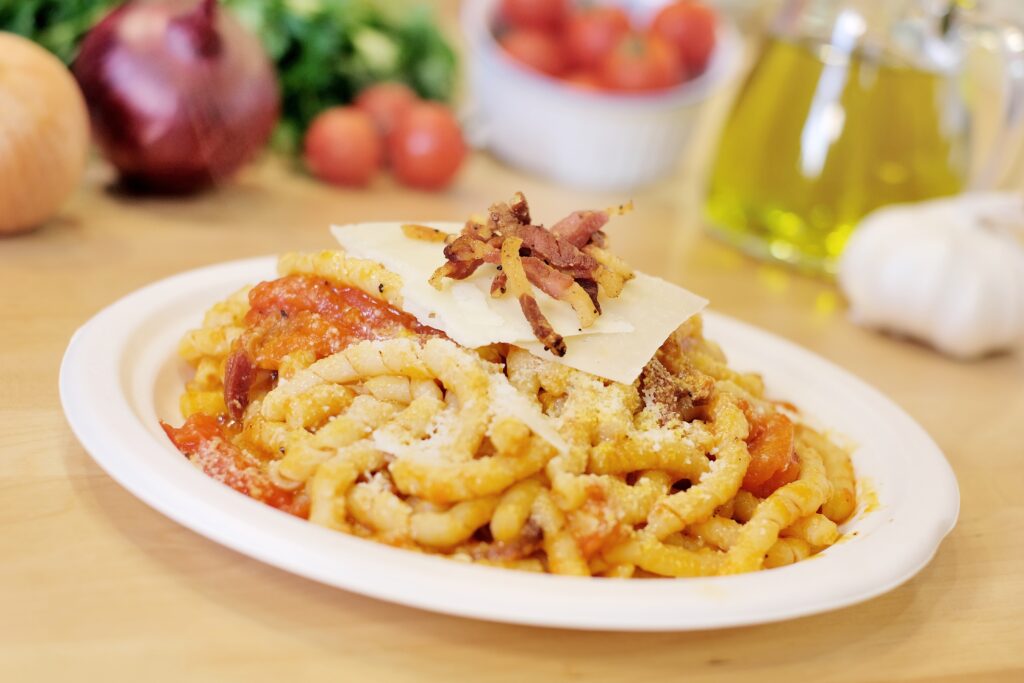
The format is disarmingly simple. Customers choose their pasta shape and their sauce, then watch as the dish is assembled from scratch before them. Fettuccine, tonnarelli, ravioli, tortellini, gnocchi, lasagne, paccheri — the range is produced daily by hand, cut and filled and shaped to order. The kitchen does not work from pre-prepared batches or industrial shortcuts. Each preparation begins at the moment of the order, in the manner of the Italian home kitchen from which this entire sensibility descends. The founders describe it, with some accuracy, as an all-Italian Street “Slow” Food: informal in setting, affordable in price, uncompromising in execution.
What distinguishes L’Ingrediente Segreto from the broader category of casual dining is the seriousness embedded in its apparent simplicity. The pasta is extruded exclusively through bronze dies — a technical choice with meaningful consequences, since bronze-cut surfaces carry a characteristic porosity that allows sauces to adhere with far greater intimacy than the smooth finish produced by industrial Teflon alternatives. Ingredients are sourced fresh each day, with a deliberate preference for local suppliers and zero-kilometre produce wherever the supply chain permits. These are not incidental details but the structural logic of a kitchen that understands quality as a cumulative effect of small, correct decisions made consistently over time.
Behind the counter, a brigade with solid restaurant experience guides the service — but the atmosphere, by design, resists formality. The founders speak of conviviality as something that has been quietly eroded by the pace of modern catering, and of their kitchen as a modest corrective. In recent years, the audience has broadened noticeably: younger customers, both Italian and international, increasingly find their way to Centocelle drawn by curiosity about the craft itself. For many, watching a raviolo or a fettuccina take shape before them is genuinely revelatory — a reminder that what the world recognises as a symbol of Italian identity is, at its origin, a matter of hands, time and attention.
The menu extends beyond pasta to include fried dishes and artisan desserts, but the underlying philosophy remains consistent throughout: simplicity as a considered position rather than an absence of ambition. Over a decade in, L’Ingrediente Segreto has established itself as a reference point for a particular kind of Roman eating — one where tradition is neither museified nor abandoned, but quietly, daily renewed. The secret ingredient of the name, it turns out, requires no translation: it is the patience to do things properly, and the belief that such patience is worth the wait.