A family estate on Sicily’s south-central coast turns centuries of agricultural history into some of the island’s most compelling DOC wines, olive oils, and artisan preserves.
The town of Licata sits at the mouth of the Imera Meridionale river, where a wide, fertile plain opens onto twenty kilometres of coastline along Sicily’s south-central shore. It is a place shaped as much by commerce as by agriculture — a port from which ships once departed loaded with grain, almonds, and olive oil, and later with sulphur, a trade significant enough to draw the Archduke Maximilian of Habsburg to the city in 1859. Behind the town, a broad arc of limestone hills rises like a natural crown, its slopes covered in vineyards and centuries-old olive trees. It is on one of these hills — the Colle di Sant’Oliva — that the Quignones estate has stood since the mid-nineteenth century.
The property carries its history lightly but unmistakably. A stretch of railway line, laid in the late 1800s, still bisects the estate, its two halves connected by a stone underpass built from local limestone blocks. From the farmhouse on the hill, on 10 July 1943, the Quignones family watched the sea fill with Allied ships and thousands of soldiers come ashore below — Licata being the first Italian city to be liberated during the Second World War. These are not anecdotes invented for visitors; they are the kind of layered memory that accumulates in a place worked by the same family across generations.
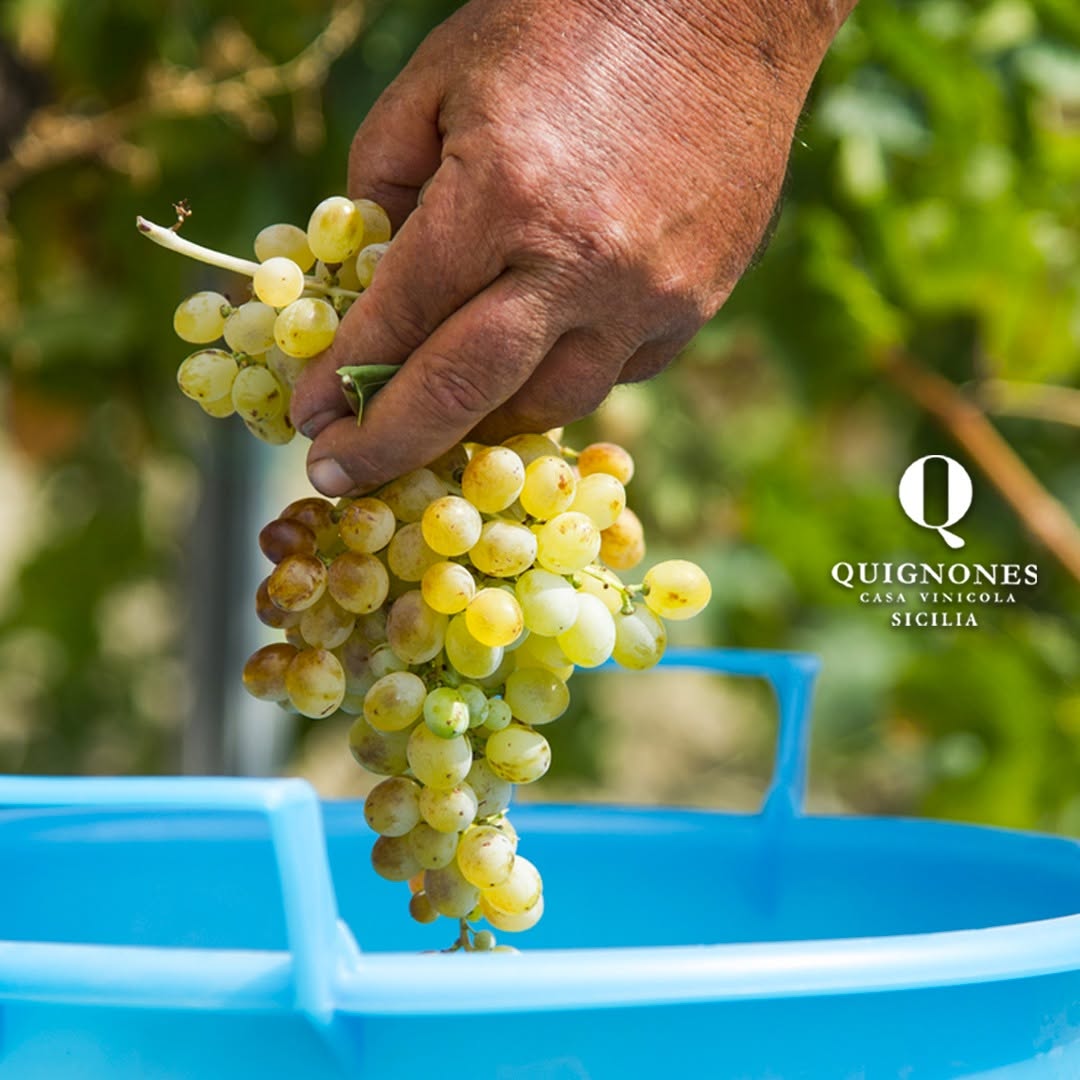
The modern shape of the estate began to take form in the 1960s, when Professor Raffaele Quignones undertook a structural transformation of the land, extending the vineyards and converting existing cultivation. In subsequent decades, new olive groves were planted alongside the ancient trees already on the property, and almond orchards — historically rooted in this part of Sicily but absent since the immediate postwar years — were reintroduced. Today, under the ownership of engineer Alfredo Quignones, the estate produces grapes, olives, and almonds across terrain where the dry climate is tempered by the proximity of the sea, and where the calcareous hillside soil encourages low yields and concentrated fruit. The result is a portfolio of DOC and IGT wines and an extra-virgin olive oil distributed across Italy and several other European countries.

The estate is entirely self-sufficient in its processing. A dedicated winery handles vinification and ageing through to bottling, while a separate facility manages the conservation and packaging of the olive oil. A third strand of production has emerged more recently: capitalising on the extraordinary abundance of fruit and vegetables grown in the Licata plain, Alfredo Quignones established a facility for artisan preserves, operating under the Terradelicata label. The range includes caponata, orange marmalade, dried tomato paste, and creams of pepper and artichoke, among others — all processed within 48 hours of harvest and sourced entirely from within the surrounding territory.
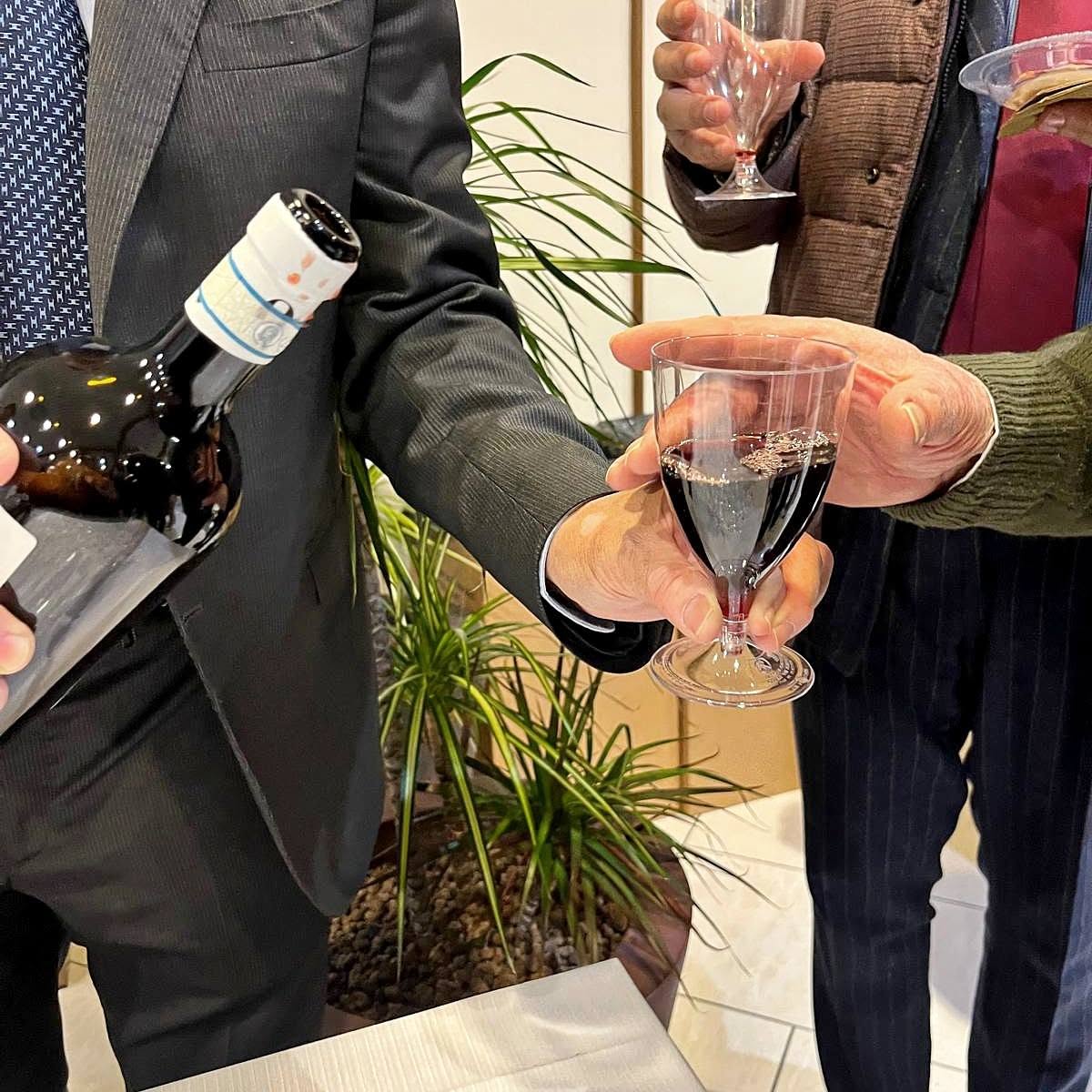
These three pillars — wine, oil, and preserves — converge most fully in the estate’s tasting experiences, where visitors are received by Alfredo Quignones himself. Wines from the Quignones label are paired with Terradelicata preserves and with locally produced breads and cheeses made exclusively in this corner of Sicily. The owner’s accounts of the land, its history, and its people provide a running commentary that extends the visit well beyond any formal schedule. Reviews left by guests from across the world speak not only to the quality of the products but to the particular quality of the time spent there — an afternoon in which the hills above Licata, and everything they have witnessed, feel entirely present.