The Plateau and Its Festivals
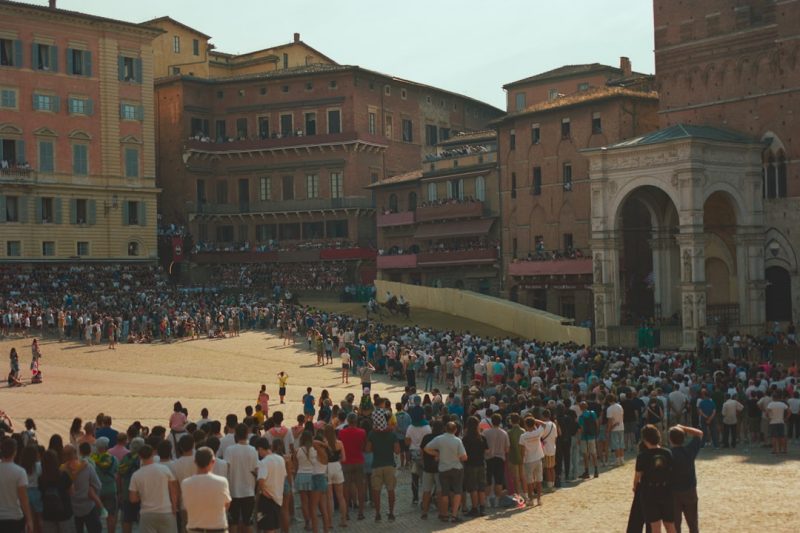
The Abruzzo plateau — the high-altitude interior that constitutes the largest natural park in central Italy and that is separated from the Adriatic coast by the Gran Sasso massif to the north and the Maiella range to the south — has a summer calendar of local festivals that bears almost no relationship to the tourism infrastructure of the coastal resorts. These are events organised by and for the communities that live on the plateau year-round: small enough to be held in a piazza or a church square, significant enough to draw back the emigrants who have left for the cities and who return specifically for the occasion.
The festivals of the Abruzzo summer share their basic structure with local festivals across a hundred other Italian regions. What sets them apart is the landscape in which they occur — a high, cool, dramatically proportioned space that the Italian Apennines share with no equivalent — and the specific cultural traditions of mountain communities that have maintained their identity against the centrifugal forces of the twentieth century with a stubbornness that is itself a form of pride.
The Transhumance Tradition

The cultural foundation of the Abruzzo plateau is transhumance: the seasonal movement of sheep flocks between the summer pastures of the high Apennines and the winter lowlands of the Tavoliere di Puglia to the southeast. This movement, which defined the economic and social life of the plateau from the medieval period until the second half of the twentieth century, left an infrastructure of droving roads — the tratturi — that crossed the plateau in a network still partially visible in the landscape, and a culture of pastoralism that shaped the festivals, the food, the music, and the social organisation of the mountain communities in ways that persist even now that the transhumance itself has largely ceased.
The festivals that celebrate the transhumance tradition — the departure of the flocks in late spring, the return in autumn — are among the most specifically local of the plateau’s summer calendar. They involve the re-enactment of the droving ritual, with flocks of sheep actually driven through the village streets by shepherds in traditional dress, a practice that in a different context might seem like heritage tourism but that in the Abruzzo plateau retains the quality of a community event — attended by people who remember the reality behind the re-enactment, or whose parents remembered it.
The Music of the Plateau
The musical traditions of the Abruzzo interior are closely connected to the pastoral culture from which they emerged. The zampogna — the Italian bagpipe, of which the Abruzzo version is among the most elaborate — was the instrument of the transhumant shepherd, carried on the drove roads and played in the winter lowlands as well as the summer pastures. Its distinctive sound — the continuous drone beneath the melody, the slightly nasal quality of the chanter pipe — is the acoustic signature of the Abruzzo plateau at festival time, and the craftsmen who make the instruments and the musicians who play them are among the most carefully maintained links to the pastoral tradition.
The cantastorie — the narrative singer who combines the functions of storyteller and musician — is a related figure, less commonly encountered now but still present at some of the more traditional festivals: a figure who carries in their repertoire the ballads and narrative songs that recorded the events of plateau life — floods, famines, feuds, miracles — before literacy made written records the dominant form of historical memory.
Sulmona and the Confetti Tradition
The city of Sulmona — reached by regional train from Rome on the scenic Transiberiana line through the Apennines — in the valley between the Maiella and the Morrone ranges, is the production centre of the confetti tradition — the sugar-coated almonds whose elaborate packaging into floral and sculptural forms has been a Sulmona speciality since the fifteenth century and whose significance as ceremonial gifts at weddings, baptisms, and first communions gives them a social function that extends far beyond their material value.
The festival calendar of Sulmona includes several events organised around the confetti tradition, but the most significant is the Easter ceremony in the main square — the Madonna che scappa in piazza, in which the statue of the risen Christ and the statue of the Madonna are brought from their respective churches and, at the moment of their meeting in the square, white doves are released and the Madonna’s mourning cloak falls to reveal the white dress beneath. It is a piece of sacred theatre that has been performed annually for centuries and that draws spectators from throughout the region without losing its character as a local event.
The Mountain Sanctuaries

The high Apennine landscape of Abruzzo is punctuated by mountain sanctuaries — pilgrimage sites set at altitude, typically in locations of geological drama that the founding tradition associates with miraculous appearance or hermetic retreat. The sanctuary of the Madonna dell’Altare on the slopes of the Maiella, the hermitages of the Morrone that were the retreat of Pope Celestine V before his elevation and his abdication, the chain of sanctuaries that marks the pilgrimage routes across the Gran Sasso — these are destinations whose significance is not primarily scenic, though the scenes in which they are set are of considerable beauty, but devotional.
The summer pilgrimages to these sanctuaries are among the most ancient events in the Abruzzo calendar, and their character — the night departure from the valley town, the ascent in the dark, the arrival at the sanctuary at dawn — has changed less than almost any other aspect of the mountain culture. They are undertaken by people of all ages, many of whom have made the same climb since childhood, and they retain the quality of a genuinely communal experience: the shared effort, the shared destination, the shared breakfast at the sanctuary that concludes the climb and that is, in its own way, the point.
Finding the Calendar
The festivals of the Abruzzo plateau are not well documented in the standard tourist sources, partly because many of them operate on the Julian calendar that determines the dates of moveable feasts and partly because the organisations responsible for them — local municipalities, confraternities, pastoral associations — are not primarily in the communication business. The most reliable sources are the local newspapers and radio stations of L’Aquila and Chieti, which carry festival listings as a matter of civic record rather than tourist promotion, and the informal networks of the plateau communities themselves, which are accessible to the visitor who makes the effort to be present and ask.
The effort is the prerequisite. These festivals exist for the communities that produce them, and those communities have no particular interest in whether the outside world knows they are happening. This is not hostility — it is the indifference of people who have a clear sense of what these events are for and do not need an audience to confirm it. Showing up counts for more than knowing about it in advance. A companion tradition of spring sacred festival is maintained in the mountain communities of Campania’s interior, documented in our guide to the sacred processions of Campania’s interior.