A Border That Does Not Belong to Maps
The Collio — the wine zone that occupies the hills between Gorizia in Italy and Nova Gorica in Slovenia, straddling a border that was fixed by treaty in 1947 and modified by the Schengen agreement in 2007 — is a landscape that has been cut by history in a way that the landscape itself does not recognise. The hills roll continuously from the Italian side to the Slovenian side; the soils are the same marl-and-sandstone formation (the local name, Ponca, applies on both sides of the line), the vine varieties overlap with negligible interruption, and the winemaking culture of the Italian Collio and the Slovenian Brda are continuations of a single tradition that the border divided but did not separate.
The wine that this landscape produces — principally white, principally from the Friulano grape (the same variety as the Slovenian Malvazija in its local form, the Jakot), but also from Ribolla Gialla, Pinot Grigio in its orange-skin-contact version, and the international varieties that have colonised the area since the 1980s — is among the most characterful white wine produced anywhere in Italy, and among the least known to the market that would most appreciate it. The combination of the Ponca soil’s mineral quality, the cool air that descends from the Julian Alps in the evening, and the specific viticulture developed over generations in this particular place produces wines of a complexity and a longevity that the more commercially successful wines of the Alto Adige, to the west, do not consistently surpass.

The Ponca Soil
The Ponca is the geological foundation of the Collio and the feature that most distinguishes it from the other wine zones of Friuli. It is an Eocene marl — a sedimentary rock formed from the compressed sediment of a shallow sea that covered this part of Europe fifty million years ago — alternating in thin layers with a harder sandstone that gives the overall formation its specific structure. When the rock weathers, it breaks into angular fragments that create a soil of distinctive texture: loose enough to allow drainage, dense enough to retain the moisture that the vine roots need through the dry Friulian summer, and mineral enough to transmit a specific salinity and character to the wines produced from it.
The vine roots in Collio penetrate deeply into the Ponca, following the fracture lines of the rock to depths that surface topsoil analysis would not suggest. The oldest vines — some of them sixty or seventy years old, planted in the immediate post-war period when the reconstruction of the Friulian wine economy was most urgent — have root systems that reach several metres into the rock, accessing mineral resources that younger vines in less permeable soils do not reach. The wines from these old-vine parcels have a depth and a persistence that the younger plantings do not match, which is why the handful of producers who still have old-vine material guard it with an attention that the economic argument for replanting does not diminish.
The Orange Wine Question
The Collio is one of the territories most associated with the contemporary orange wine movement — the winemaking practice of fermenting white grapes with extended skin contact, producing wines of amber colour and tannin-structured texture that represent a departure from the mainstream of Italian white wine production. The association is historically complicated: the skin-contact technique was, in this area, a traditional method that was abandoned in favour of reductive winemaking in the 1960s and 1970s and that was recovered by a specific group of producers in the 1990s as a deliberate return to tradition rather than an innovation.
The quality of the best Collio orange wines — particularly those made from Ribolla Gialla, whose thick skin and high acidity make it exceptionally suited to long maceration — is genuinely exceptional: wines of a complexity and a structural longevity that the reductive style could not produce from the same grapes. They are also wines that require context to be fully appreciated: the tannin that gives them their structure is unfamiliar to palates trained on reductive Italian whites, and the colour is alarming to a wine culture that associates amber with oxidation rather than extraction.
The Cross-Border Dimension
The opening of the Schengen border between Italy and Slovenia in 2007 restored the freedom of movement that the post-war settlement had removed, and in the wine community of the Collio/Brda region the effect was immediate and significant. Producers on both sides of the line, who had been maintaining professional relationships across a border that required formal crossing procedures, could now visit each other’s cellars and vineyards with the same ease as neighbours in the same country. The wine-cultural exchange that followed — the sharing of techniques, the joint tastings, the occasional winemaking collaboration — has produced a wine community that is genuinely binational in character, even if the wines themselves are still classified under Italian or Slovenian DOC/appellation rules that maintain the administrative border the landscape ignores.
The visitor who takes the Collio wine roads seriously will find themselves crossing the border multiple times in a single day, not as a gesture of geographical symbolism but because the wines worth tasting are on both sides. The Slovenian Brda producers — working with the same Ponca soil, the same Ribolla Gialla, the same skill for extended maceration — are producing wines that are in several cases equal to the best Italian Collio examples and that are available at prices that reflect the smaller international profile of the Slovenian appellation. Friuli’s visual heritage runs alongside its wine heritage: the Byzantine mosaic floors of Aquileia, an hour’s drive southwest of Cormons, form the other argument for spending more than a single day in the region.
The Roads
The wine roads of the Collio are among the most beautiful in northeastern Italy, which is not an area short of beautiful roads. They follow the ridge lines of the Ponca hills, alternating between the Italian and Slovenian sides in ways that the border signs mark but the landscape does not; they pass through vineyards maintained with the specific intensity of care that old-vine Collio producers give their parcels; they descend into valleys where the Natisone and the Isonzo rivers have cut through the Ponca to reveal its geological interior in cross-section.
The road between Cormons and the border crossing at San Floriano del Collio is one axis; the road from Dolegna del Collio along the ridge toward the Slovenian side is another. Between them, and on the lesser roads that connect the farmhouses and wineries of the zone, is a concentrated wine landscape of perhaps twenty kilometres in each direction that contains, within its limited geography, more distinctive winemaking than most regions spread across ten times the territory. Gorizia and Cormons are both on the regional rail line from Trieste and Udine, making the Collio accessible without a car for those approaching from the coast; the regional train from Trieste to Gorizia runs several times daily and takes under an hour.

When to Visit
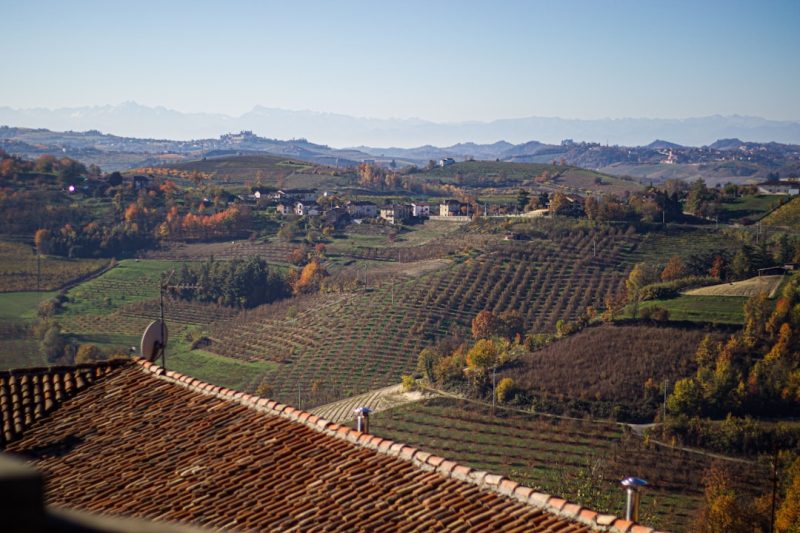
The Collio is at its most visually dramatic in two seasons. The first is October, when the vine leaves turn in the specific sequence from green to yellow to red that the slope exposure and the variety determine, and the harvested vineyards alternate with the vine rows still in colour to create a patchwork of extraordinary richness. The second is the late spring — May, early June — when the new growth is at its most intense green against the grey-white of the Ponca outcrops on the steeper slopes, and the clarity of the air after the last spring rains gives the views across the border hills a definition that summer haze removes. The wineries are open in both seasons, though the October harvest period requires the flexibility to accommodate the fact that everyone in the Collio is primarily focused on the grapes rather than the visitors during the first two weeks of the month.