The Amalfi Coast is one of Italy’s most photographed stretches of coastline and, as a result, one of its most managed. Every bend in the road has been documented, every cliffside village has its own social media presence, and the summer months bring a level of traffic — both vehicular and human — that transforms the experience of moving through it into something closer to an endurance exercise than a pleasure. What very few of those visitors notice, because it lies just a few kilometres further south and lacks a UNESCO listing to draw attention to itself, is that Cilento exists.
Cilento is a national park — the second largest in Italy — covering the southern portion of Campania’s coast and its hinterland with a combination of geography that makes the Amalfi Coast look, by comparison, somewhat restrained. The cliffs are taller. The beaches are longer and less developed. The water runs cleaner. The villages, from the coast to the inland mountains, have not been converted into museums of themselves. And the food, drawing on the same deep Campanian tradition but without the markup that tourist concentration brings, is served at prices and in conditions that feel like a different economy entirely.

What Cilento Actually Is
The name refers to both a geographical area and the national park that was established in 1991 to protect it. The park covers roughly 1,800 square kilometres, extending from the coast to the Alburni mountains and the Vallo di Diano inland plateau. It is a UNESCO World Heritage Site — but for its natural and cultural landscape rather than for any single monument, which means it lacks the kind of headline-grabbing hook that would concentrate visitors at a single point.
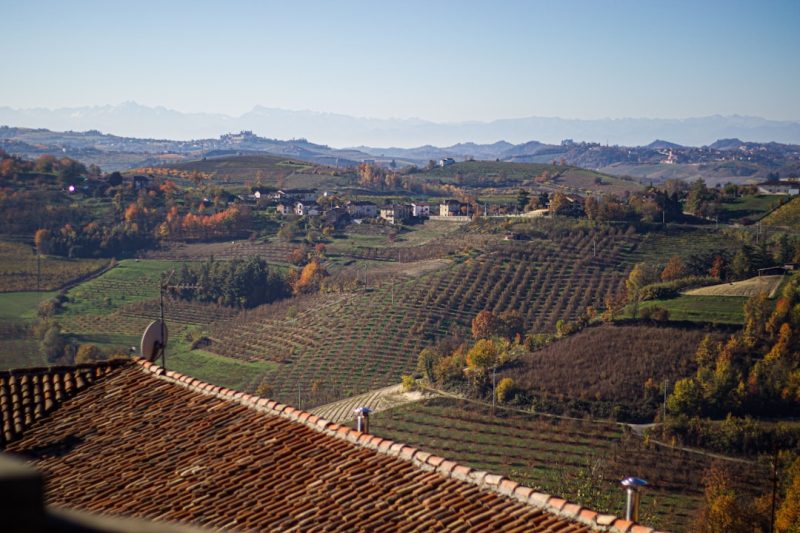
The terrain is deliberately varied. The coast alternates between sheer limestone cliffs — in places rising directly from deep water with no beach at all — and long sandy coves accessible only by boat or by tracks that require real walking. The hinterland rises steeply into forested highland that in character and climate feels entirely removed from the Mediterranean shoreline below. Villages up here sit at altitudes that produce cold winters, clear summers, and an agricultural economy built around olive oil, legumes, and sheep that has been operating on largely the same terms for centuries.
There are also the archaeological sites. Paestum, just north of the park boundary, contains three Greek temples in a state of preservation that would be remarkable anywhere in the Greek world. Within the park itself, the ruins of Velia — another major Greek colonial city — sit on a hillside above the sea in a state of productive half-excavation, visited by a fraction of the people who queue for the Pompeii ticket office.
The Coast: Cliff, Cove, and Archaeology
The western boundary of the park runs along approximately 100 kilometres of Tyrrhenian coastline, and the character of that coast changes significantly from north to south. The northern sections, around Agropoli and Castellabate, are more accessible and more developed — small towns with working harbours, beach establishments with sunbeds and umbrellas, a reasonable amount of summer activity without reaching the saturation levels of the Amalfi.

Moving south, the coast becomes progressively wilder. The promontory of Punta degli Infreschi, near the southern limit of the park, is one of the most dramatic pieces of coastal geography in the entire Italian south: a headland where limestone cliffs drop directly into water of extraordinary clarity, accessible by small boat from the nearest harbour, with the experience of arriving by sea — rounding the headland and finding the cove enclosed by rock — feeling genuinely remote in a way that is increasingly difficult to achieve anywhere on the Italian coast.
The small towns that punctuate the coast — Acciaroli, Pioppi, Pisciotta, Palinuro — function on a different register from their Amalfi equivalents. They are fishing communities that have adapted to tourism without being consumed by it. The morning fish market at a working harbour is a real market, not a performance. The boats that come in with the night’s catch are selling to local restaurants and private buyers, not primarily to souvenir photographers. The pace of a summer afternoon in one of these towns — shutter-filtered light, the smell of drying nets, bar tables on uneven pavements — belongs to an Italy that has largely been priced out of more celebrated coastal areas.
Getting to the Hidden Beaches
The best beaches in Cilento require effort to reach, which is precisely what keeps them at a manageable scale. Some are accessible only by sea — small boat taxis operate from the main harbours in summer and the crossing takes twenty to forty minutes depending on the destination. Others require descent by foot path from inland parking areas, which filters out anyone unwilling to carry their own equipment down and back up a rocky trail. The reward in both cases is a beach where the ratio of coastline to people feels, even in peak summer, closer to generous than to oppressive.
The water quality in the southern sections of the coast is among the best measured anywhere on the Tyrrhenian — consistently in the highest European classification categories. The combination of deep water close to shore, limestone substrate, and limited development in the catchment area behind produces a clarity that in summer light reads as turquoise in the shallows and intensifying blue in the depths. This is not a marketing description. It is simply what the water looks like when it has not been subjected to the runoff pressures that affect more heavily developed stretches of coastline.
The Inland: Mountains, Valleys, and Villages
The hinterland of Cilento is where the region’s character runs deepest, and where almost no visitor from outside Italy ventures. The Alburni mountains form the park’s eastern spine, rising above 1,700 metres in places and supporting a landscape of beech forest, limestone caves, and highland pasture that has nothing to do with the Mediterranean image that dominates Italian travel writing. The Grotte di Castelcivita — a cave system in the mountains that ranks among the most extensive in southern Italy — are open for guided visits and see a small fraction of the tourist numbers that enter the more famous Castellana caves in Puglia.
The villages in the hills and mountains of Cilento have the quality common to much of inland southern Italy: medieval cores of remarkable architectural coherence, populations that have contracted significantly since the mid-20th century, and a daily rhythm that operates on its own terms rather than on any tourist schedule. What they offer that the coast does not is the food and agricultural tradition in its most unmediated form — the olive oil made from trees that have been producing for generations, the cheese made from milk of animals that graze on these specific hillsides, the cooking that reflects not what visitors might expect from southern Italy but what the people here actually eat.

The Mediterranean Diet and Its Source
Cilento holds a particular scientific and historical significance: the area was the primary study site for the research that produced the concept of the Mediterranean diet in the mid-20th century. The long-term health studies conducted here, comparing the diet and mortality rates of local populations with those of northern European and American groups, generated findings that have shaped nutritional science globally. The food that those researchers were documenting — olive oil as the primary fat, abundant vegetables and legumes, fish several times weekly, limited meat, simple preparation — is still, with some modifications, recognisably the food being produced and eaten in this area.
Eating in Cilento is not a culinary tourism experience in the sense that Emilia-Romagna or Piedmont have become destinations for food enthusiasts. It is simply very good food, made from ingredients of exceptional quality, served without fuss and at prices that reflect local rather than tourist economics. The olive oil from the DOP zones within the park is genuinely among the finest produced in Italy. The mozzarella di bufala from the plains at the park’s northern edge needs no qualification. The fish, arriving directly from the boats, requires minimal intervention.
Paestum and Velia: Two Greek Cities
The presence of major Greek colonial remains on and near the Cilento coast gives the area a historical depth that the landscape alone would not provide. Paestum — technically just outside the national park boundary but functionally inseparable from the Cilento experience — contains three Doric temples from the 6th and 5th centuries BCE in a state of preservation that is almost disorienting. The Temple of Neptune, the largest and best preserved, can be walked around freely, its proportions registering in ways that museum photographs never quite capture.
Velia, within the park, tells a different archaeological story. This was the city of Elea in the Greek world — home to the Eleatic school of philosophy in the 5th century BCE, associated with thinkers whose work on the nature of being and knowledge still forms part of the foundations of Western philosophy. The site sits on a hillside above the coast, partially excavated, partially still underground, with the remains of a city gate — the Porta Rosa — that is the oldest true arch in Italy, possibly in the western world. Visitor numbers here are modest. The atmosphere is one of serious archaeology in progress, rather than packaged heritage experience.
Practical Information
Cilento is significantly easier to navigate with a car than without one. The coastal towns are connected by a main road that follows the shoreline, but reaching the inland villages, the archaeological sites, and the best beach access points requires leaving the coast road. The distances involved are not great — crossing the park from west to east takes under an hour in most conditions — but the road network in the interior is genuinely mountainous and some routes require concentration.
Public transport covers the main coastal towns with reasonable frequency in summer, including connections to the major railway station at Agropoli-Castellabate on the main Naples-Reggio Calabria line. Inland connections are limited and infrequent. For visitors planning to cover any significant portion of the park’s territory, renting a car at the nearest large station is the practical approach.
Accommodation ranges from agriturismo farms in the hills — where the price typically includes meals prepared from the farm’s own production — to small hotels and B&Bs in the coastal towns. Expect to spend €60-120 per night for a double room with breakfast in mid-range options, and considerably less in the inland areas during the shoulder season. The summer peak (July-August) commands higher prices and requires advance booking at the more popular coastal locations. The shoulder months — May, June, September — offer the best combination of weather and availability.
When the Amalfi Becomes Too Much
The decision to go to Cilento rather than the Amalfi Coast is not a budget-driven compromise. It is a different choice about what kind of coastal Italy you want to experience. The Amalfi is spectacular and it delivers its particular kind of experience efficiently and reliably. Cilento is less legible to visitors — less processed, less immediately photogenic in the Instagram-optimised sense — but it offers something the Amalfi cannot: the sense of arriving at a coast that is still being lived in rather than primarily being visited.
The clarity of the water at Punta Infreschi. The smell of the fish market at six in the morning in a harbour where the boats have just returned. The silence in the Alburni mountains after the summer heat lifts. The olive groves on hillsides above the coast, tended by families who have been pressing oil from these trees for generations. These are things that money alone cannot arrange in Amalfi — not because money does not work there, but because the scale and concentration of visitors has changed the baseline of what is available.
Cilento’s relative obscurity is temporary. The word is spreading through the networks of travellers who care about the things the region offers, and the trajectory of Italian coastal tourism over the past decade suggests that the next generation of discovered coastlines tends to get discovered quickly once the threshold is crossed. The window of visiting before that happens is still open, but it requires moving now rather than later.