Inside Palazzo RAS, a meticulously restored early twentieth-century landmark on Piazza della Repubblica, one of Trieste’s most storied buildings has found a second life as a four-star hotel that wears the city’s layered history on its walls.
Trieste has always occupied an unusual position in the European imagination — a port city shaped by the Habsburg Empire, facing the Adriatic yet carrying the cultural weight of Central Europe in its bones. It is a city of literary cafés, seafront palazzi, and a cosmopolitan past that left its mark in stone, plaster, and stained glass. Few buildings embody that inheritance more completely than Palazzo RAS, which stands on Piazza della Repubblica, a few steps from Piazza Unità d’Italia and the waterfront. Constructed between 1911 and 1913 as the headquarters of the Riunione Adriatica di Sicurtà, the palazzo was designed by architects Ruggero and Arduino Berlam — central figures of Italian eclecticism — and remains one of the defining architectural statements of the Habsburg era in the city. Today, under the HNH Hospitality portfolio, it houses the DoubleTree by Hilton Trieste.
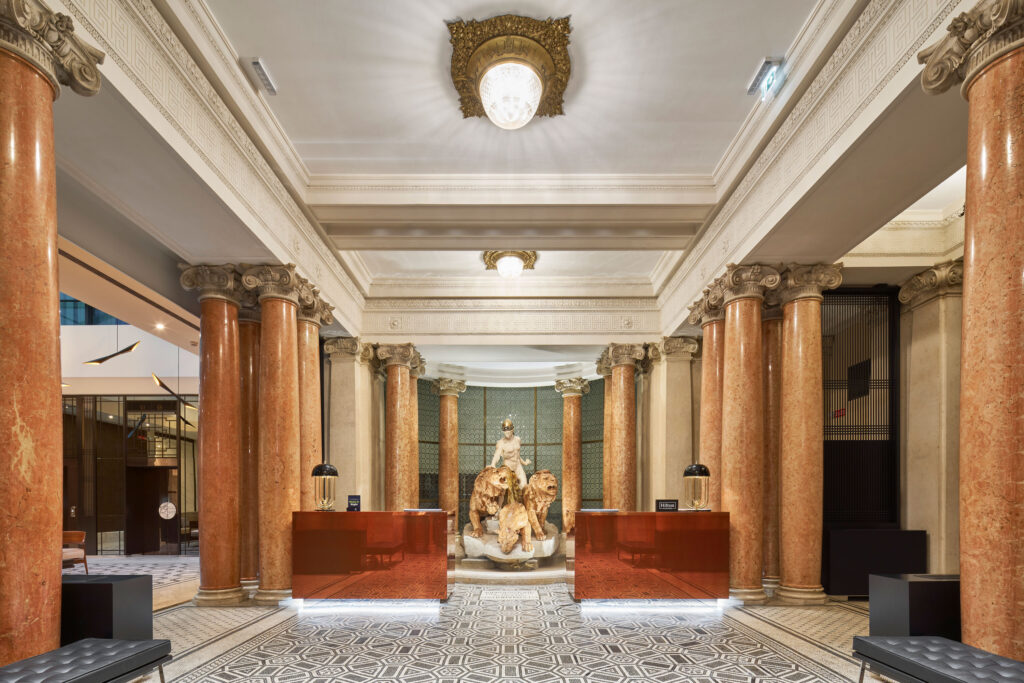
The restoration that converted the original executive offices into a hotel was overseen with the scrutiny of the Soprintendenza Archeologica Belle Arti e Paesaggio, Italy’s heritage authority, ensuring that the building’s historical and artistic fabric was not merely preserved but actively celebrated. The result is a property where original stucco work, decorative mosaics, period fireplaces, ornamental ceilings, and monumental staircases coexist with contemporary design without contradiction. The lobby sets the tone immediately: a dramatic entrance anchored by a monumental marble fountain depicting Mercury with three lions — an emblem of Trieste’s seafaring and commercial tradition — that announces, from the first moment, exactly where you are.
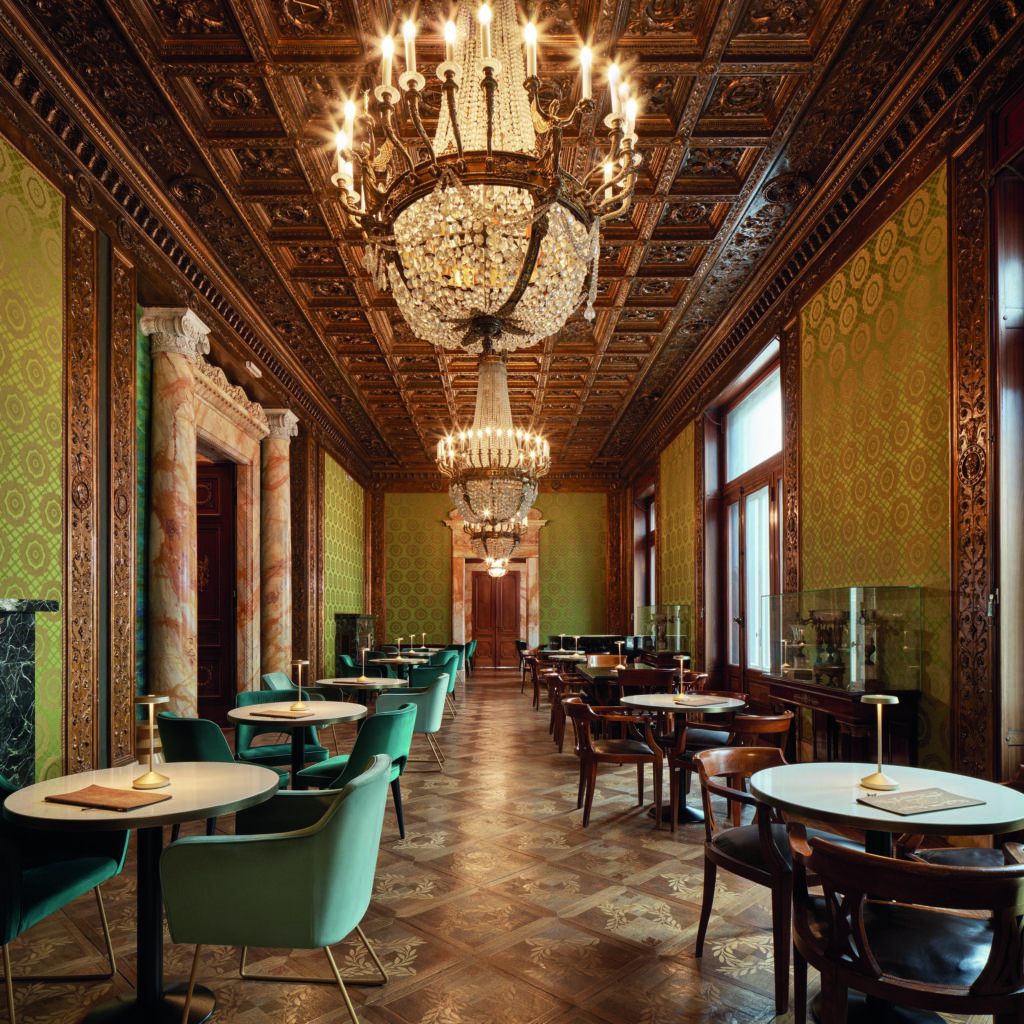
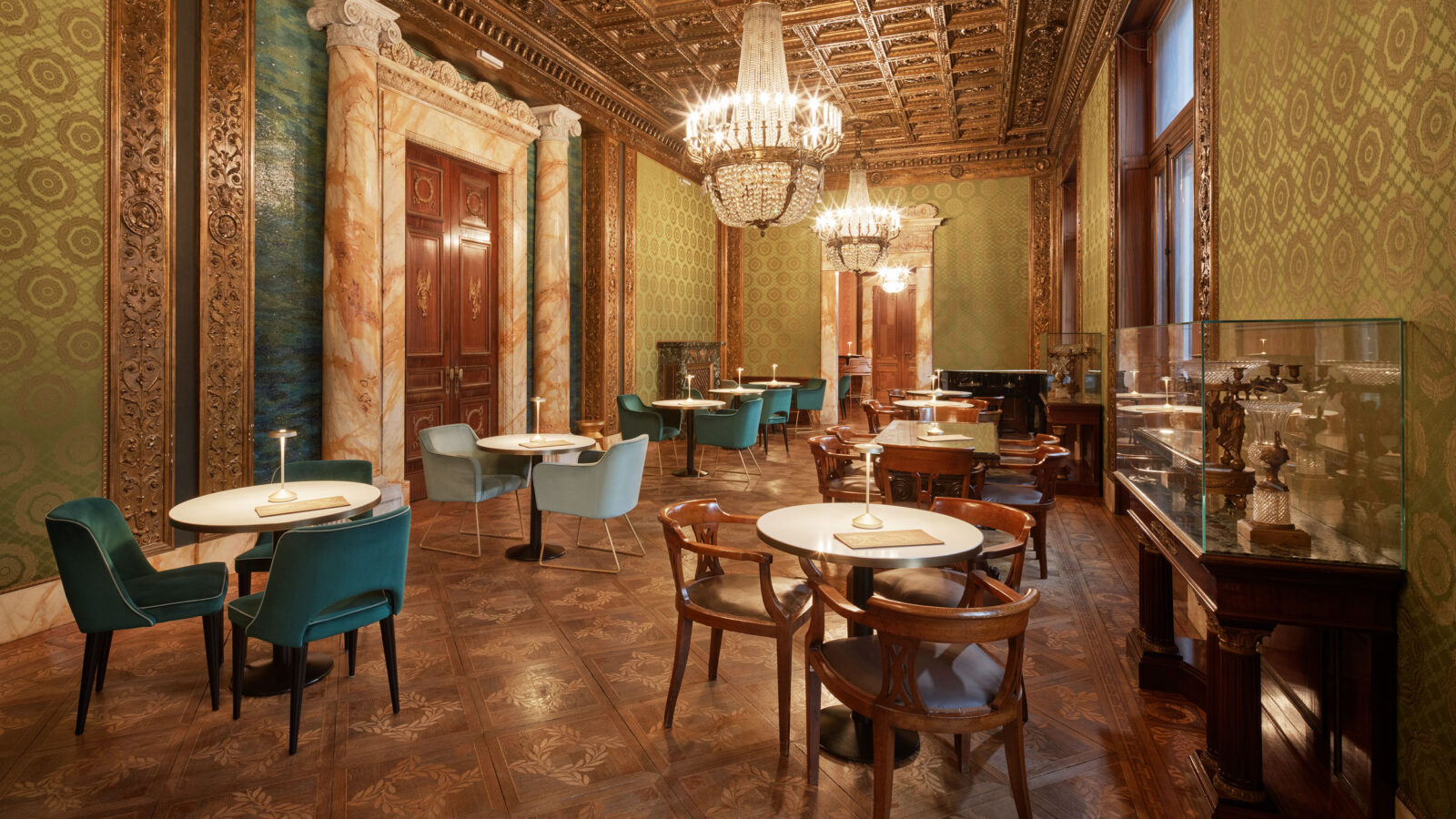
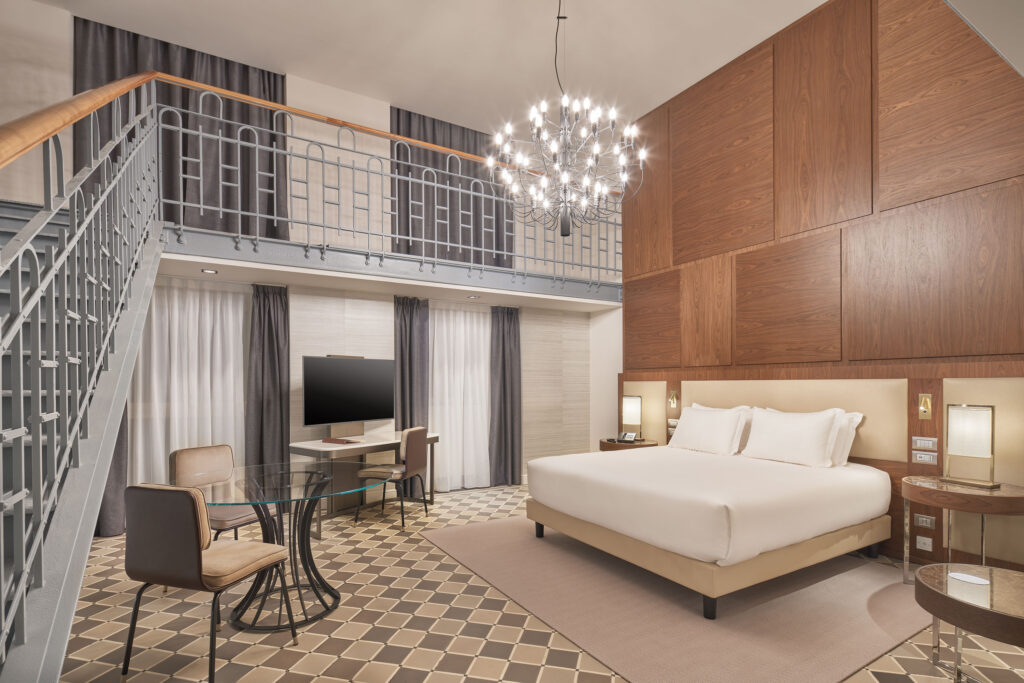
Nowhere is the palazzo’s soul more present than in its historic rooms, where the conversion work was at its most painstaking. Suites and rooms retain original early twentieth-century details — wooden floors, decorative fireplaces, period stained-glass windows, ornamental ceilings — that have been seamlessly integrated with modern comforts. These are not spaces designed to evoke a historical atmosphere through reproduction; they are the original spaces themselves, carefully restored and quietly reinterpreted. Equally atmospheric is the first-floor foyer, where the palazzo’s original historic elevator remains in operation alongside the sweeping monumental staircase, creating a gathering space where the architectural memory of Mitteleuropean Trieste feels genuinely alive.
The common areas extend this dialogue between past and present with considered intention. The Berlam Coffee Tea & Cocktail — named in homage to the family of architects who gave the building its form — serves as an elegant venue for aperitivo, dinner, and after-dinner drinks. The reference is apt: Trieste’s culture of the café, the long evening conversation, the crossroads of literary and intellectual exchange that once made this city a meeting point between East and West, is precisely the spirit the space seeks to continue. The names of James Joyce, Italo Svevo, and Umberto Saba are threaded through the city’s identity, and the hotel’s central location places guests within easy reach of the historic cafés and seafront palazzi that shaped their world.
What distinguishes the DoubleTree by Hilton Trieste is the seriousness with which it treats the building’s biography. The hotel does not simply occupy a historic palazzo — it proceeds from the understanding that Palazzo RAS is itself the experience, and that contemporary hospitality, at its most considered, can be a form of cultural stewardship. For a city as historically complex and architecturally distinctive as Trieste, that is precisely the right approach.