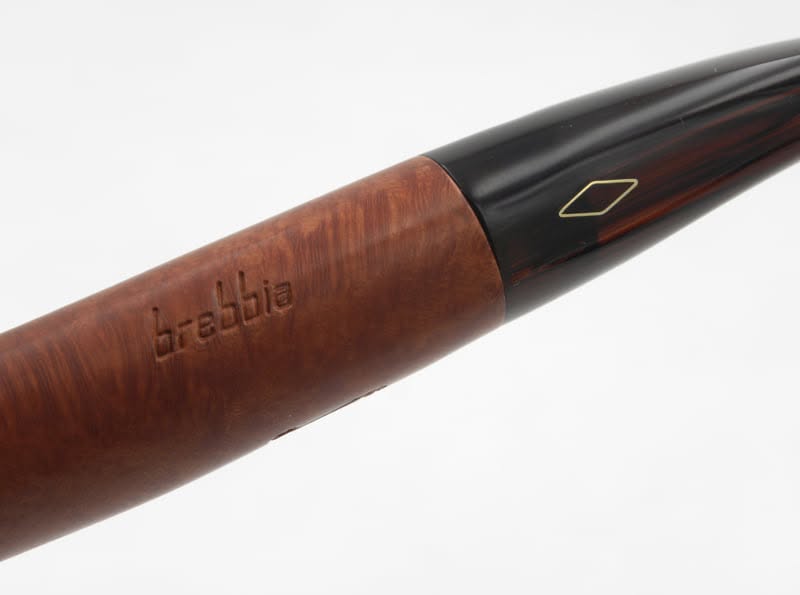
In a sandstone valley outside Varese, a family-run workshop has been shaping briar pipes by hand since 1947 — and the landscape itself is part of the craft.
The story of Pipe Brebbia begins, as many good Italian stories do, with family money, a disagreement, and an idea that arrived in the rain. In 1947, two men — Enea Buzzi and Achille Savinelli — set up a small pipe workshop in Brebbia, a town just outside Varese, with financial backing from their uncle Bernardo Papa, who had made his fortune in London. Enea was a restless entrepreneur whose grandfather had built a hydroelectric power station in the same territory back in the 1890s. It was reportedly during a rainstorm at Varese station, pipe in hand, that he began thinking about how to smoke comfortably in wet weather. The resulting designs — a lidded bowl with air vents, and bowls shaped in the likeness of famous faces with smoke emerging from the nostrils — proved popular with American soldiers stationed in the area. The partnership with Savinelli was short-lived; creative and commercial visions diverged almost immediately, and the two formally separated in 1956.
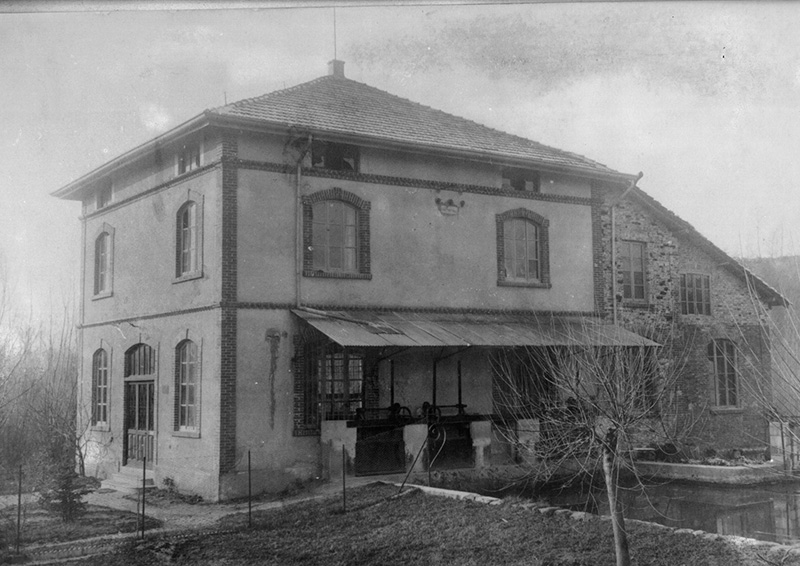
The intervening years were eventful. A fire destroyed the factory in early 1954, prompting Enea to redesign the workshop from scratch. By 1953 he had begun marking his production with the stamp MPB — Manifattura Pipe Brebbia — and in 1968 the brand took its definitive name. That same year, a slow-smoking competition in Varese gave Brebbia its first brush with international visibility: each competitor received three grams of tobacco and smoked with perfect calm, the last one still alight winning. Brebbia fielded a team of their own employees, sent them touring across Europe, and accumulated victories that carried the brand name to every corner of the continent.
The company’s next chapter arrived in the late 1970s when Enea’s son Luciano — a trained architect — joined and gradually took over creative direction. His influence proved transformative. Approaching pipes with an architect’s instinct for the relationship between function and form, he tackled a concrete market problem in his first series, the 79 of 1979: the German market demanded effective filtration, but the industry’s standard 6mm filters were largely ineffective. Luciano engineered pipes around a 9mm filter while keeping the shank elegantly slim. Today all Brebbia pipes carry a 9mm filter as standard.
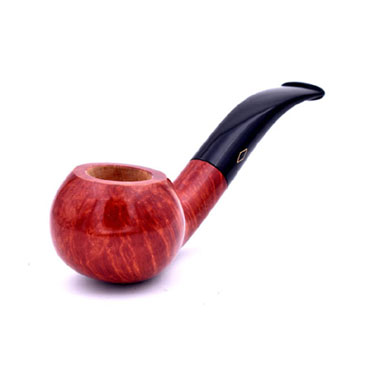
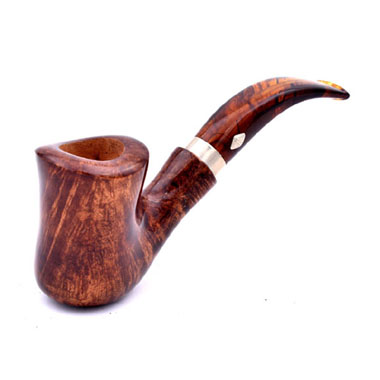
What distinguishes Brebbia pipes most profoundly, however, is neither design nor pedigree but geography. The workshop sits at the Bosco Grande, a valley enclosed on all sides in sandstone, through which the Bardello river winds on its way from Lake Varese to Lake Maggiore. The alkaline soil, constant humidity, and sheltered microclimate create near-perfect conditions for the natural seasoning of briar root — conditions that, as far as anyone can establish, exist only here. Briar contains tannin, the compound responsible for the harsh flavour a new pipe delivers during its first smokes. Elsewhere this is managed through processing; at Brebbia, the microclimate draws the tannic acid out naturally. When pipe enthusiasts describe Brebbia pipes as sweet, it is not mere praise — it is a statement about place.
Production unfolds across fifty stages, carried out almost entirely by hand or with small electric motors. Dyes are vegetable-based, essences natural. The workshop at Bosco Grande is the oldest still-active briar pipe workshop in Italy and has never stopped producing in over seventy years. In 1992, Enea Buzzi gave permanent home to the collection of historic pipes he had gathered over decades — models from around the world acquired first to study the competition, then to preserve an entire craft tradition. That room at Bosco Grande became the Museo della Pipa, today a destination for enthusiasts from across Italy and beyond. Pipe Brebbia is, all at once, a workshop, a family, a microclimate, and a living archive — and each pipe that leaves the Bosco Grande carries all of it.


